
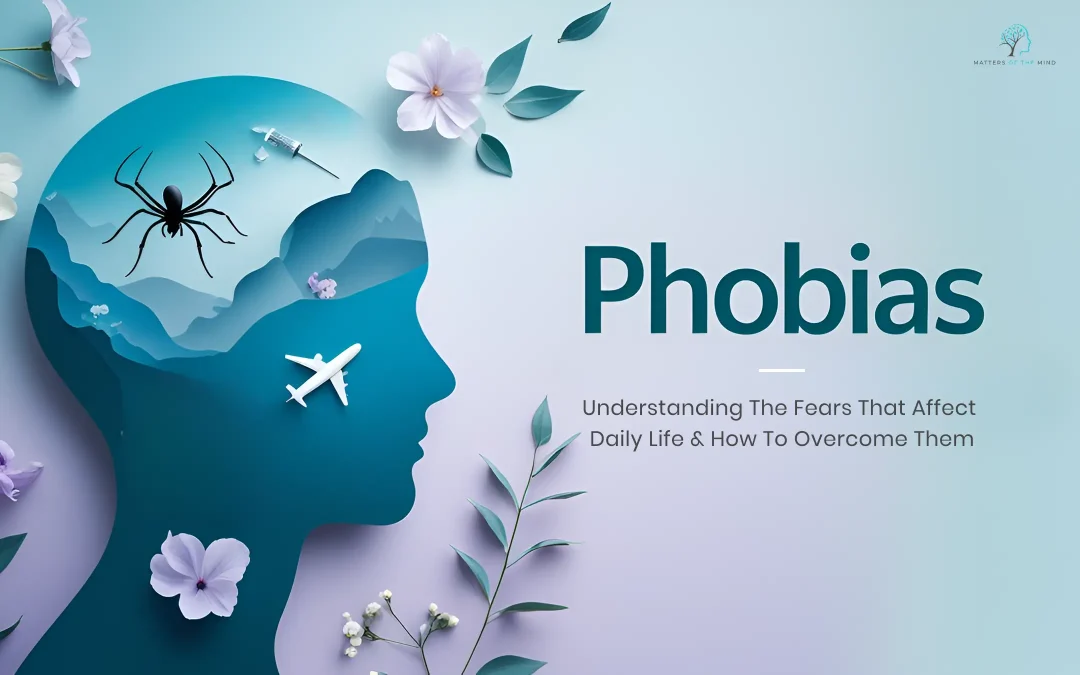
Fear is the natural human response to situations. But when the fear becomes intense, persistent, and focused on specific scenarios, it reflects a threat and may indicate a phobia. Phobias are a type of anxiety disorder characterised by overwhelming fear and avoidance behaviours that can interfere with everyday life.
What is a Phobia?

Various Types of Phobias
- Acrophobia – Fear of Height
- Aerophobia – Fear of Flying
- Aquaphobia – Fear of Water
- Trypanophobia – Fear of Injections
- Arachnophobia – Fear of Spiders
- Claustrophobia – Fear of Enclosed Spaces
- Emetophobia – Fear of Vomiting
- Cynophobia – Fear of Dogs
- Zoophobia – Fear of Animals
- Social phobia – Fear of Social Situations
1. Acrophobia – Fear of Height
Why Does It Happen?
- Past incidents
- Perception issues related to balance trigger the fear response
- Evolutionary roots can be the reason for the fear of falling
How Can It Affect Daily Life?
- Avoidance of upper floors, elevators
- Difficult travelling (plane rides, cable cars, mountains)
- Impact on social activities
2. Aerophobia – Fear of Flying
Why Does It Happen?
- Past traumatic flight experience, or generalised anxiety
- Fear of crashing, or sometimes resonates with claustrophobia
How Can It Affect Daily Life?
- Avoidance of work-related or personal travel
- Disruption of travel plans, vacations, and personal goals
- Stress and anxiety in the lead-up to a trip
3. Aquaphobia – Fear of Water
Why Does It Happen?
- Traumatic water-related incident in childhood
- Lack of swimming ability or fear of the unknown depths
- By observing someone else’s fear
How Can It Affect Daily Life?
- Avoidance of swimming, bathing, or water-related activities
- Fear of bathing and showering
- Physical symptoms of anxiety when seeing or thinking about water
4. Trypanophobia – Fear of Injections
Why Does It Happen?
- Linked to a traumatic medical experience in childhood
- Stemming from sensitivity to pain or witnessing distressing procedures
- It can also be influenced by anxiety or a strong fear of bodily harm
How Can It Affect Daily Life?
- Avoidance of doctors’ appointments or medical procedures
- Heightened stress in healthcare settings
- Delayed or skipped vaccinations and medical treatments
5. Arachnophobia – Fear of Spiders
Most people can get triggered even by images, discussions, or videos about them, and they usually avoid certain places where they can encounter a spider.
Why Does It Happen?
There isn’t any specific reason for this, but most studies show the following.
- Humans are biologically wired to fear potentially dangerous creatures.
- Post-traumatic experience, such as childhood trauma, can also contribute to the development of this phobia.
How Can It Affect Daily Life?
- Avoidance of activities or staying alone in certain rooms
- Overalertness in new environments
- Disruption of sleep or daily routine due to fear of spiders
6. Claustrophobia – Fear of Enclosed Spaces
Why Does It Happen?
- Linked to past experiences, such as being stuck in a confined area
- Can develop from general anxiety or as a learned behaviour from observing others
How Can It Affect Daily Life?
- Avoidance of public transport, lifts, and small rooms
- Difficulty with travel, crowded venues, or closed-door environments
- Restrictions in professional and social situations
7. Emetophobia – Fear of Vomiting
Why Does It Happen?
- Traumatic vomiting experience since childhood
- Lack of control, fear of embarrassment, or fear of contamination
- Overlap with anxiety disorders
How Can It Affect Daily Life?
- Restrictive eating patterns or obsessive hygiene routines
- Avoidance of social gatherings, travel, or public spaces
- Intense anxiety during flu season
8. Cynophobia – Fear of Dogs
Why Does It Happen?
- It often develops after a traumatic incident, such as being chased or bitten by a dog in childhood
- Arise from learned fear, especially if parents or siblings displayed a fear of dogs
- Lack of familiarity with dogs or feeling out of control around unpredictable animals
How Can It Affect Daily Life?
- Avoidance of public spaces where dogs might be present
- Limiting social visits or outdoor activities
- High anxiety when encountering dogs unexpectedly
9. Zoophobia – Fear of Animals
Why Does It Happen?
- Unexpected encounters with animals in childhood
- Learned through observation
- Generalized anxiety or cultural beliefs can also contribute to this
How Can It Affect Daily Life?
- Avoidance of nature or social settings
- High stress in an unfamiliar place
- Impact on relationships and daily routines
10. Social phobia – Fear of Social Situations
Social phobia or social anxiety disorder is a persistent and intense fear of being judged, embarrassed in social situations. For individuals with social phobia, even routine interactions like speaking in a meeting, eating in public, or small talk can cause overwhelming anxiety.
Why Does It Happen?
- Developed from early negative social experiences, bullying, or criticism
- Can be influenced by family dynamics, such as overprotection or high expectations
- Underlying self-esteem issues or a high fear of failure or rejection
How Can It Affect Daily Life?
- Avoidance of social gatherings, public speaking, or dating
- Physical symptoms like blushing, sweating, and in social settings
- Difficulty at school or work due to fear of interaction
Why Do These Phobias Develop?
1. Traumatic experiences
2. Learned behaviour
3. Brain chemistry and genetics
4. Underlying anxiety disorders
Evidence-Based Treatments for Phobias
Psychological therapies have been shown to reduce fear, eliminate avoidance behaviours, and face past traumatic events.
Ready to take control of your fears?
Get in touch with Dr Kavita Deepak-Knights and take the first step forward.


