
Emotional intensity is a part of being human, but for many individuals, these emotions can sometimes feel hard to manage and difficult to calm down. In moments like these, having the right tools to understand, manage, and soothe emotional experiences becomes essential. Dialectical Behaviour Therapy (DBT) is one such framework that brings clarity, structure, and long-term healing to those seeking emotional clarity.
More than a therapeutic method, DBT is a practical, skill-building approach designed to help individuals regulate their emotions, build healthier relationships, and navigate life with greater resilience. It has shown remarkable effectiveness for those with high emotional sensitivity or patterns often associated with borderline personality disorder, while also offering valuable support to anyone striving for emotional balance and mental well-being.
In this blog, we’ll discuss what exactly Dialectical Behaviour Therapy is and how it can help an individual to achieve mental well-being.

Understanding Dialectical Behaviour Therapy (DBT)
At its core, Dialectical Behaviour Therapy (DBT) blends two essential components, ie, acceptance and change. The term dialectical refers to balancing two seemingly opposite ideas, accepting your emotions as they are while also learning healthier ways to respond to them.
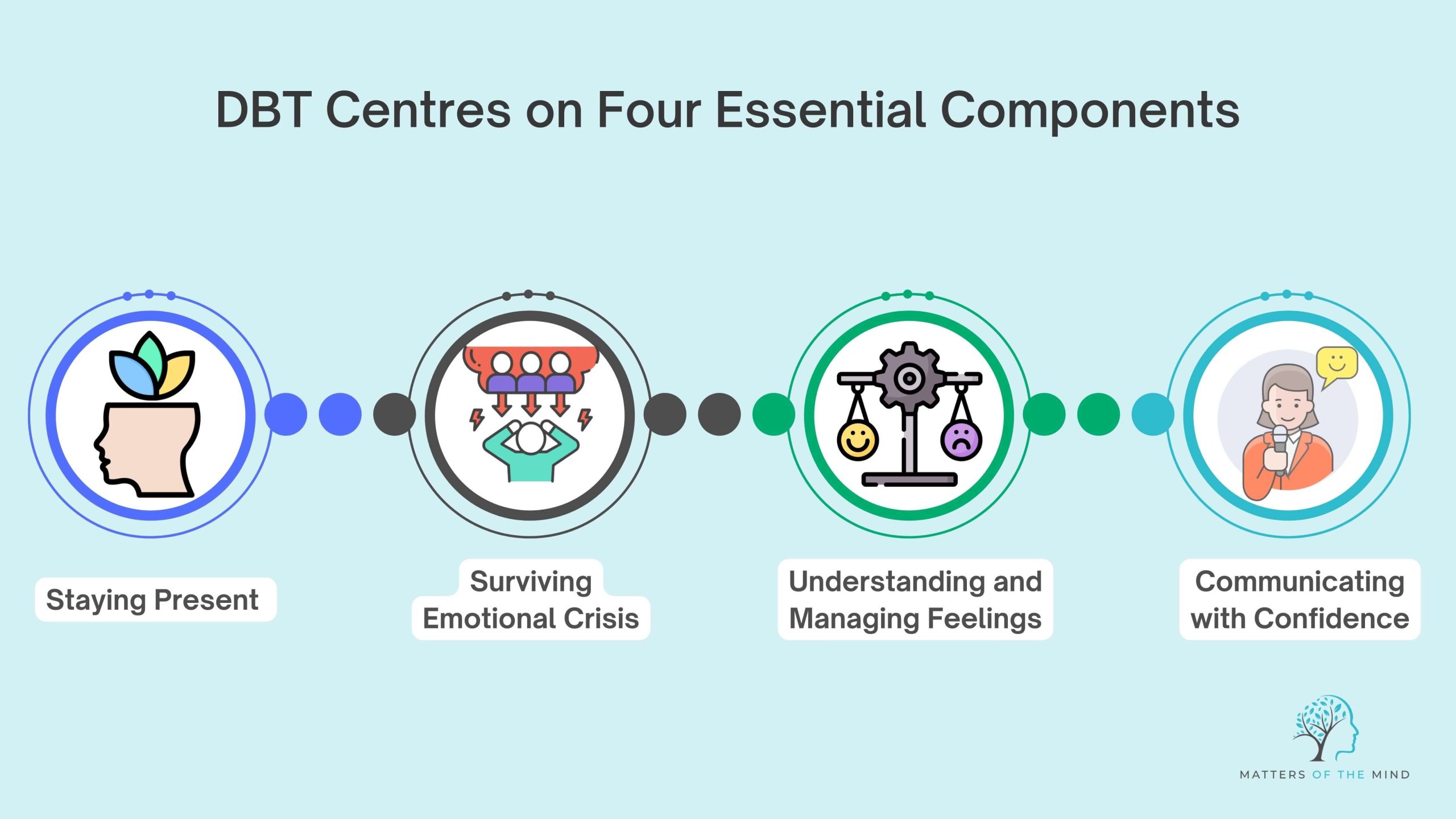
DBT Centres on Four Essential Components
DBT focuses on 4 key components

1. Mindfulness: Staying Present

Mindfulness helps individuals slow down, observe their thoughts and emotions without judgment, and stay anchored in the moment. For many, this becomes a foundation for clarity and emotional stability.

2. Distress Tolerance: Surviving Emotional Crisis

Instead of reacting impulsively during emotional distress, DBT teaches practical techniques to ride the wave safely. These tools help prevent harmful coping behaviours and provide healthier alternatives.

3. Emotional Regulation: Understanding and Managing Feelings

Many individuals dealing with intense emotions often describe their experiences as unpredictable and overpowering. DBT provides strategies to identify emotional patterns, reduce vulnerability, and cultivate long-term emotional balance.

4. Interpersonal Effectiveness: Communicating with Confidence

This focuses on building healthier relationships. Individuals need to assert their needs, set boundaries, and maintain self-respect, all without damaging important connections.

Why is DBT Especially Helpful for Borderline Personality Disorder?

One of the most researched applications of Dialectical Behaviour Therapy is for individuals living with Borderline Personality Disorder. People with this condition often experience intense emotions, fear of abandonment, difficulty maintaining relationships, and impulsive behaviour during high stress.

DBT addresses these challenges directly by providing structured skills that reduce emotional reactivity, support stability, and promote long-term resilience. Many individuals report feeling more in control, more connected, and better able to manage their day-to-day lives after adopting DBT skills.

Who Should Consider DBT Therapy?

While DBT was initially developed for borderline personality disorder, it can be used widely for a wide range of other experiences, such as:
  • Chronic stress
  • Anxiety
  • Depression
  • Trauma
  • Emotional burnout
  • Self-esteem challenges
  • Difficulty with emotional regulation
It is equally effective for teenagers managing emotional overwhelm and adults dealing with long-standing patterns that impact relationships or decision-making.

How DBT Creates Lasting Change

Here’s how DBT can create meaningful transformation:
How DBT Creates Lasting Change

1. Building awareness

When individuals become aware of emotional triggers and reactions, patterns that once felt uncontrollable become easier to understand.

2. Replacing reactivity with skillful responses

Practical skills empower individuals to pause, choose, and act with intention instead of react impulsively.

3. Strengthening self-compassion

Many people struggling with intense emotions also struggle with self-criticism. DBT gently challenges these patterns, helping individuals adopt a kinder inner voice.

4. Supporting relationship stability

Healthy communication, boundary-setting, and self-respect create deeper, safer, and more meaningful connections.

5. Encouraging long-term resilience

DBT is not a quick fix; it is a structured framework for long-lasting emotional wellbeing. With time, people build habits that stay with them long after sessions end.

Final Thoughts

Emotional healing is not a linear journey, it unfolds gradually, often in small yet meaningful steps. Dialectical Behaviour Therapy (DBT) offers a compassionate, structured path for anyone navigating emotional overwhelm, whether connected to borderline personality disorder or other difficulties. By learning to understand emotions rather than fight them, individuals can move toward a calmer, more grounded, and more empowered version of themselves.

Seek Support Through Matters of the Mind

If you or someone you care about is struggling with emotional intensity, recurring patterns, or relationship challenges, personalised, evidence-based guidance can make a profound difference. Dr Kavita Deepak-Knights, founder of Matters of the Mind in Windsor, Berkshire, offers supportive, research-driven sessions designed to help individuals navigate their emotional world with clarity and confidence.

If you feel ready to take the next step toward healing, you can reach out to Dr Kavita Deepak-Knights to begin your journey toward stability and wellbeing.

Dr. Kavita Deepak-Knights
About the Author

Dr Kavita Deepak-Knights linkdin icon

With over 20 years of clinical experience, Dr Kavita brings a trusted and expert approach to mental health care. As the founder of Matters of the Mind and an Oxford-trained psychologist, she specialises in evidence-based therapies, including CBT, ACT, DBT, and EMDR, offering personalised support to help individuals understand their challenges and enhance their overall well-being.