
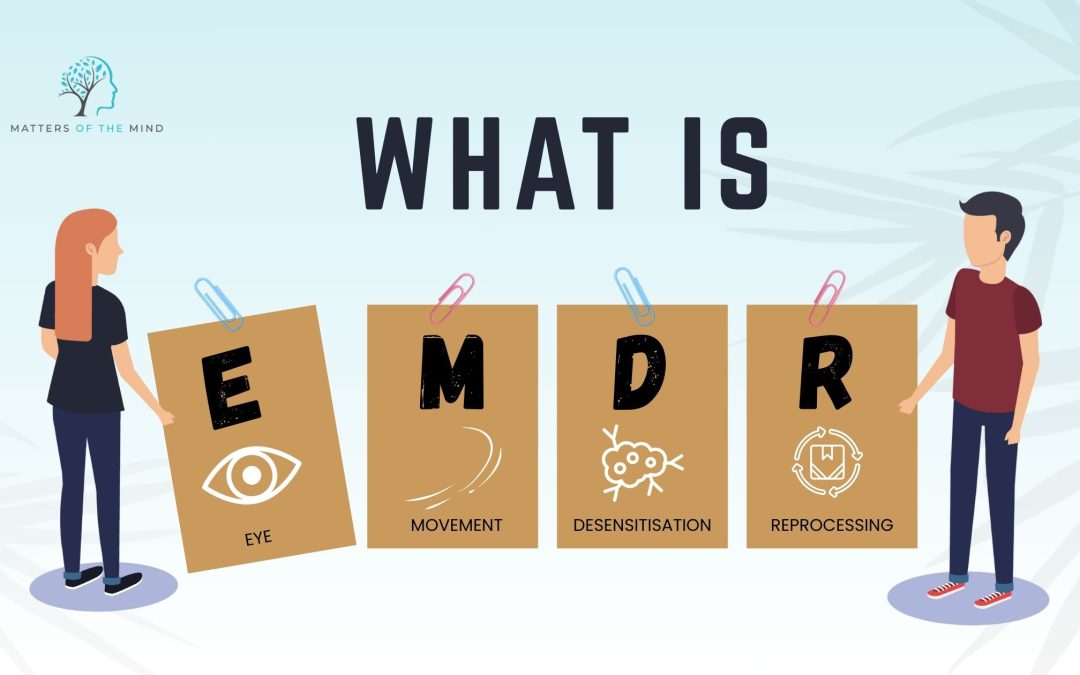
What is EMDR Therapy?
EMDR is a psychotherapy designed to help people heal from the distress associated with traumatic memories and difficult life experiences. Unlike traditional talk therapy, EMDR doesn’t require you to discuss your trauma in detail. Instead, it focuses on helping your brain process these memories so they no longer hold the emotional charge.
Mainly, this therapy is built on the understanding that our brains have an innate ability to heal from psychological trauma, and through EMDR, the unnecessary blocks can be removed to ensure a smooth healing process.
Science Behind EMDR: How Trauma Affects the Brain
Different Phases of EMDR Therapy
EMDR is a structured, evidence-based psychotherapy that follows a dedicated procedure. Here is a detailed description of these phases:
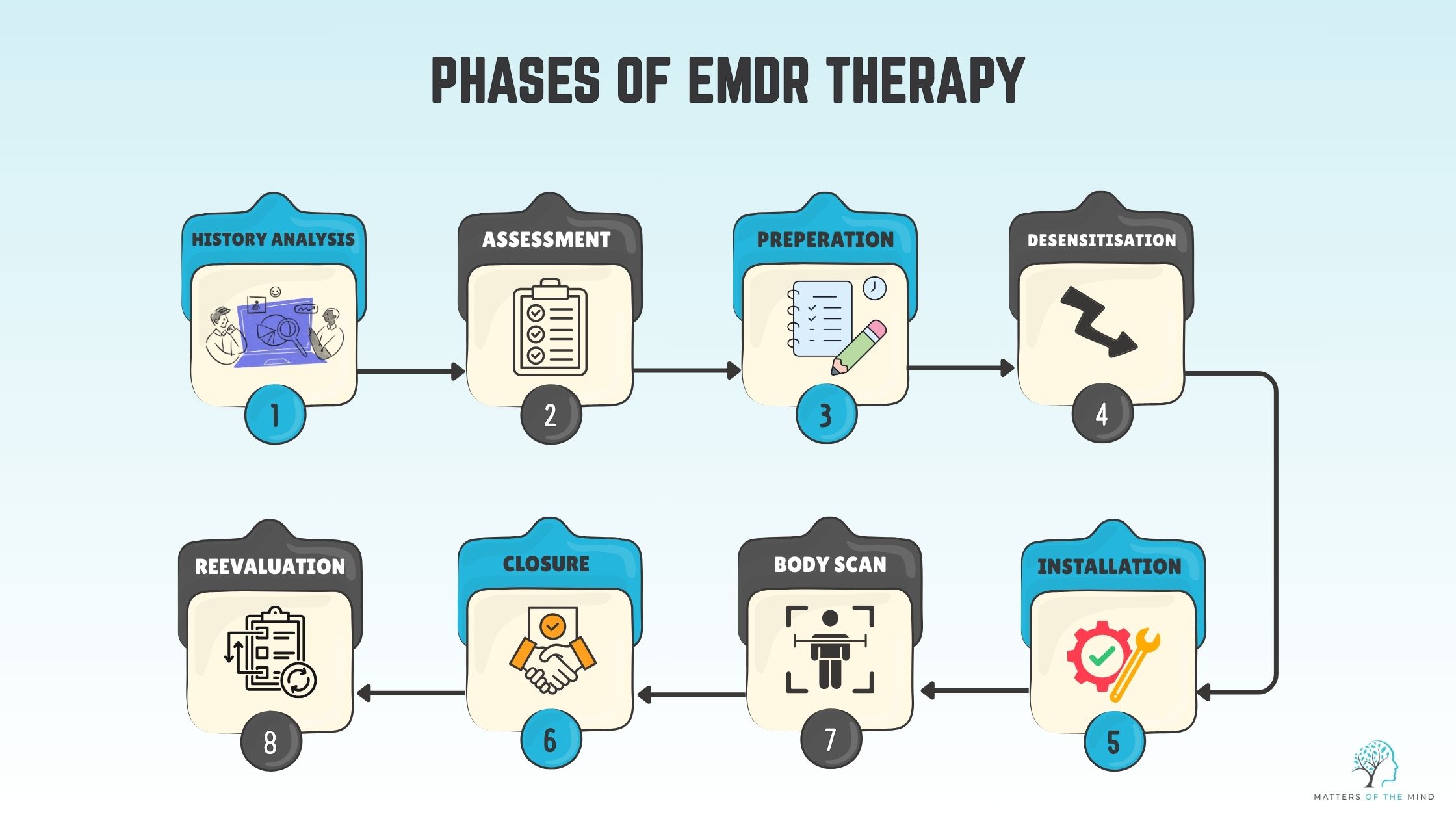
1.History analysis and treatment planning
It begins by conducting a comprehensive assessment of a person’s psychological history, current symptoms, and previous treatment experiences. This primarily targets memories, triggers, and negative belief systems to determine whether EMDR is effective.
5. Installation
At this stage, focus is on strengthening the positive cognition, helping the individuals integrate a more accurate and healthier belief related to memory.
2. Preparation
This step focuses on stabilising and regulating emotions. Individuals are taught grounding and self-soothing techniques to manage distress, ensuring they have adequate coping resources before trauma processing begins.
6. Body scan
It involves checking in with your body. Even after cognitive and emotional processing, residual tension still exists, and therefore, it is resolved to ensure the body no longer holds unresolved distress.
3. Assessment
A specific traumatic or distressing memory is selected. It identifies associated negative cognitions, emotional responses, and bodily sensations, along with more adaptive beliefs.
7. Closure
Each session concludes with stabilisation techniques to ensure emotional balance. This reinforces coping strategies so the individual leaves the session feeling grounded and safe.
4. Desensitisation
Through bilateral stimulation (eye movements, tactile taps, or auditory tones), the brain is guided to reprocess the memory. The emotional intensity linked to the experience gradually decreases as adaptive information processing occurs.
8. Reevaluation
Each subsequent session includes re-evaluation. It involves reviewing the progress you’ve made, positive changes you’re holding, and anything that needs attention.
Who Can Take EMDR Therapy?
EMDR therapy can benefit people who are struggling with the effects of distressing or traumatic experiences. It is commonly used for individuals who feel stuck in painful memories, emotions, or reactions that continue to affect their daily life.
It is specifically helpful for individuals experiencing.
- Trauma or post traumatic stress (PTSD)
- Anxiety or panic attacks
- Depression
- Childhood trauma
- Phobias or fears
- Grief or loss
- Low self-esteem or core negative belief
- Accidental stress
- Eating disorders
- Additional substance use
- Performance anxiety
Is EMDR Right For You?
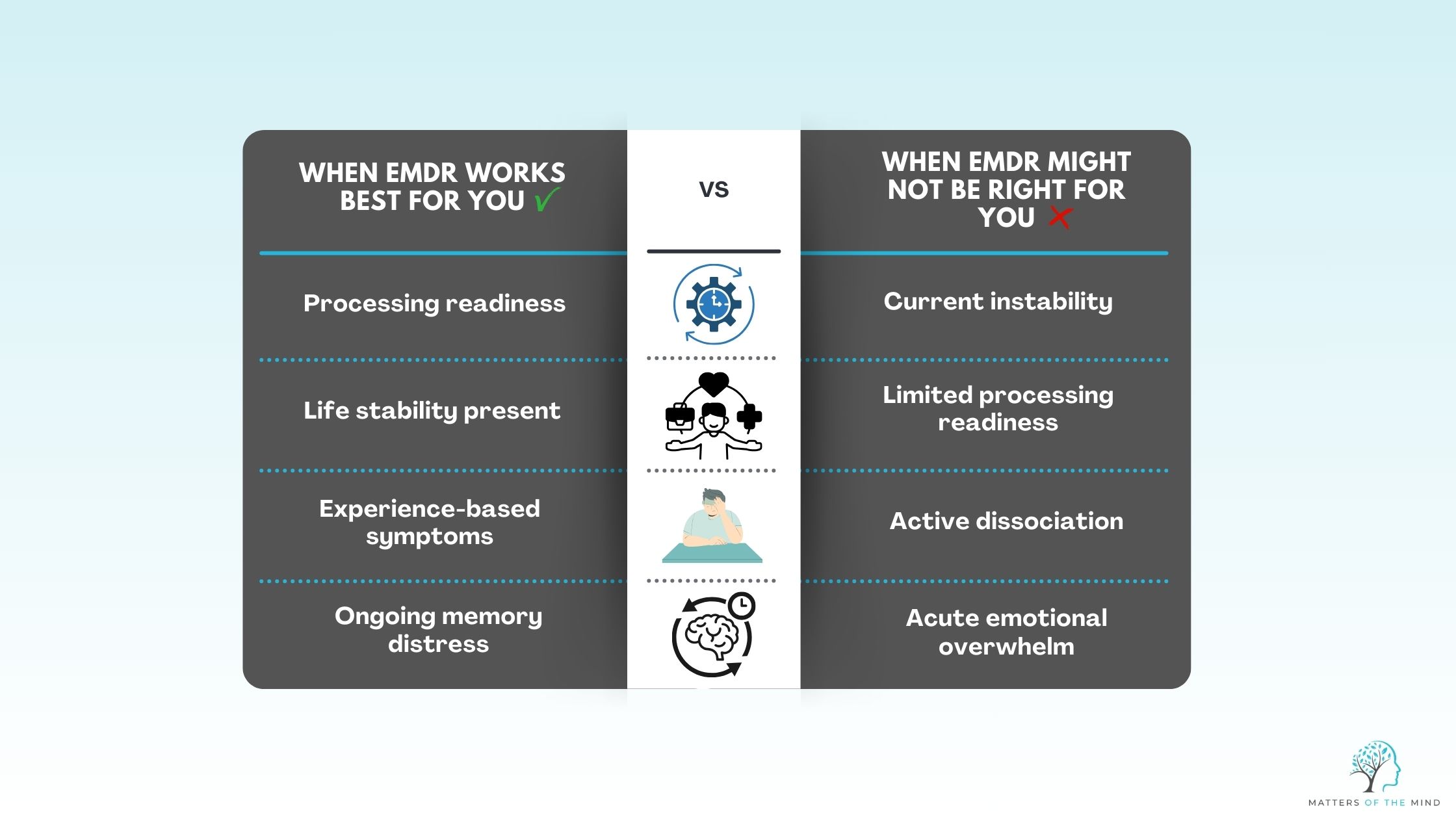
EMDR can be a powerful tool for healing, but it’s not the only path, and it may not be right for everyone at every time. It works best when an individual has some stability in life and is ready to engage with difficult memories.
EMDR is typically effective for conditions rooted in life experiences and memories. So the right therapeutic approach can work well in these cases when an individual is highly distressed and needs to get out of it.
A Forward Move
EMDR represents a compassionate, evidence-based approach to healing that honors the pain that you’ve experienced and your inherent capacity for resilience. This approach doesn’t erase what happened to you, but it can change how those experiences affect you today.
If you’re struggling with memories that won’t let you rest, emotions that seem inappropriate to present circumstances, EMDR can offer you a path forward that you’re seeking.
Dr Kavita Deepak-Knights, an experienced clinical psychologist, offers EMDR therapy that helps you process difficult experiences at your own pace and reconnect with a sense of calm and support. If you’re ready to take the next step towards healing, you can book a personalised consultation and begin your journey with guidance.
Frequently Asked Questions (FAQs)
1. Do I have to talk in detail about my trauma during EMDR
No. EMDR does not require you to describe your experiences in detail. The therapy focuses on how the memory is stored in the brain rather than repeatedly discussing what happened.
2. Is EMDR only for people with PTSD?
No. While EMDR is well-known for treating PTSD, it is also effective for difficulties linked to distressing life experiences that continue to influence emotions, thoughts, or behaviour.
3. How many EMDR sessions will I need?
The number of sessions varies depending on the individual, the nature of the experiences being processed, and current emotional stability. Some people notice change in a few sessions, while others may benefit from longer-term work.


