
An individual’s inner voice is somehow responsible for every action that he performs. Whether it’s making a meal choice or selecting the most entertaining activity, it’s the battle between our inner voices. It constantly shapes our habits and choices, leading to healthier or unhealthier lifestyles.
An eating disorder is one of the results of our habits. It is far more than a difficult relationship with food. It is a serious mental health condition that can affect thoughts, emotions, physical health, daily routines, and relationships. For many people, the struggle is not simply about eating too much or too little. It is about control, fear, self-warmth, distress, and coping emotions that may feel too heavy to carry.
Let’s discuss this concept in more detail and learn the signs, causes, and impact of eating disorders on an individual.
What is an eating disorder?
An eating disorder is a mental health condition that affects an individual’s relationship with food and how they imagine themselves (body image). It includes a distorted pattern of eating and related thoughts that can affect a person’s overall quality of life. It may involve restriction, bingeing, obsessive concern about body shape, fear, or strict eating rules.
These conditions are not a matter of willpower; they’re complex, often connected to emotional pain, low self-esteem, anxiety, trauma, and perfectionism. This condition depends on person to person, thus affecting it differently.
Common Signs Of Eating Disorder
The signs of an eating disorder are not always obvious. In many cases, it seems different, but it commonly includes:
-
- Skipping meals or making repeated excuses to avoid eating
- Becoming highly focused on body appearance, calories, or weight
- Following a strict diet plan
- Feeling intense guilt, shame, or anxiety after eating
- Rapid weight loss or changes in weight
- Excessive exercise or feeling unable to rest
- Mood changes, irritability, or fatigue
- Pulling away from social gatherings
These signs vary from person to person, but taking care of them is what’s more important.
What Causes An Eating Disorder?
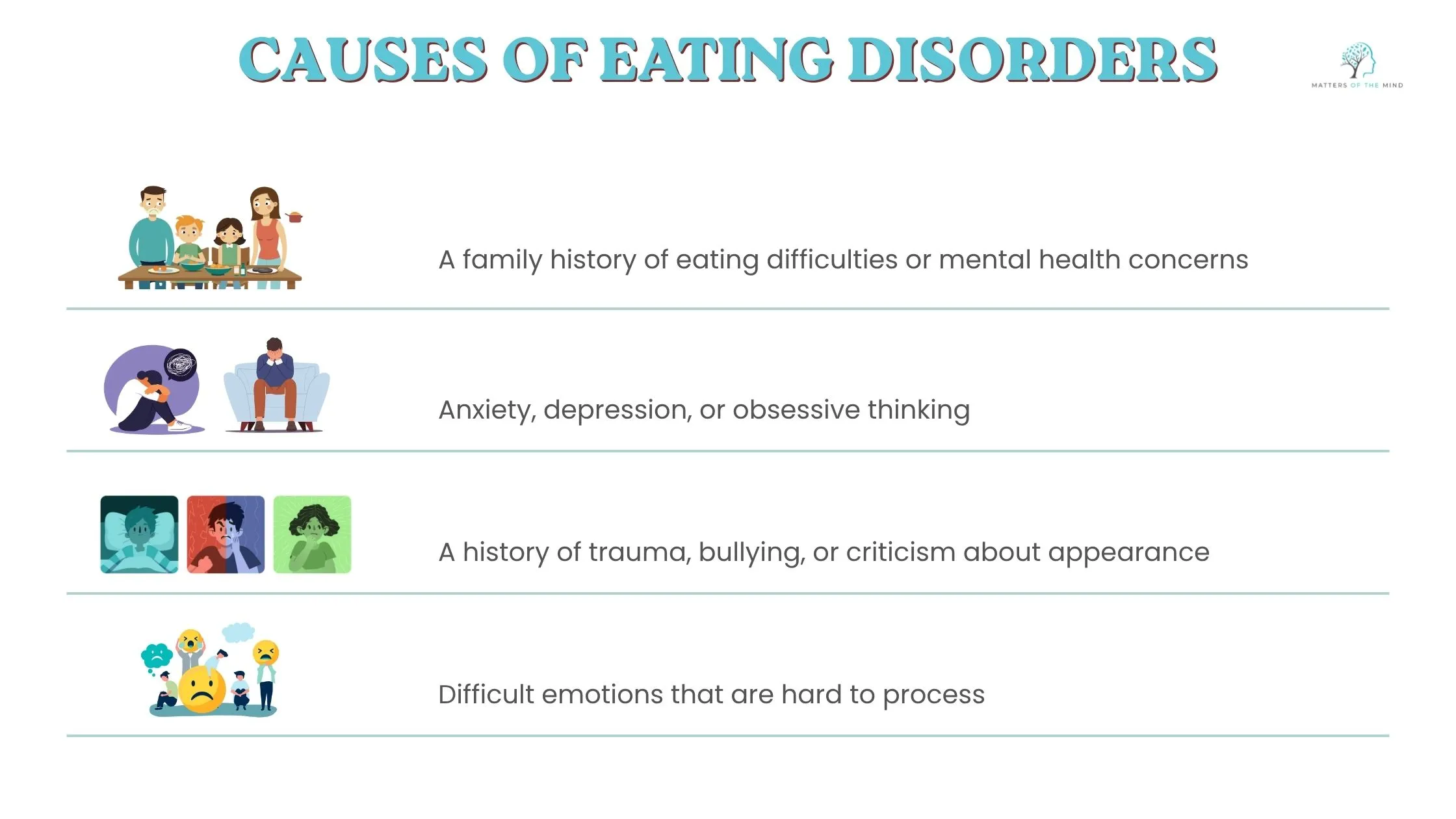
There is no one single cause behind an eating disorder. These include factors such as biological, psychological, social, and environmental influences.
A person may be more vulnerable if they have:
-
- A family history of eating difficulties or mental health concerns
- Anxiety, depression, or obsessive thinking
- A history of trauma, bullying, or criticism about appearance
- Difficult emotions that are hard to process
For some individuals, food becomes a way to manage emotions. Restriction may create a temporary sense of control. Bingeing may bring brief comfort. Purging may feel like a forceful stress. These behaviours can be deeply ingrained and become difficult when a person actually wants to stop.
Types of Eating Disorder
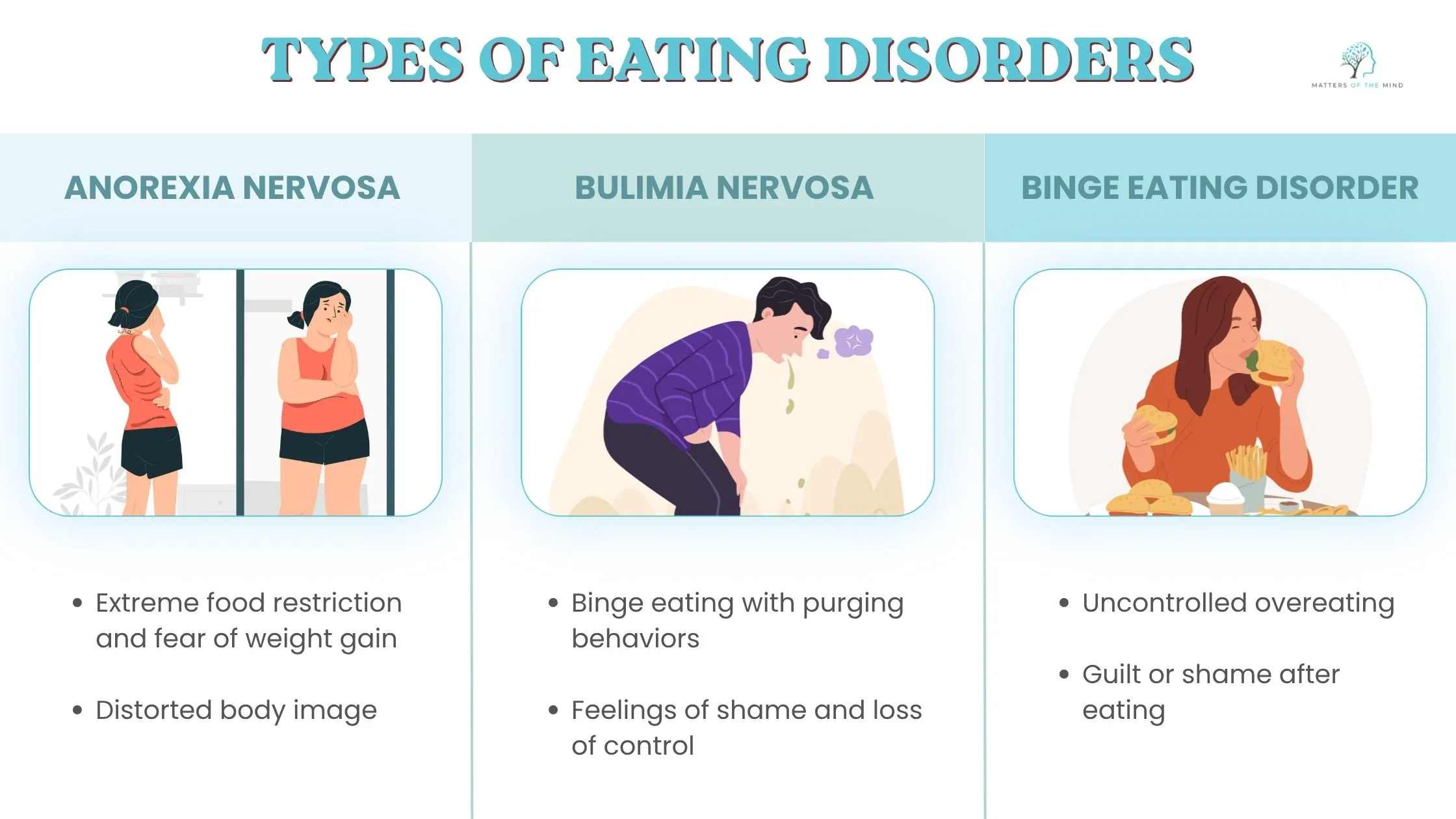
Below are several types of disorders, and each can affect the mind and body in several ways.
1. Anorexia nervosa
Anorexia nervosa eating disorders are often marked by severe food restriction, an intense fear of gaining weight, and a distorted body image. A person may see themselves as larger than they are, even when their health is already at risk. They may feel compelled to follow strict rules around food and may experience anxiety or distress when these rules are challenged.
2. Bulimia nervosa
Bulimia nervosa involves cycles of binge eating followed by compensatory behaviours such as vomiting, using laxatives, fasting, or excessive exercise. The person may be trapped in feelings of shame, secrecy, and loss of control. Because weight may not change dramatically, the condition can remain hidden for longer than people expect.
3. Binge eating disorder
Binge eating disorder involves eating food in a short amount of time. There is no control over eating. During a binge, people may eat food faster or eat more than planned. Even when not hungry, eating may continue long past feeling uncomfortable. After a binge, people feel a great deal of guilt, disgust, or shame.
Impact of Eating Disorder
An eating disorder affects an individual both emotionally and physically that affects overall well-being.
The emotional impact
The emotional burden of an eating disorder can be stressful. Many individuals feel trapped inside their own minds. Food may dominate their thoughts right from the moment they wake up. Meals may become a source of panic rather than nourishment. Social situations may feel exhausting or frightening. Over time, this mental stress results in increased anxiety and mood fluctuations. In this whole process, the inner conflict can be exhausting.
The physical impact
Eating disorders impact the physical body, too. Nutrition affects every system of the body, whether it’s energy levels, hormonal balance, heart function, or brain health. Without support, these scenarios become even worse and more dangerous. It includes dizziness, weakness, fatigue, bone weakening, poor concentration, and memory problems.
Final Thoughts
An eating disorder can be a serious issue if it is neglected for a long time. It is important to seek help if eating habits are causing distress, physical symptoms, or changes in mood, sleep, or social life. Recovery is possible, though it often takes time. With the right support, healing can begin to feel possible again. If you or someone you know is concerned, this timely support can make a difference.
Dr Kavita Deepak-Knights is a trained mental health psychologist who offers thoughtful and personalised support through Matters of the Mind. Her approach focuses on creating a calm, non-judgmental environment where individuals can explore their relationship with emotions.
Book your personalised consultation today and take a first step towards mental well-being.
Ready to prioritise your mental health?
Connect with Dr Kavita Deepak-Knights to explore personalised care and navigate mental health challenges.
Frequently Asked Questions (FAQs)
1. What are the early signs of an eating disorder?
Early signs may include skipping meals, becoming overly focused on weight or calories, following strict diets, mood changes, withdrawing from social situations, and feeling guilt or anxiety around food.
2. How do eating disorders affect emotional well-being?
They can lead to ongoing stress, anxiety, low mood, and a constant preoccupation with food and body image, which may make everyday life feel overwhelming.
3. What physical effects can eating disorders have?
Physical effects may include fatigue, dizziness, poor concentration, hormonal imbalance, weakened bones and other health concerns if left unaddressed.
4. Where can I get help for an eating disorder in Windsor, Berkshire?
Support is available through qualified clinical psychologists offering personalised therapy. Seeking help from an experienced practitioner can provide a structured and supportive path towards recovery.


