
Have you been in a situation where you wake up, go through your day, finish your work, and indicate everything looks normal on the outside, but feel something off inside?
In this scenario, you’re not exactly sad, not anxious, but just blank. The things that used to make you smile don’t quite feel the same way anymore. Conversations might be distant; moments that should feel emotional pass by quietly, with little reaction.
This is the state of millions of people, where they experience emotional numbness and often deal with too many emotions to process.
In this blog, we’ll discuss what exactly emotional numbness is, its signs, causes, and how an individual can get better support at this.
What is Emotional Numbness?
Emotional numbness is a state of being in which you’re not feeling or expressing emotions. In other words, it is a reduced ability to feel, recognize, or respond to emotions in a natural way. Emotional numbness is not a personality trait or lack of empathy; it is often a proactive response. When emotions become intense due to stress, trauma, or prolonged mental strain, the mind may choose to quiet time as a way to cope.
Symptoms of Emotional Numbness
The symptoms mainly vary from one individual to another, but it often includes a sense of emotional disconnection from both yourself and others. Common symptoms are:
- Feeling emotionally flat or neutral most of the time
- Difficulty experiencing joy, sadness, or excitement
- Reduced emotional reactions to events that normally affect you
- Feeling detached in relationships
- Struggling to identify or express what you feel
- Losing interest in activities you once enjoyed
- A sense of being present physically, not emotionally
Cause of Emotional Numbness
Below are the common causes of emotional numbness.
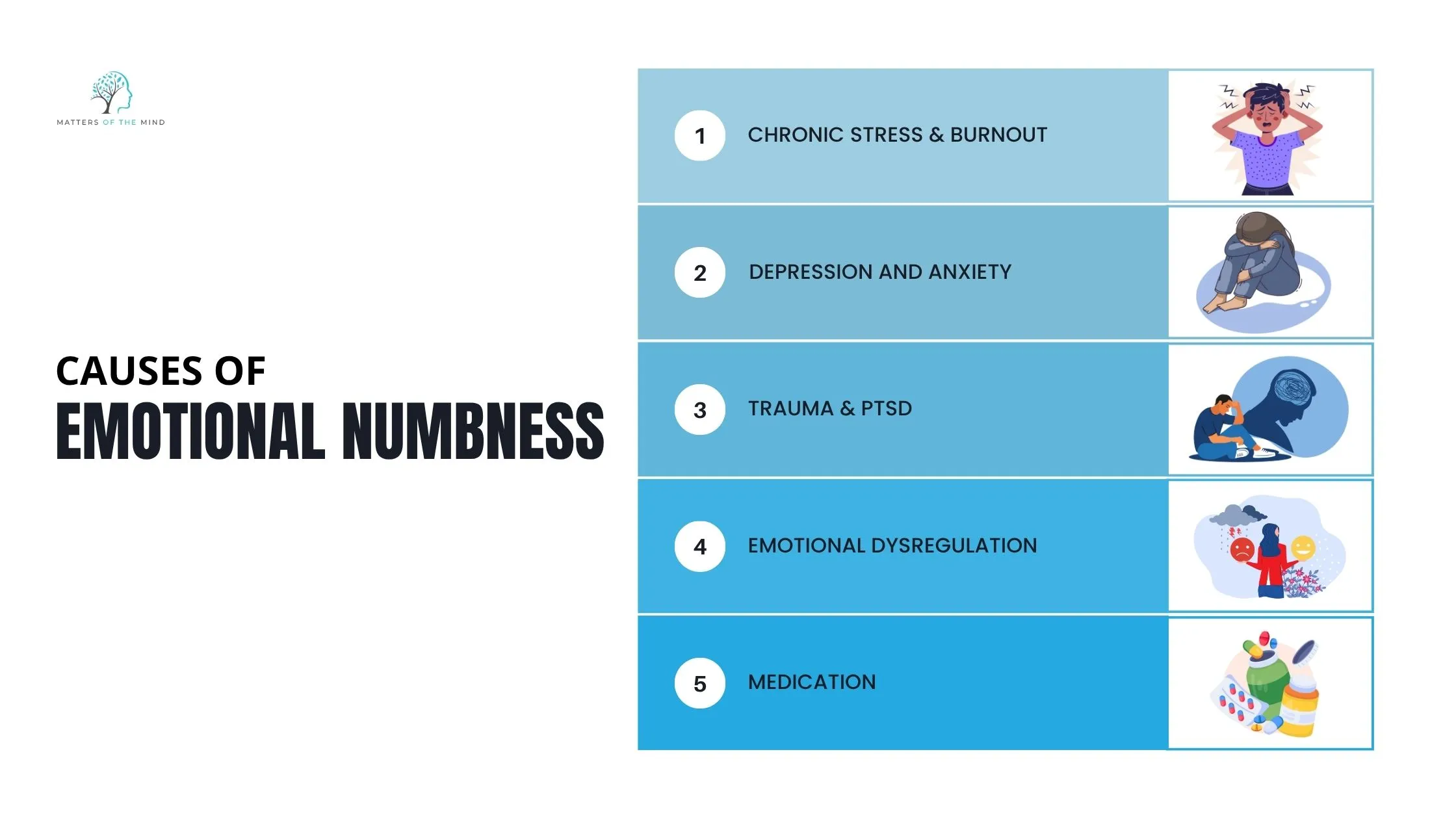
1. Chronic stress and burnout
When the mind has been under pressure for too long, it may begin to shut down emotionally to conserve energy. Over time, this can lead to emotional fatigue. Instead of feeling everything intensely, the mind begins to dampen emotional responses as a way to conserve energy. It’s similar to how the body shuts down after physical exhaustion, except here it’s happening emotionally. In the whole process, you don’t feel much stress anymore, but you also don’t feel much of anything.
2. Depression and anxiety
While depression is associated with sadness, many people experience it as emptiness rather than heaviness. There can be a quiet disconnection from emotions where even things that once mattered started to feel distant or meaningless. Similarly, with anxiety, when the mind is constantly in a state of alertness or worry, it may eventually go into a kind of emotional shutdown to escape the ongoing tension.
3. Trauma and PTSD
After a deeply distressing or overwhelming experience, the nervous system may struggle to return to a sense of safety. In such situations, emotional numbness acts as a psychological buffer. Instead of re-experiencing intense fear, pain, or vulnerability, the mind creates a distance from emotions. This is the reason why people who have gone through trauma describe feeling disconnected.
4. Emotional dysregulation
Numbness can be a part of emotional dysregulation and is often referred to as a form of dissociation, depersonalization, which can occur with stress, PTSD, borderline personality disorder, and other conditions.
5. Medication
Feeling emotionally numb can be a side effect of excessive medication taken for anxiety and depression. If you’re taking antidepressants or feeling emotionally numb, it’s essential to work closely with your doctor. They consider this carefully and adjust the dosage accordingly or change the medication if necessary.
Emotional numbness is not the absence of emotion; it’s a way of managing emotional overload. Understanding this can shift the experience from frustrating or confusing to something that begins to make sense.
How Right Support Can Help
The first step in addressing emotional numbness is understanding what may be contributing to it. Professional support can help you gently explore stress or burnout, unresolved emotional experiences, patterns linked to anxiety or depression, and the role of lifestyle or medication.
Therapeutic approaches such as talk therapy, trauma-focused therapies, or mindfulness-based interventions can help you gradually connect with your emotional experience in a safe and manageable way.
If you or someone close to you is experiencing emotional numbness, working with a trained professional can make a meaningful difference. Dr Kavita Deepak Knights, based in Windsor, Berkshire, offers a personalised approach, tailored to your unique emotional needs. Through matters of the mind, she supports individuals in understanding patterns like emotional disconnection, helping them move forward with clarity and balance.
Get the Right Help
If emotional numbness is difficult to manage, professional support can help you understand your emotions and move forward with clarity.
Final Thoughts
Emotional numbness can feel confusing, especially when you can’t quite explain what’s wrong, but you know something doesn’t feel right. It’s important to remember that this experience is not a failure or flow; it’s a way of protecting you when something feels difficult to process.
With the right support, awareness, and patience, it’s possible to slowly reconnect with your emotions and experiences and sustain a better mental well-being.
Frequently Asked Questions (FAQs)
1. How long does emotional numbness usually last?
The duration can vary from person to person. For some, it may last a short period during times of stress, while for others it can continue for longer. With the right support and understanding of underlying causes, it can gradually improve over time.
2. Can emotional numbness go away on its own?
In some cases, emotional numbness may ease as stress levels reduce. However, if it continues or begins to affect daily life, seeking professional support can help address the underlying causes and support recovery more effectively.
3. What is the difference between emotional numbness and feeling sad?
Sadness is an emotion that can be recognised and expressed, whereas emotional numbness involves a reduced ability to feel emotions altogether. People experiencing numbness often describe feeling empty or disconnected rather than upset.
4. How can therapy help with emotional numbness?
Therapy provides a safe and supportive space to understand what may be contributing to emotional disconnection. It can help individuals gradually reconnect with their emotions, develop coping strategies, and address underlying stress, trauma, or mental health concerns.
5. When should I seek help for emotional numbness?
It may be helpful to seek support if emotional numbness persists, affects relationships or daily functioning, or feels difficult to manage on your own. Early support can make it easier to understand and work through these experiences.


