
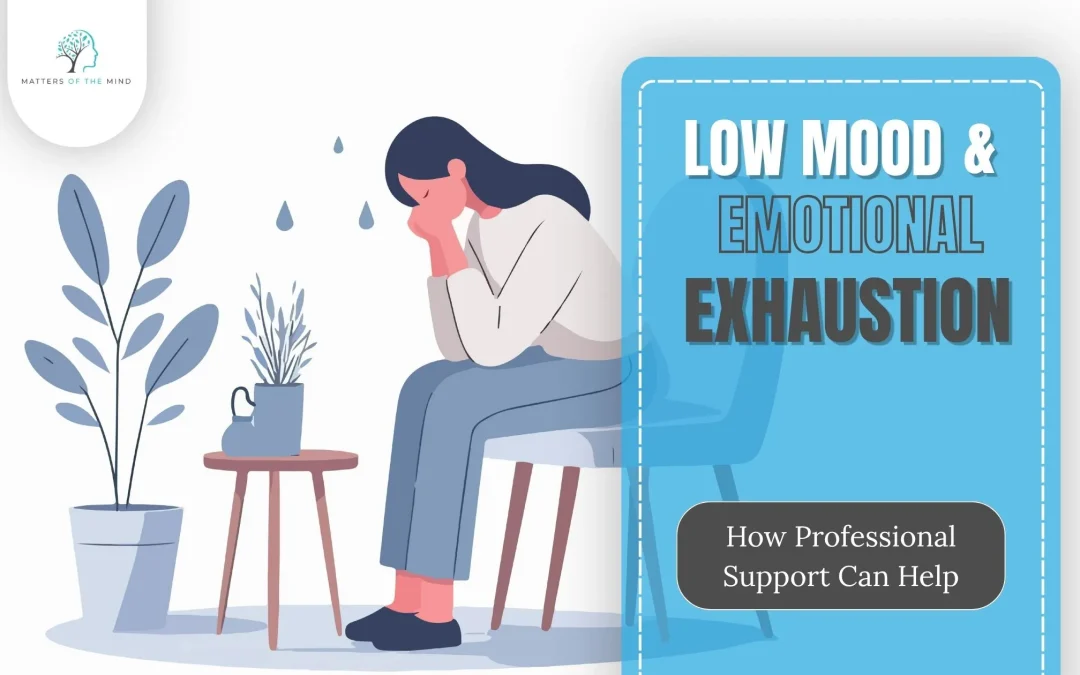
There are some days when it feels like taking a day off and relaxing all day. But there is a difference between taking a day off and feeling stuck in a deeper emotional dump. That emotional dump considerably includes low mood & emotional exhaustion.
Low mood can show up as sadness, irritability, anxiety, tiredness, low confidence, or poor sleep. For many individuals, it lifts after a few days or weeks, but when it stays, it starts affecting daily life, or comes with a lot of disinterest and hopelessness.
Emotional exhaustion is what people feel when they are mentally and emotionally used up. In many cases, it becomes a hard-earned burnout that does not get sorted easily. According to the World Health Organization (WHO), burnout is classified as an occupational phenomenon rather than a medical condition.
This can leave a person physically and mentally exhausted, irritable, unmotivated, and struggling with sleep or physical symptoms.
Let’s understand the exact difference between low mood and emotional exhaustion, how it affects, and how professional support can help.
Low Mood
There is rarely a single reason behind a low mood. More often, it develops as a response to a combination of emotional, physical and environmental factors. Understanding the causes of low mood can help bring clarity and reduce the sense of confusion that many individuals experience.
For some, low mood can be linked to specific events such as loss, relationship difficulties, work-related stress, financial concerns, and health issues. These experiences create emotional strain that gradually affects how a person feels day to day.
There are times when low mood is influenced by internal factors such as negative thought patterns, self-criticism, or feeling stuck in unhelpful cycles of thinking. These patterns can make it harder to regain a sense of balance without support.
Start Feeling Like Yourself Again
Take the first step today!
Book a confidential session with Dr Kavita Deepak-Knights in Windsor, Berkshire, and begin restoring your emotional balance.
Emotional Exhaustion
Emotional exhaustion often builds gradually, making it really harder to recognise. It is not just being tired, but a deeper sense of being mentally and emotionally drained, where even small tasks can begin to feel overwhelming.
The signs of emotional exhaustion can show up in different ways. Many people notice a persistent lack of energy, even after rest, along with reduced ability to cope with daily demands.
Concentration can become more difficult, and decision-making may feel heavier than usual. Some individuals feel detached from their work, relationships, or even from their own emotions. Activities that once felt enjoyable may start to feel like obligations.
What Causes Emotional Exhaustion and Low Mood?
Both low mood and emotional exhaustion rarely come from a single source. Moreover, they usually develop over time as a response to ongoing pressure, unmet emotional needs, or prolonged stress without enough recovery.
1. Prolonged stress without enough rest
One of the most common contributors is chronic stress, whether from work, relationships, or daily responsibilities. When the mind is constantly in doing or coping mode without time to pause, it gradually leads to emotional exhaustion and over time, it can lower mood.
2. Emotional overload
Holding in emotions, suppressing feelings, or constantly managing difficult emotions without expressing or processing. This emotional buildup often leads to low mood and a sense of inner fatigue.
3. Lack of balance and boundaries
When there is no separation between personal and professional life, or when someone feels unable to say no, it can create a continuous cycle of overcommitment. This lack of balance reduces recovery time, making emotional exhaustion more likely.
4. Poor sleep and physical fatigue
Sleep and mental health are closely related. Ongoing sleep disturbances affect emotional regulation, making a person more vulnerable to irritability, low motivation, or low mood.
5. Social disconnection
Humans are wired for connection. Feeling isolated, unsupported, or misunderstood deepens feelings of sadness and emptiness. Over time, this can contribute to both emotional exhaustion and persistent low mood.
6. Negative thinking patterns
Patterns such as self-criticism, overthinking, or focusing on worst-case scenarios can reinforce emotional strain. These internal patterns often sustain low mood and make it harder to feel emotionally rested.
Recognising the causes of low mood and emotional exhaustion is often the first step towards addressing them, whether through small lifestyle shifts, stronger boundaries, or seeking therapy for emotional well-being.
How Professional Support Can Help?
When low mood and emotional exhaustion begin to affect daily life, professional support offers more than reassurance; it provides structure, clarity, and a steady path toward recovery. It creates a space where experiences can be understood without judgment and addressed with care.
Professional support helps in identifying and addressing the signs of emotional exhaustion early. Rather than continuing in a cycle of pushing through fatigue, individuals can learn to recognise limits, restore balance, and rebuild emotional capacity.
If you recognise these patterns in yourself or someone close to you, speaking to a professional can be a meaningful first step. Dr Kavita Deepak-Knights offers a safe and supportive space to understand what you’re going through and begin rebuilding emotional balance. With a thoughtful approach, you can identify the underlying cause of low mood, address signs of emotional exhaustion, and develop practical strategies that support long-term therapy for emotional well-being.
Reaching out to the right person at the right time can definitely help you out. Book your personalised session today.
Frequently Asked Questions (FAQs)
1. Is low mood the same as depression?
Not always. Low mood can be temporary, but if it lasts for weeks and affects daily life, it may be linked to depression.
2. What does emotional exhaustion feel like?
It often feels like constant mental fatigue, low energy, and difficulty coping, even with small tasks.
3. Can emotional exhaustion go away on its own?
Sometimes rest helps, but if it continues, professional support can help address the underlying causes.
4. Is it normal to feel emotionally drained without a clear reason?
Yes, it can happen. Ongoing stress, internal pressure, or unmet emotional needs can build up over time.
5. What kind of therapy helps with low mood?
Approaches like Cognitive Behavioural Therapy (CBT) and other evidence-based therapies can help you understand patterns and improve emotional wellbeing.


