
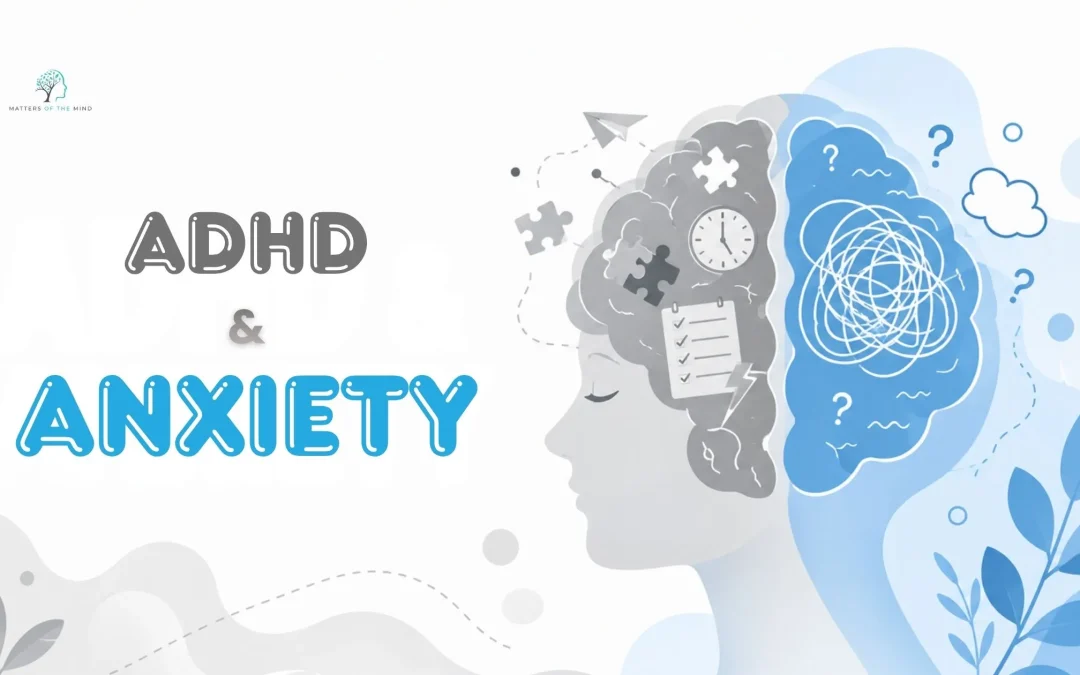
It is easy to get stuck and confuse ADHD and anxiety because both can affect focus, energy, restlessness, sleep, and day-to-day functioning. An individual may appear distracted, forgetful, or mentally switched on all the time, and it is not always clear what is driving those experiences.
The confusion becomes complex and leads to emotional & attention related challenges. An individual may struggle with concentration because their mind is racing with worry. Another may feel anxious because they are constantly missing deadlines, misplacing things, and feeling behind due to untreated ADHD. In more complex cases, both conditions are present simultaneously, making the overall scenario more challenging.
This is why understanding the difference between ADHD and anxiety matters. When signs are fully understood, the support may not fully address the real issue. Let’s discuss in the blog the actual difference between ADHD and anxiety, symptoms, and how both can be treated.
A Closer Perspective on ADHD and Anxiety
The clearest way to understand the difference between ADHD and anxiety is to look at what’s happening at the core. With ADHD, the central challenge is often attention regulation. The brain finds it hard to recognise information, maintain focus, manage time, or hold several steps in mind at once. The person may genuinely want to complete a task, but still struggles to start and finish it.
With anxiety, the main challenge is often worry. The person may be able to focus at times, but their mind becomes crowded with thoughts such as what-ifs, fear of making mistakes, and concern about consequences. Concentration is disrupted because of a lack of mental clarity.
In simple terms
ADHD can make it hard to focus because the brain is easily pulled in many directions.
Anxiety can make it hard to focus because the mind is preoccupied with fear or uncertainty.
Common Symptoms of Anxiety & ADHD
| ADHD | Anxiety |
|---|---|
| Difficulty sustaining attention | Persistent worry |
| Forgetfulness in daily tasks | Feeling tense |
| Poor time management | Restlessness |
| Procrastination | Racing thoughts |
| Feeling physically and mentally restless | Difficulty sleeping |
| Talking excessively | Irritability |
| Losing things frequently | Avoidance of situations that feel overwhelming |
The Overlap of ADHD & Anxiety
When anxiety and ADHD coexist, it makes it difficult to diagnose. For example, a child or adult with untreated ADHD may feel anxious after repeated experiences of missing deadlines, losing items, or being corrected by others. In this case, anxiety may be developed as a reaction to day-to-day struggles caused by ADHD.
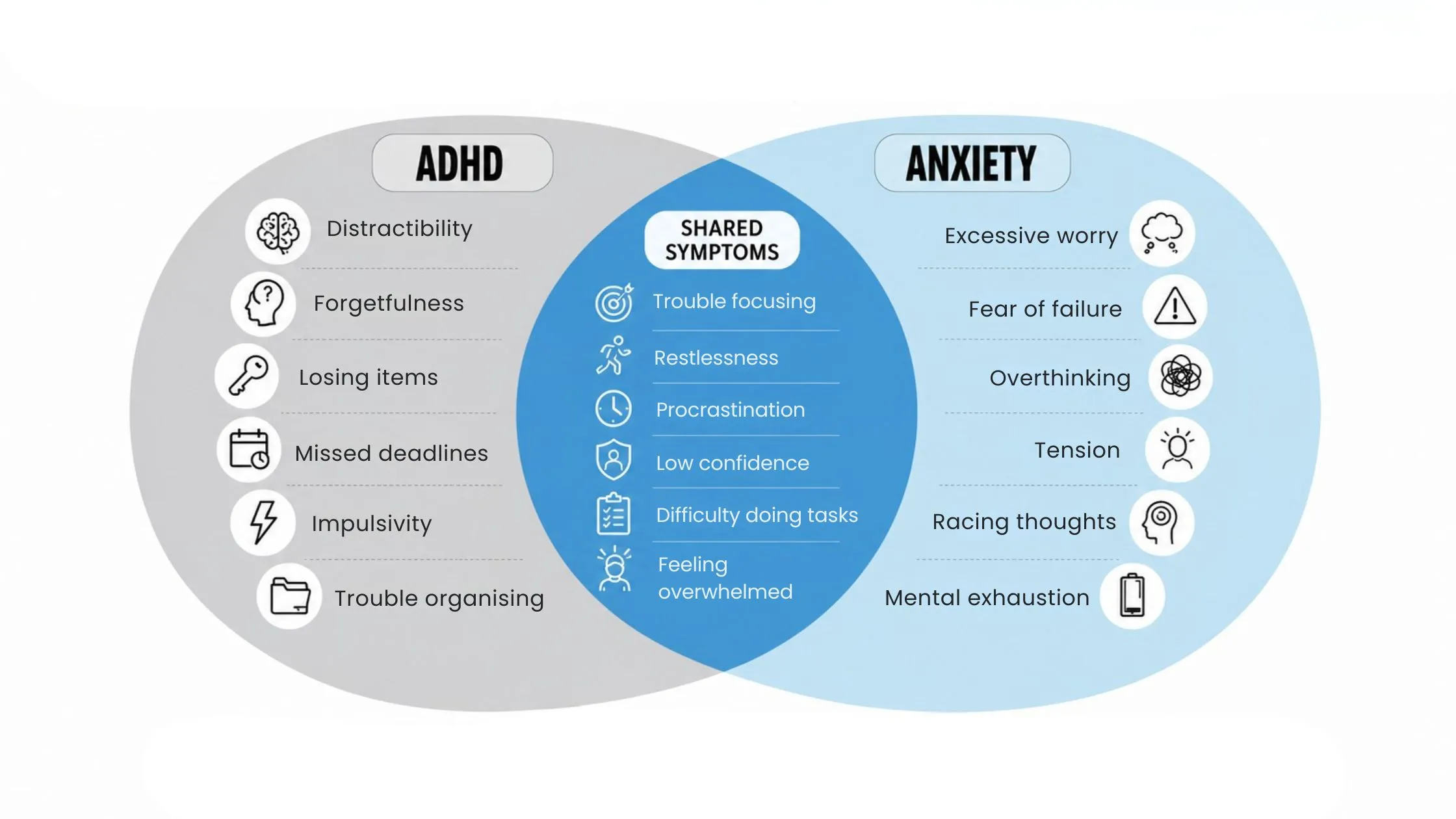
In other cases, ADHD may come first. A person who constantly worries may appear distracted, mentally unclear, and unable to complete tasks. The overall attention suffers because the mind is busy managing fear.
When both are present together, someone may experience:
-
- Trouble focusing and frequent worry
- Restlessness and tension
- Procrastination and fear of failure
- Forgetfulness and overthinking
- Low confidence
This is why a careful assessment matters, and treating only one part may leave the person struggling.
When to Seek Professional Help
If you or someone you know is struggling with ADHD or anxiety, it is necessary to speak to a mental health professional. Here are some active signs to look out for:
Lack of focus affecting work, studies, or relationships

Constant feeling of worry
Restlessness
Difficulty in managing emotions
A proper assessment can help clarify whether the pattern points towards ADHD, anxiety, or both. Many people feel a sense of validation simply from finally understanding why they have been struggling.
Dr Kavita Deepak Knights offers compassionate psychological support through Matters of the Mind, helping individuals navigate challenges related to attention difficulties, anxiety, emotional well-being, improve daily functioning, and build healthier coping strategies over time.
With therapeutic approaches such as CBT, mindfulness practices, or more, an individual can improve their overall mental well-being.
Book a confidential session today and take the first step toward greater clarity, balance, and emotional well-being.
Start Feeling Like Yourself Again
Take the first step today!
Book a confidential session with Dr Kavita Deepak-Knights in Windsor, Berkshire, and begin restoring your emotional balance.
Frequently Asked Questions (FAQs)
1. What is the difference between ADHD and anxiety?
ADHD mainly affects attention, organisation, and impulsivity, while anxiety is driven by excessive worry, fear, and overthinking.
2. Can ADHD and anxiety happen together?
Yes, many people experience both conditions at the same time, which can make symptoms more complex.
3. Why do ADHD and anxiety look similar?
Both can cause restlessness, poor concentration, procrastination, sleep difficulties, and feeling overwhelmed.
4. What are common signs of ADHD in adults?
Common signs include distractibility, forgetfulness, poor time management, impulsivity, and difficulty staying organised.
5. When should I seek professional support?
If symptoms are affecting work, studies, relationships, or emotional wellbeing, professional support may help.
6. Can therapy help with ADHD and anxiety?
Yes, therapies such as CBT and mindfulness-based approaches can help manage symptoms and improve daily functioning.


