
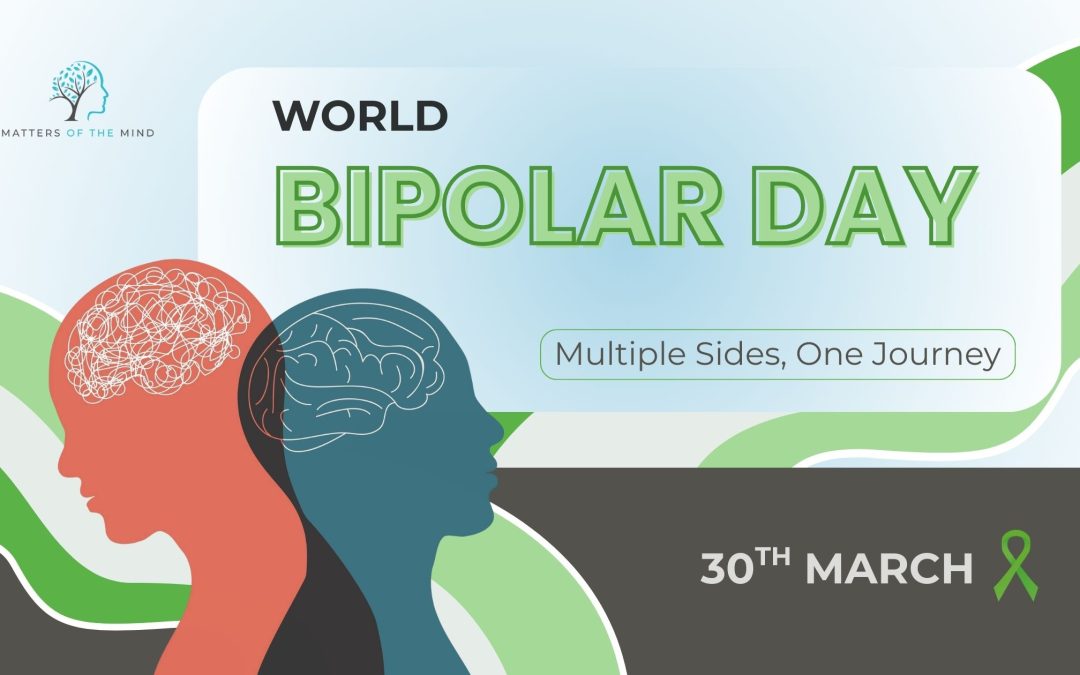
World bipolar day holds an opportunity to educate, support, and empower individuals living with bipolar disorder. Let’s delve deeper into this day and gain a better understanding of it.
What is Bipolar Disorder?
DBT focuses on 4 key components

1. Bipolar I Disorder
Characterised by one full manic episode, which may be severe enough to require hospitalisation. Depressive episodes often occur but are not required for diagnosis.
2. Bipolar II Disorder
Involves at least one hypomanic condition (a milder form of mania) and one major depressive episode.
3. Cyclothymic Disorder
A chronic pattern of fluctuating mild hypomanic and depressive symptoms lasting at least 2 years, without meeting the full criteria for mania or major depression.
NOTE:
Bipolar disorder is not just moodiness or typical emotional ups and downs. The mood changes are intense, last for days to weeks (or longer), and significantly affect daily functioning.
Understanding the Real Scenario of Bipolar Disorder
Bipolar disorder affects approximately 46 million people worldwide, yet the gap between prevalence and public understanding remains alarmingly wide. This neurobiological condition is ideated through significant mood fluctuations that extend far beyond ordinary emotional experiences. The shift between manic or hypomanic episodes can significantly impact relationships, trajectories, and overall quality of life.
When we highlight the realities of this diagnosis, its biological underpinnings, and treatment options, we create a pathway towards early intervention and better outcomes.
However, its stigma remains one of the common barriers to recovery. Individuals living with bipolar disorder often face misconceptions that make them unpredictable, incapable, or defined solely by their diagnosis. These narratives can delay help-seeking behaviour, while silently eroding self-worth and social connections.
Why World Bipolar Day 2026 Holds Importance?
World bipolar day 2026 carries a significant importance in our global mental landscape that extends beyond just annual observance. Here’s why this holds utmost importance:
1. Post-pandemic mental health crisis
COVID 19 pandemic has created challenges for mental health systems worldwide. According to a study conducted by the WHO, more than 1 billion people are living with a type of mental health disorder, such as anxiety or depression. World bipolar day provides a platform to address these issues and take preventive measures accordingly.
2. Breaking the stigma
Despite endless awareness about mental health, many individuals dealing with bipolar disorder face judgment, discrimination, and negligence. This day aims to challenge these misconceptions that bipolar disorder is a manageable medical condition and can be cured with professional therapy treatment.
3. Challenge persistent misconception
Myths about bipolar disorder continue to create misconceptions about violence, unpredictability, and thus directly impact the relationships with self and others. The bipolar day allows countering these narratives with accurate experiences, live experiences, and evidence-based perspectives.
4. Early diagnosis and treatment
Bipolar disorder is often misunderstood or remains undiagnosed for a long period, with symptoms such as stress or depression. Early diagnosis and intervention can prevent severe consequences and ensure better mental health.
Ways To Get Involved in Bipolar Day 2026?

Here’s how you can support and be part of bipolar day.
1. Building effective support systems
Foster space for open conversations, encourage peer support, and strengthen community networks for individuals living with bipolar disorder.
2. Spread awareness
Share accurate information on social media to reduce stigma and promote better understanding.
3. Educate yourself & others
Attend webinars, workshops, or awareness events focused on mental health issues.
4. Support NGOs
Partner with or donate to mental health organisations working in this space.
5. Active listening
Sometimes, simply being present and listening without judgment can make a powerful difference.
A Path Forward
As we observe Bipolar Awareness Day 2026, we must recognise that awareness alone is insufficient; it must catalyse meaningful change, too. This includes building a culture that ensures equivalent coverage of mental health issues, creating an educational curriculum that prepares young people to support their own mental health and peers, too. And if you’re a working professional in the field of mental health, this day calls us to examine our own practices. Are we offering the right and responsive care?
As we move forward, let’s make this conversation shape the support systems, policies, and attitudes of tomorrow, making our participation not just meaningful but essential.
Ready to prioritise your mental health?
Connect with Dr Kavita Deepak-Knights to explore personalised care and navigate mental health challenges.


