
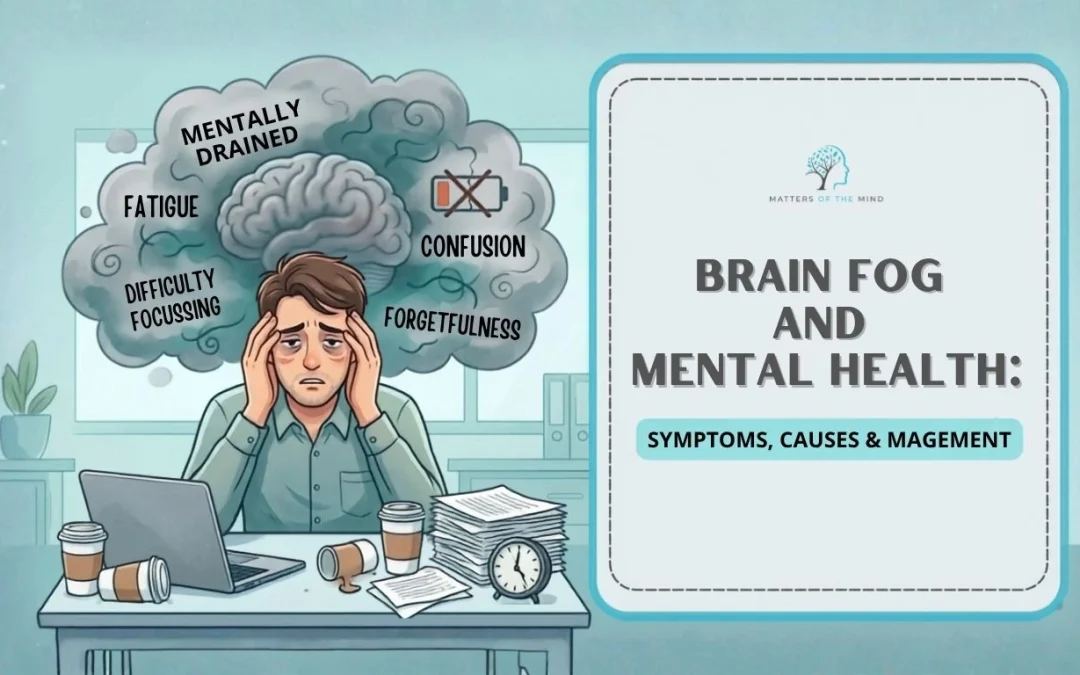
Brain fog is one of those things almost everyone experiences but few people talk about openly. It can show up as forgetting why you walked into a room, staring at an email for a full minute before typing a word, or rereading the same paragraph three times without it going in. Left unchecked, it quietly chips away at focus, memory, mood and everyday performance at work or at home.
The good news is that brain fog, mental fatigue and low mental clarity almost always have identifiable causes, and most of them respond well to the right combination of lifestyle changes and, where needed, professional support.
In this blog, we’ll look at what typically causes brain fog, the signs to watch for, and practical ways to start feeling mentally sharper again.
Causes of Brain Fog
Brain fog can become so familiar that it starts to feel normal.
Common signs include:
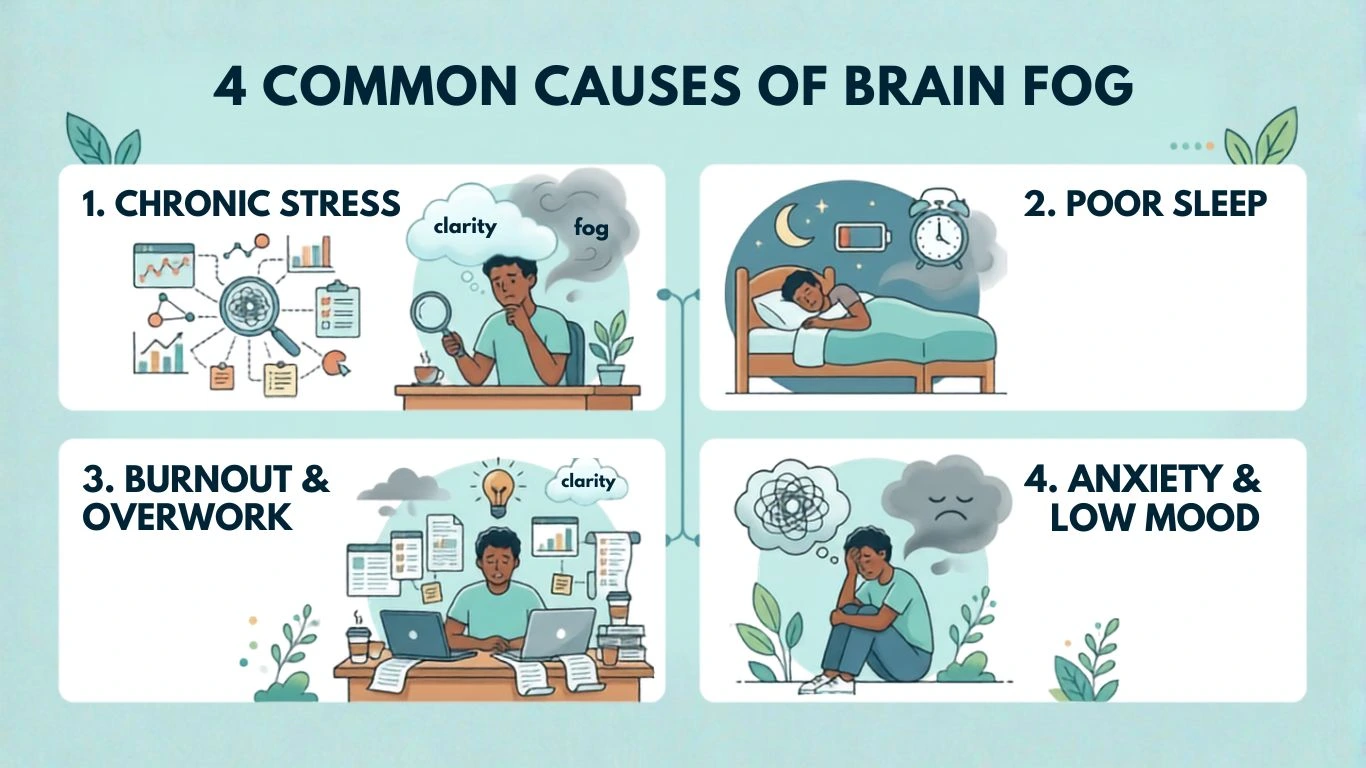
1. Chronic stress
Stress and brain fog are closely linked. Under sustained pressure, the body keeps producing cortisol well past the point where it’s useful. Research into chronic fatigue and cognitive symptoms has connected this kind of prolonged stress response to reduced blood flow to the brain, along with measurable changes in attention, working memory and processing speed (Ocon, Frontiers in Physiology, 2013). The prefrontal cortex, responsible for planning and decision-making, seems particularly sensitive to this kind of strain.
2. Poor sleep
Sleep is when much of the brain’s cognitive repair work actually happens. Even a few nights of disrupted or shortened sleep can measurably slow reaction time, memory recall and concentration the following day.
3. Burnout and overwork
Work is a major driver of mental fatigue in the UK. The Health and Safety Executive’s latest figures show that 964,000 workers in Great Britain experienced work-related stress, depression or anxiety in 2024/25, accounting for 22.1 million lost working days (HSE, 2025). That’s not a small or unusual problem. It’s a fairly ordinary feature of working life right now.
4. Anxiety and low mood
Brain fog rarely turns up on its own. A recent research review found it typically overlaps with anxiety, low mood and general fatigue, alongside difficulties with attention, memory and word-finding (NCBI, 2024).
The Mental Health Foundation’s UK-wide survey, the largest of its kind carried out in the country, found that 74% of adults had felt so stressed at some point in the past year that they felt overwhelmed or unable to cope, and that 61% of those who’d experienced stress also reported feeling anxious (Mental Health Foundation).
Signs of Brain Fog
Here are the common signs and symptoms of BPD that can be seen in an individual.
-
- Feeling mentally exhausted even without physical activity
- Struggling to concentrate or follow conversations
- Forgetting words mid-sentence or losing your train of thought
- Rereading the same sentence several times before it sinks in
- Finding simple decisions, what to eat, which task to start, disproportionately difficult
- Feeling foggy or slow even after a full night’s sleep
This last point is what separates brain fog from ordinary tiredness. Ordinary tiredness usually lifts with rest. Brain fog is stickier than that, and it can linger for weeks if the underlying cause isn’t addressed. The same pattern shows up in long Covid research, where around two-thirds of people with lingering symptoms reported brain fog specifically, alongside weaker cognitive test performance (NCBI, 2022).

Techniques to Improve Mental Clarity
Clearing brain fog rarely requires a complete overhaul. Small, consistent changes tend to make the biggest difference.
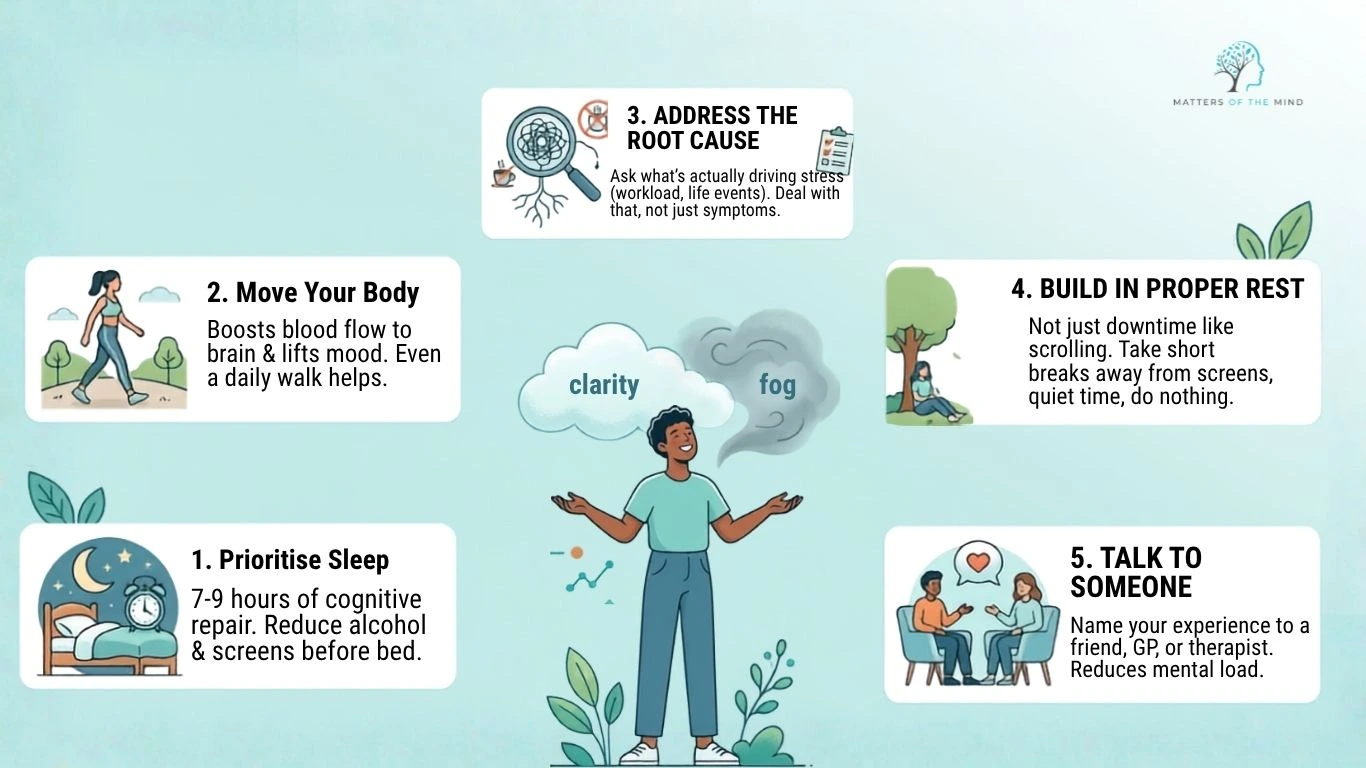
1. Prioritise sleep
Protecting seven to nine hours of decent sleep is the single most reliable way to support cognitive repair. Cutting back on alcohol and reducing screen time in the evening both help here too.
2. Move your body
Intense or frantic efforts to avoid real or perceived abandonment, even in normal situations.
4. Address the root cause, not just the symptoms
Protecting seven to nine hours of decent sleep is the single most reliable way to support cognitive repair. Cutting back on alcohol and reducing screen time in the evening both help here too.
4. Build in proper rest, not just downtime
Scrolling a phone for an hour isn’t the same as genuine rest. Short breaks away from screens, quiet time, or simply doing nothing for a few minutes between tasks give the brain more of a chance to recover.
5. Talk to someone
Naming what you’re going through, to a friend, a GP or a therapist, often reduces the mental load on its own, and it’s usually the fastest way to work out what’s actually going on.
NOTE:
If brain fog has settled in and isn’t lifting despite these changes, that’s usually a sign something underneath needs proper attention. A GP is a sensible first stop, particularly if there are physical symptoms alongside the mental fatigue. From there, psychological therapy services, including approaches such as Cognitive Behavioural Therapy (CBT), can help you get to what’s actually driving the stress rather than managing the fallout from it indefinitely. If you’re in or around the area, mental health treatment in Berkshire is available through local practitioners experienced in working with stress, anxiety and burnout, including Dr Kavita Deepak-Knights.
Final Thoughts
Brain fog isn’t a personal failing, and it isn’t something you simply have to push through. It’s usually your mind and body telling you that something, sleep, stress, workload, or emotional strain, has been carrying on for too long without a break. Small, consistent changes help. So does getting proper support early, before weeks of mental fatigue turn into months.
Recovery in BPD does not necessarily mean the complete absence of vulnerability; it reflects increased self-awareness, healthier coping strategies and improved quality of life.


