
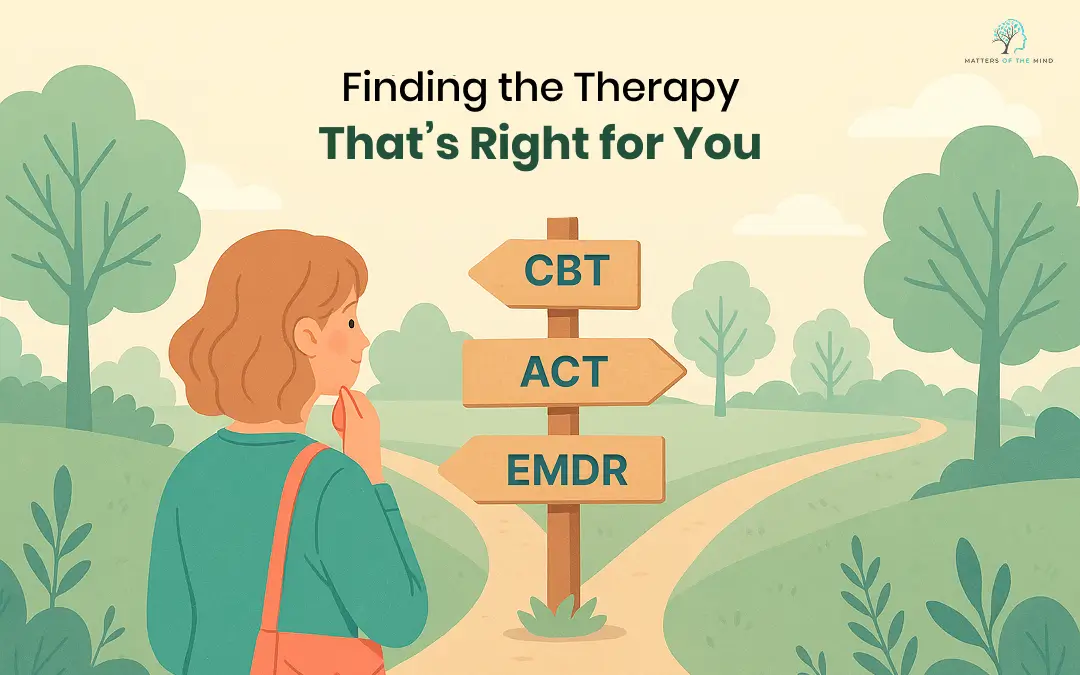
Choosing to begin therapy is an important and commendable step towards prioritising your mental well-being. However, once you’ve decided to seek support, you may find yourself confused by one question: Which therapy is best for me?
With a variety of therapeutic approaches available, it’s natural to feel unsure and unclear. Each form of therapy is grounded in specific principles and tailored techniques, and the best fit depends on your unique experience, goals, and preferences.
This blog will provide you with clarity on the most common therapy types and help you make an informed decision that feels right for you.
Common Types of Therapeutic Approaches
Below is a summary of evidence-based therapies frequently used in clinical practice. While this list is not exhaustive, it may offer clarity on what type of support may suit you best.
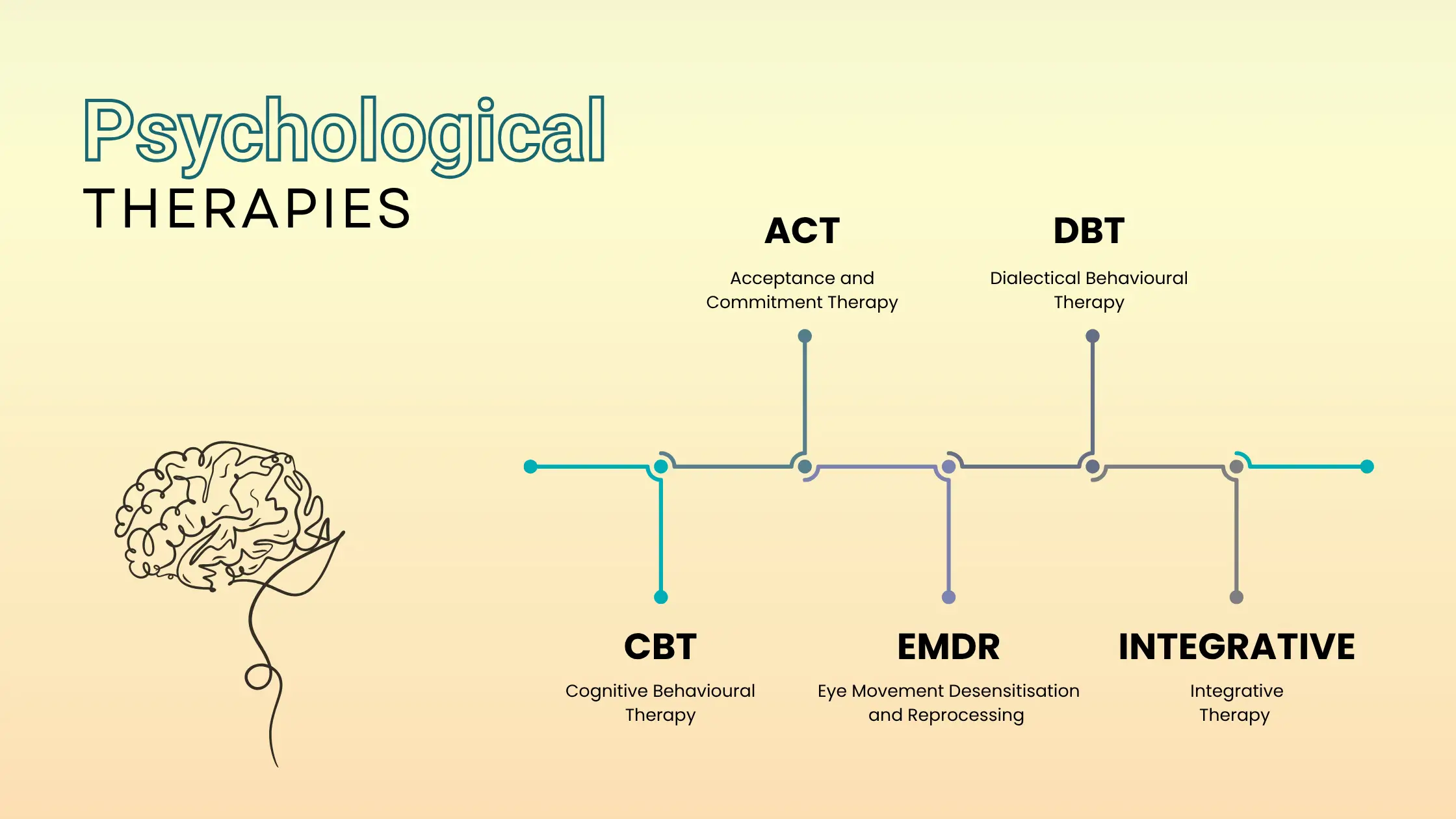
1. Cognitive Behavioural Therapy (CBT)
CBT is a structured form of therapy that focuses on identifying and challenging unhelpful thought patterns and behaviours. The main goal of this therapy is to develop more balanced thinking and healthier responses to difficult situations.
CBT is a highly evidence-based therapy and is often recommended for individuals who prefer practical tools and measured progress.
Best suitable for: People dealing with anxiety, depression, obsessive-compulsive disorder (OCD), phobias, and health-related stress.
2. Acceptance and Commitment Therapy (ACT)
ACT integrates mindfulness techniques with behavioural strategies, encouraging you to accept difficult emotions rather than avoid them. The therapy focuses on helping you live in alignment with your values even when faced with emotional discomfort.
This approach is especially effective if you feel stuck in unhelpful cycles of thoughts or behaviours. It offers tools to build psychological flexibility and resilience.
Best suitable for: Chronic pain, anxiety, depression and stress related to life transition.
3. Eye Movement Desensitisation and Reprocessing (EMDR)
EMDR is a structured therapy that uses bilateral stimulation to help the brain process traumatic memories and reduce their emotional intensity. It does not require detailed verbal recall, making it suitable for individuals who find it difficult to speak about their trauma.
This is considered a widely used therapy in trauma care, delivering significant results in just a few sessions.
Best suitable for: Post-traumatic stress disorder (PTSD), complex trauma and other life-distressing events.
4. Integrative Therapy
Many therapists are trained in multiple modalities and draw upon different approaches based on your needs; this is known as integrative therapy. These sessions combine elements of CBT and person-centred therapy depending on what is most useful for you.
This approach recognises that therapy is not one size fits all, and offers flexibility as your needs evolve.
Best suitable for: Individuals with overlapping concerns or who want a more personalised approach.
5. Dialectical Behavioural Therapy (DBT)
DBT is a structured and evidence-based approach developed to support individuals who experience overwhelming emotions or struggle with self-destructive behaviours. It combines principles from CBT with concepts of mindfulness and acceptance.
DBT aims to help individuals build a life worth living by living by four key skill areas: mindfulness, distress tolerance, emotional regulation, and interpersonal effectiveness.
Best suitable for: Emotional dysregulation, borderline personality disorder (BPD), self-harming behaviours, suicidal thoughts and intense interpersonal conflict.
How Do You Know What’s Right For You?
While reading about different therapies is helpful, it is equally important to consider the following questions, too.
- What am I hoping to achieve in therapy?
(eg, Symptom relief, self-understanding) - Do I prefer structured questions to open-ended conversations?
- Am I ready to explore past experiences, or do I want tools to manage the present?
A qualified therapist can help you answer these questions during your initial consultation. You have the right to ask about your therapist’s approach, discuss your goals, and assess whether it feels like the right fit.

Final Thoughts
There is no best therapy universally, only what is best for you at this moment in your life. Each individual is different, and therapy should honour the uniqueness. Sometimes, the most effective healing begins with a healthy therapeutic relationship.
If you’re unsure where and how to begin, start having an open conversation with a trusted mental health professional. At Matters of the Mind, Dr Kavita Deepak-Knights, a qualified clinical psychologist based in Windsor, Berkshire, offers a compassionate and evidence-informed approach to therapy. Her work is grounded in helping individuals find clarity, build resilience, and choose the therapeutic path that best supports their well-being.
Book Your First Therapy Session Today with Dr Kavita Deepak-Knights.
Frequently Asked Questions
1. What if I’m already in therapy but feel it’s not the right fit?
It’s okay to re-evaluate your therapy. Speak with your therapist; they can help adjust the approach or suggest alternatives.
2. How do I find the right therapist in the UK?
Look for accredited professionals through organisations like BPS, HCPC, or BACP, and schedule an initial consultation to assess fit.
3. How long does therapy usually last?
It varies; some therapies are short-term (6–20 sessions), while others may be longer depending on your goals and needs.
4. What’s the difference between counselling and psychotherapy?
Counselling is often short-term and issue-focused; psychotherapy tends to explore deeper, long-term patterns.
5. Is it normal to feel nervous before starting therapy?
Yes, starting therapy can feel uncertain. A good therapist will help you feel safe and supported from the beginning.
6. Can I ask my therapist about their approach?
Absolutely. You’re encouraged to ask questions to understand the process and ensure it aligns with your needs.


