
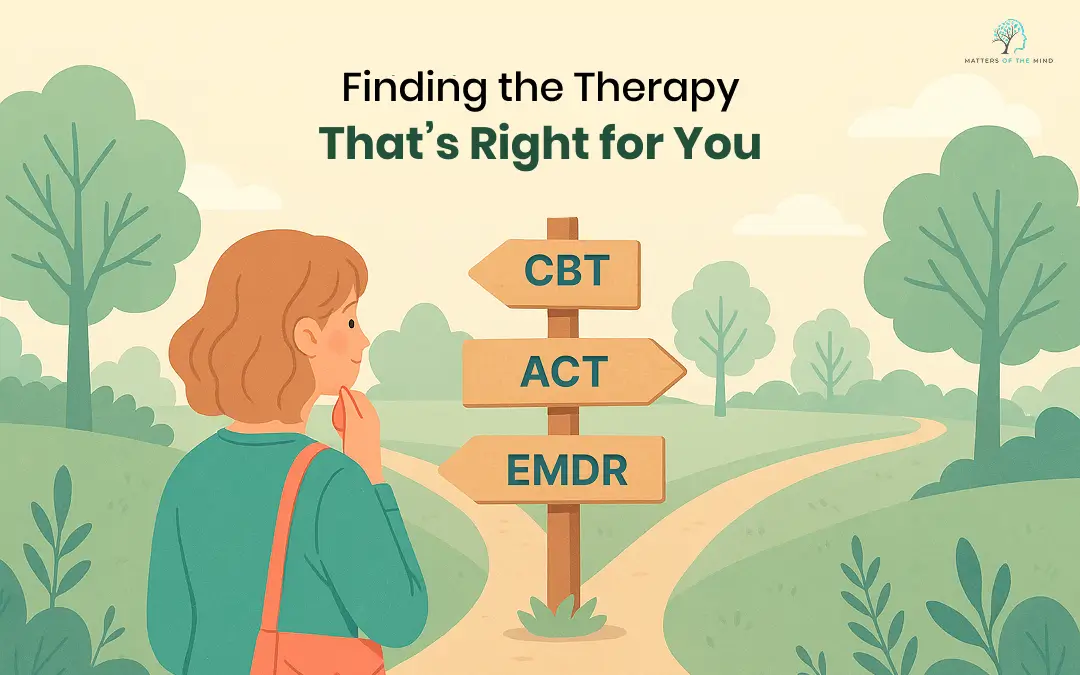
With a variety of therapeutic approaches available, it’s natural to feel unsure and unclear. Each form of therapy is grounded in specific principles and tailored techniques, and the best fit depends on your unique experience, goals, and preferences.
This blog will provide you with clarity on the most common therapy types and help you make an informed decision that feels right for you.
Common Types of Therapeutic Approaches
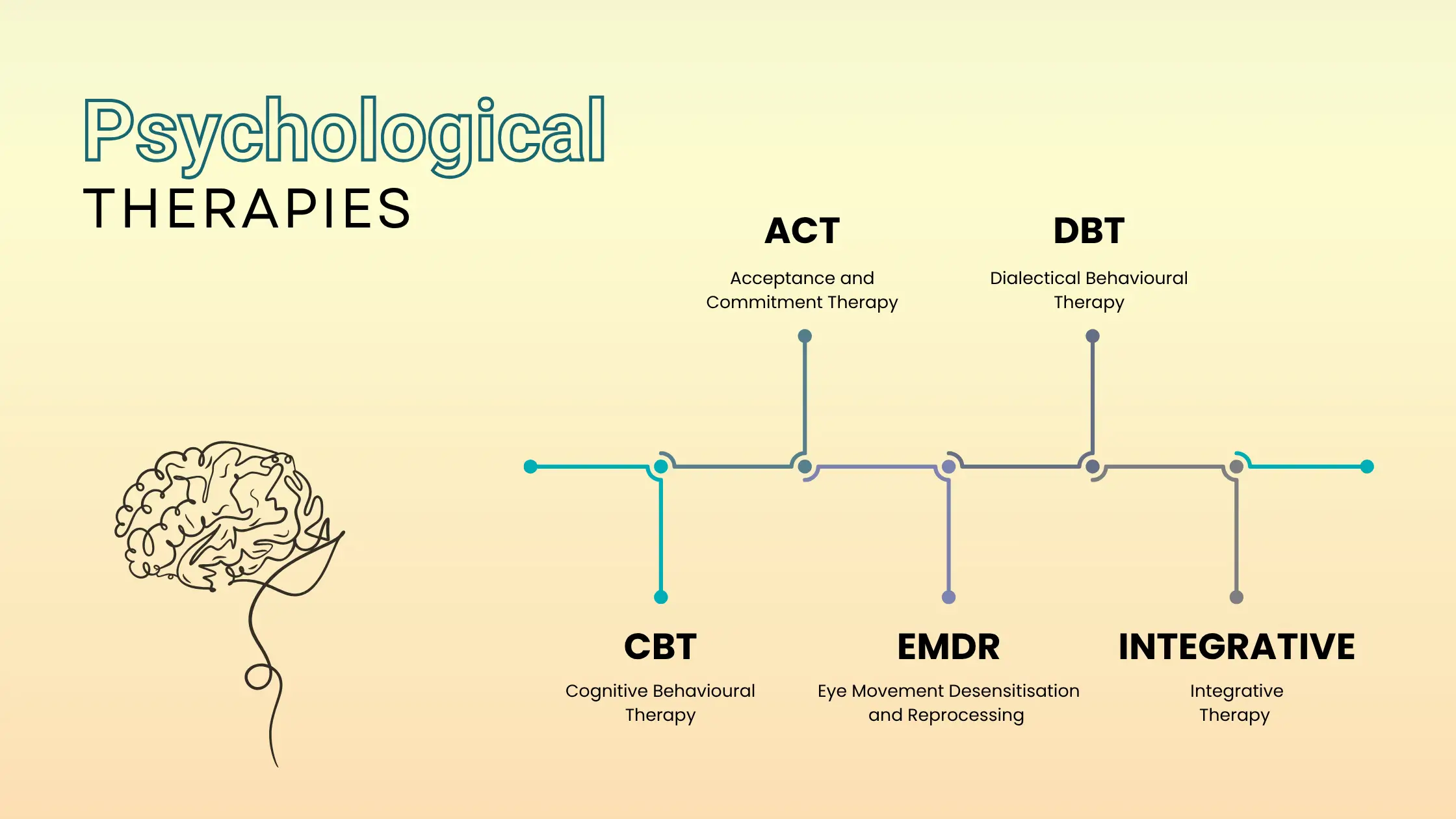
1. Cognitive Behavioural Therapy (CBT)
CBT is a structured form of therapy that focuses on identifying and challenging unhelpful thought patterns and behaviours. The main goal of this therapy is to develop more balanced thinking and healthier responses to difficult situations.
Best suitable for: People dealing with anxiety, depression, obsessive-compulsive disorder (OCD), phobias, and health-related stress.
2. Acceptance and Commitment Therapy (ACT)
Best suitable for: Chronic pain, anxiety, depression and stress related to life transition.
3. Eye Movement Desensitisation and Reprocessing (EMDR)
EMDR is a structured therapy that uses bilateral stimulation to help the brain process traumatic memories and reduce their emotional intensity. It does not require detailed verbal recall, making it suitable for individuals who find it difficult to speak about their trauma.
Best suitable for: Post-traumatic stress disorder (PTSD), complex trauma and other life-distressing events.
4. Integrative Therapy
Many therapists are trained in multiple modalities and draw upon different approaches based on your needs; this is known as integrative therapy. These sessions combine elements of CBT and person-centred therapy depending on what is most useful for you.
5. Dialectical Behavioural Therapy (DBT)
DBT is a structured and evidence-based approach developed to support individuals who experience overwhelming emotions or struggle with self-destructive behaviours. It combines principles from CBT with concepts of mindfulness and acceptance.
Best suitable for: Emotional dysregulation, borderline personality disorder (BPD), self-harming behaviours, suicidal thoughts and intense interpersonal conflict.
How Do You Know What’s Right For You?
- What am I hoping to achieve in therapy?
(eg, Symptom relief, self-understanding) - Do I prefer structured questions to open-ended conversations?
- Am I ready to explore past experiences, or do I want tools to manage the present?

Final Thoughts
Book Your First Therapy Session Today with Dr Kavita Deepak-Knights.


