
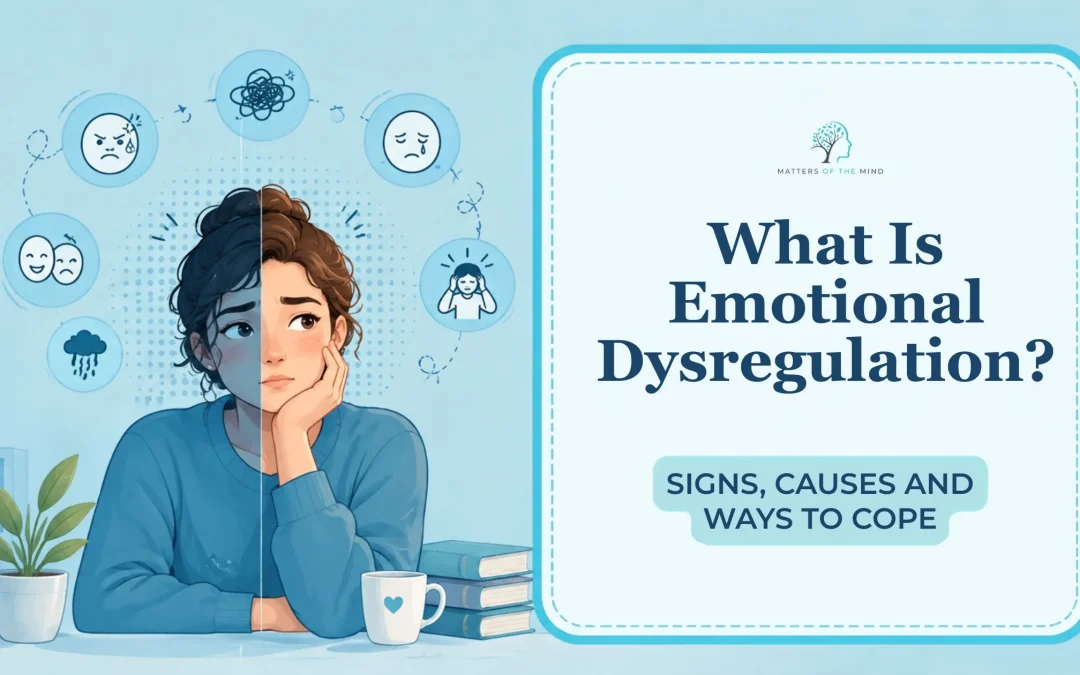
Everyone has an off day. That’s not what this is. Dysregulation is a pattern, not a one-off. Feelings show up too fast, hit too hard, or hang around for hours, and it’s actually getting in the way of your relationships, your work, or just your own peace of mind.
What It Actually Feels Like
Think about how a feeling usually works. Something happens. A feeling shows up. It peaks. Then it fades. Most of the time that whole thing takes a few minutes. With emotional dysregulation, that shape gets bent out of place. The peak hits harder and faster than the trigger seems to justify. The comedown takes ages. And somewhere in the middle, thinking straight can feel almost impossible.
Signs and Symptoms to Watch For
-
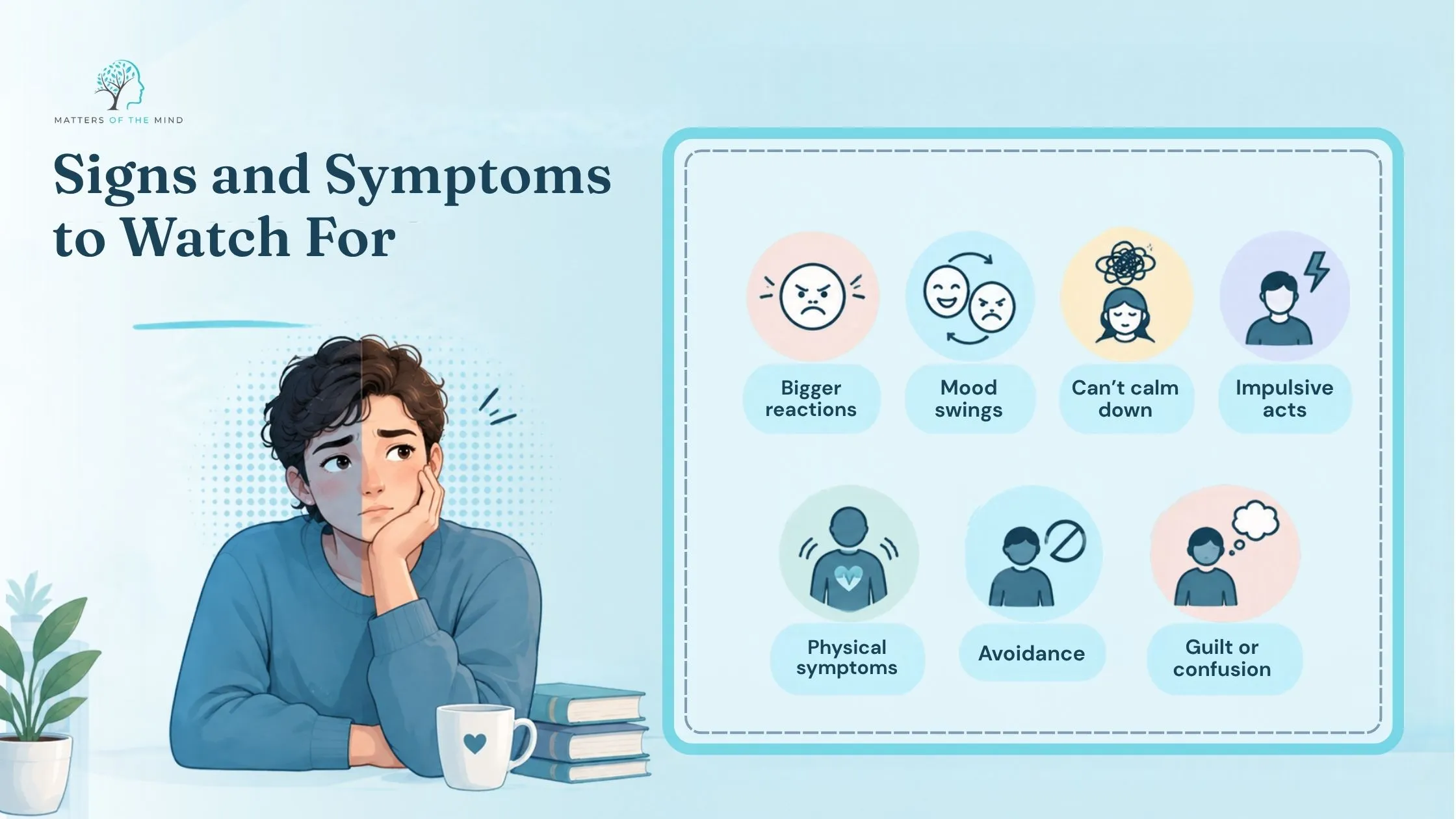
- A reaction that’s way bigger than what actually happened. Even you can tell it doesn’t match.
- Your mood swings fast, with no warning. Calm to furious in minutes, sometimes for no clear reason at all.
- You can’t calm down once you’re upset. The feeling lingers for hours after whatever caused it.
- You act on impulse while the emotion’s still hot. You say something you regret. You send the message. You walk out mid-conversation.
- Your body joins in too. Racing heart. Tight chest. Shaking. Your whole system is overwhelmed, not just your head.
- You avoid anything that might set it off. Certain people, certain talks, certain rooms, all dodged on purpose.
- Afterwards you feel confused, or ashamed. “I don’t even know why I reacted like that.”
Why It Happens
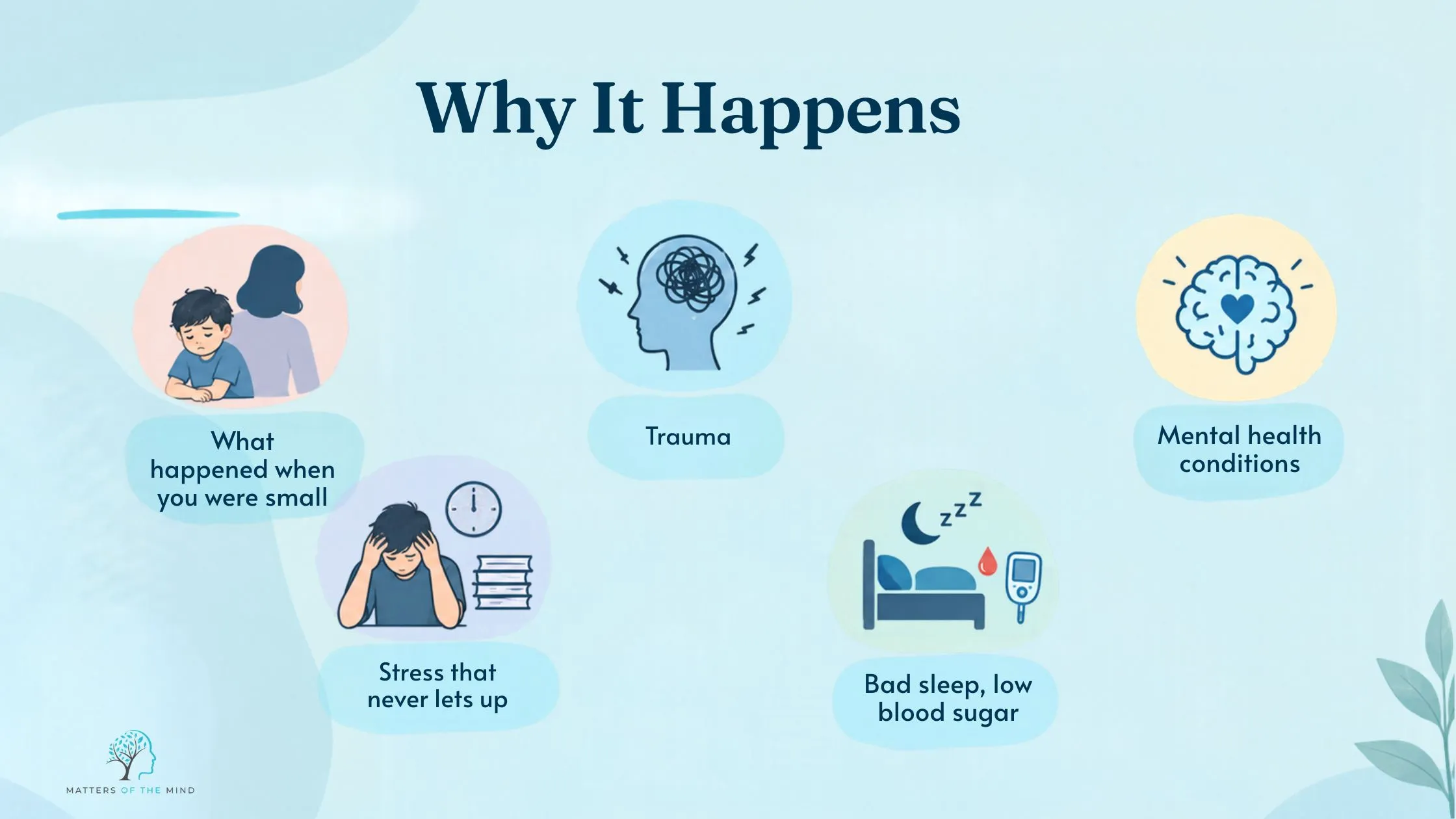
What happened when you were small
Mental health conditions
Bad sleep, low blood sugar
Trauma
Stress that never lets up
In Adults, It Looks a Bit Different
In relationships, this often shows up as a row that escalates faster than either person means it to. Or one partner shutting down completely rather than risk another intense fight. At work it can look like a reaction to feedback that’s way out of proportion, or a reputation for being unpredictable that doesn’t match how you actually see yourself.
Getting It Under Control
Name the feeling properly. “I’m angry” gets you less far than “I’m angry because I feel dismissed.” Getting specific takes some heat out of it.
Write down what happened, not just in your head. What set it off. How big it felt. How long it took to settle. Patterns show up this way that you’d never spot in the moment.
Look after the basics. Sleep. Food. Movement. These aren’t separate from how you handle your emotions, they’re what regulation is actually built on. A tired body has far less capacity to manage anything, no matter how much effort you put in.
Learn a couple of grounding tricks. Feet flat on the floor. Something cold in your hands. Slowing your breath right down, on purpose. Small things like these can stop a spike in its tracks, even if they don’t fix what caused it.
Talk to someone properly trained. Where this is affecting your relationships or your work, a therapist tends to get you further than trying to manage it alone. This is especially true if the roots go back to childhood or trauma. Dialectical behaviour therapy, DBT, was built specifically to teach these skills, and it has strong evidence behind it. CBT and trauma-informed therapy can help too, depending on what’s actually driving things for you.
Start Feeling Like Yourself Again
Take the first step today!
Book a confidential session with Dr Kavita Deepak-Knights in Windsor, Berkshire, and begin restoring your emotional balance.
Emotional dysregulation isn’t a character flaw. It doesn’t mean you’re “too sensitive,” or making a scene on purpose. Most of the time it just means your nervous system never quite learned how to settle itself back down.
Emotional dysregulation isn’t a character flaw. It doesn’t mean you’re “too sensitive,” or making a scene on purpose. Most of the time it just means your nervous system never quite learned how to settle itself back down. That’s usually down to things that happened well before you had any say in them. The good news: these skills can be learned, at pretty much any age, with the right help and a bit of patience.
Frequently Asked Questions (FAQs)
1. Is emotional dysregulation a mental health condition on its own?
Not really. It’s more of a feature that shows up across several conditions, like BPD, ADHD, and mood disorders. It can also turn up on its own, with no formal diagnosis attached at all.
2. What are the most common signs of emotional dysregulation?
Reactions that don’t match the trigger. Mood swings with no warning. Trouble calming down. Acting on impulse while the emotion’s still hot. Often a racing heart or a tight chest come with it too.
3. Can it actually be treated?
Yes. Therapy, especially DBT, has solid evidence behind it for building these skills back up. A qualified counsellor, whether that’s local in Windsor or somewhere else, is usually your best route in, especially if the roots trace back to childhood or trauma.


