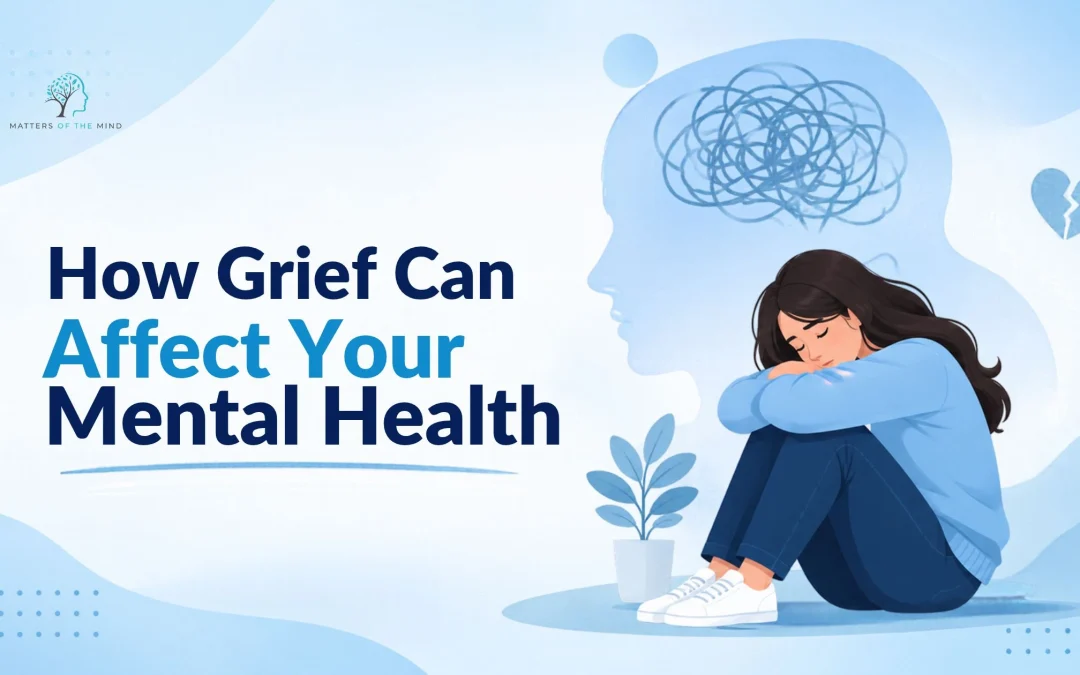
It isn’t only about death, either. The NHS says other losses can set it off too, like a relationship ending or losing a job or a home. Whatever you’ve lost, your mental health can take a real knock. Knowing what’s normal, and what isn’t, makes it easier to cope.
Quick answer:
Grief Is Not Just Sadness
The NHS also makes one thing clear. There’s no right or wrong way to feel. You might cry for days. You might feel nothing and then worry something’s wrong with you. Neither means you’re doing it badly. And feelings often turn up without warning. A song in a shop, a smell, a date on the calendar, and you’re flattened again.
How Grief Affects Your Mental Health
Here’s how it tends to show up.
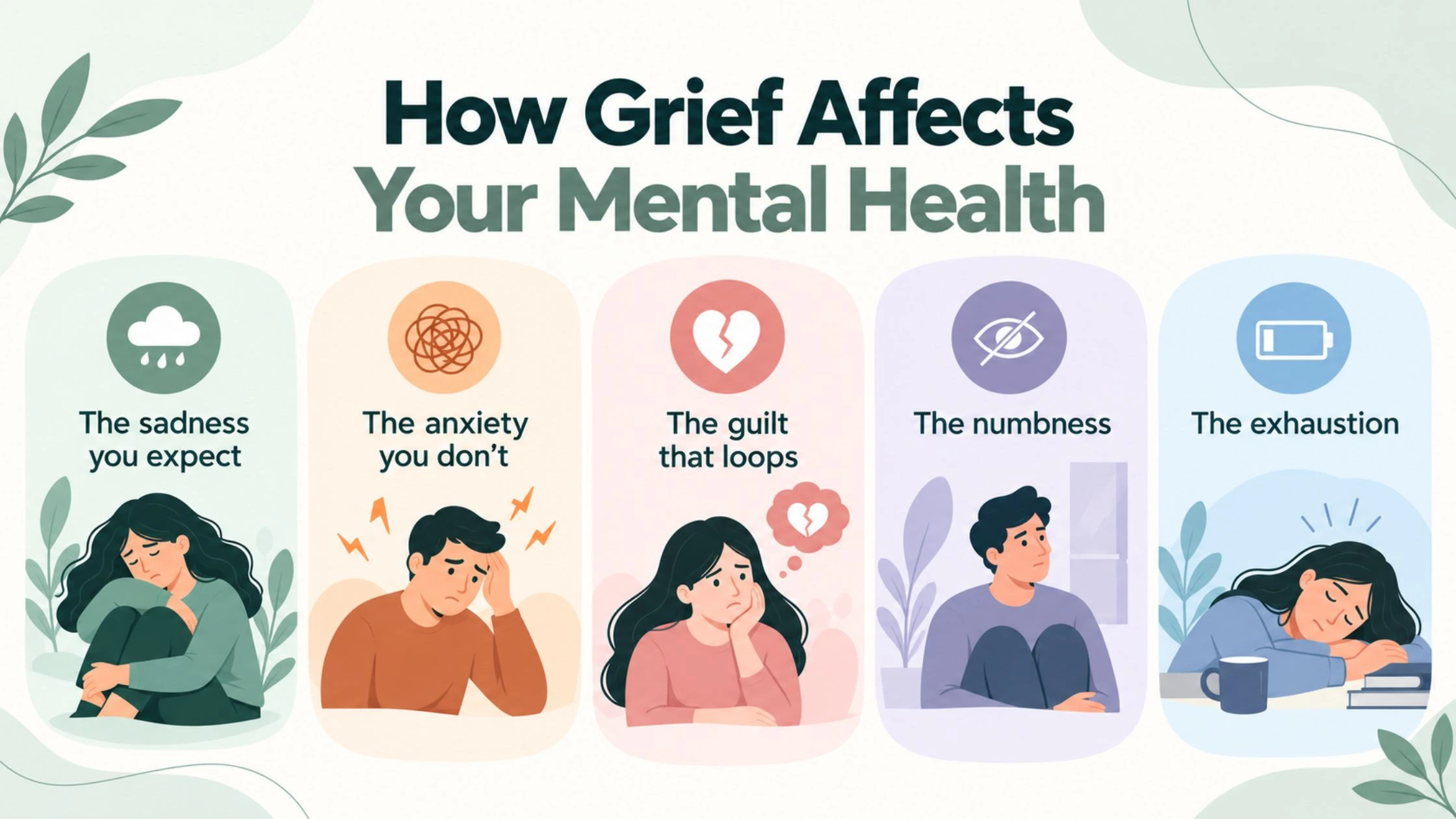
The sadness you expect
The anxiety you don’t
The guilt that loops
The numbness
The exhaustion
When Grief Doesn’t Ease
How common is it?
One systematic review and meta-analysis looked at adults bereaved by non-violent deaths. It found a pooled prevalence of 9.8%, which is about one in ten people. The risk goes up after a sudden or traumatic loss. A separate meta-analysis of unnatural losses, such as accidents, disasters, suicide and homicide, put the figure at 49%. The researchers say that number needs careful reading, because the studies were done in very different ways. Still, the point stands. How someone dies can change how hard the grief hits.
- A longing for the person that doesn’t ease
- Still being unable to accept the loss, months on
- Feeling life has no meaning without them
- Avoiding anything that reminds you of them, or not being able to stop thinking about them
- Struggling with daily life, like work, eating or seeing people
Is It Grief or Depression?
Ways to Cope With Grief
Talk about it
Remember you’re not alone
Look after the basics
Go easy on alcohol and other crutches
Let it come in waves
Keep the connection
When to Get Professional Help
-
- Your grief isn’t easing after many months
- You can’t manage daily life, work or caring for others
- You’re drinking or using substances to cope
- You feel hopeless, or numb for long stretches
- The loss was sudden or traumatic and you can’t stop reliving it
If you’d rather speak to someone privately, you can reach out to Dr Kavita Deepak-Knights, a clinical psychologist based in Windsor, Berkshire, and founder of Matters of the Mind. She offers personalised, evidence-based therapy to help people make sense of what they’re going through, including loss and what it does to their mental health. Asking for help early doesn’t mean you’re grieving the wrong way. It means you don’t have to carry it alone.


