
Family holds a deeply important role in shaping every individual’s emotional and psychological well-being. From the way an individual learns to communicate to how they respond, much of it is influenced by our family environment.
The International Day of Families, celebrated on 15th May, offers a moment to reflect more consciously on this impact. While families are often seen simply as social units, they are also emotional systems in which patterns of communication, support, and even stress are shared and experienced together.
In everyday life, families can be a source of strength, grounding, and belonging. When relationships become strained, the impact is rarely limited to one individual. Each emotion subsequently affects the whole family. This is why understanding and strengthening family support is essential, not only for individual well-being, but for the health of the family as a whole.
Let’s understand in this blog why families matter as an emotional system, how systemic therapy supports families, and how this day can strengthen more of family support in everyday life.
What is the Theme of the International Day of Families?
The theme for International Day of Families is Families, Inequalities and Child Well-being, which emphasises the need for strong & better family support systems, including policy investments in childcare and education to reduce poverty, enhance child well-being, and bridge inequalities. This is mainly celebrated to strengthen the family units and promote healthy communication.
Why Family Support Matters
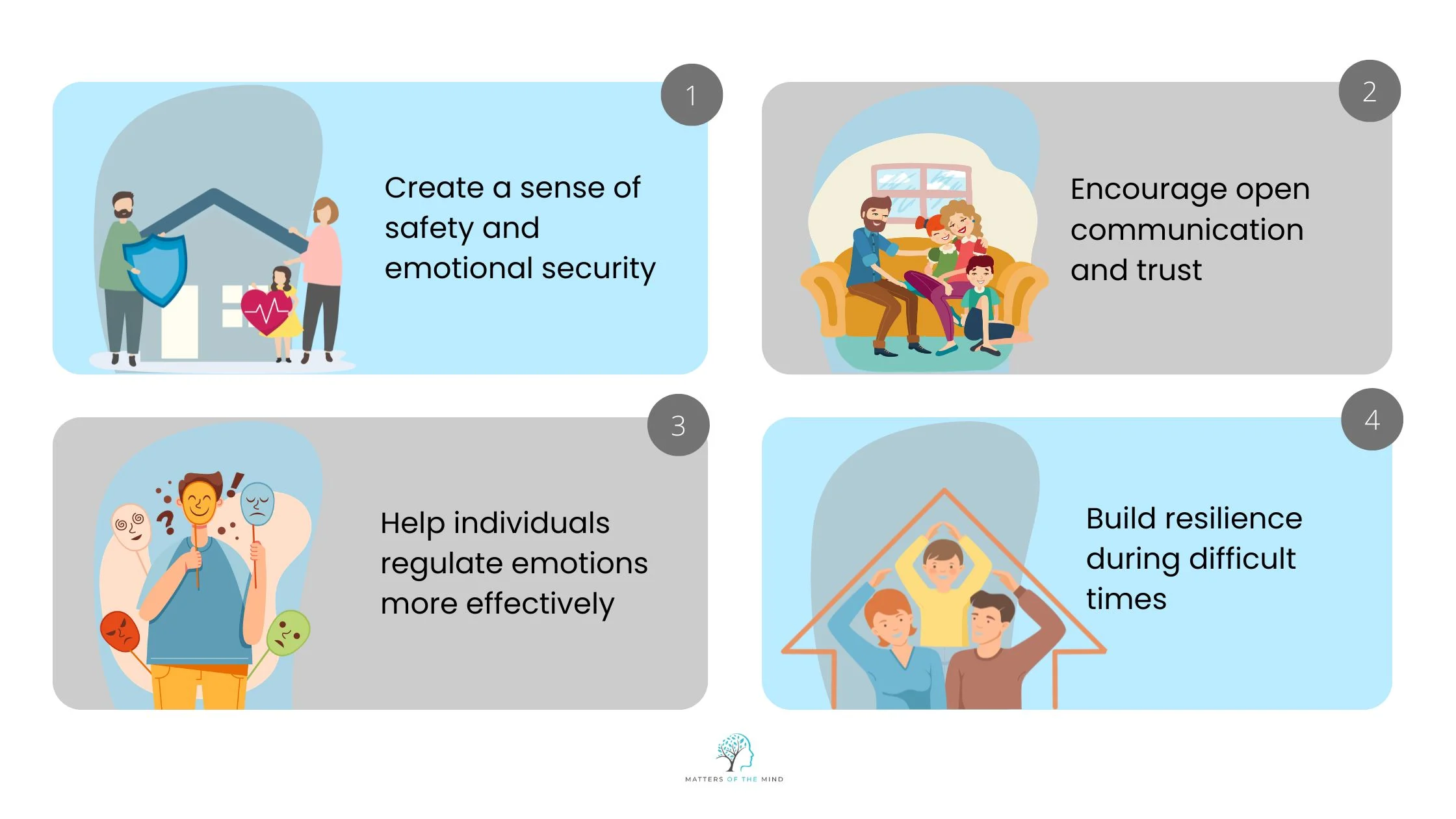
Family support is the first way of emotional care. It influences how individuals cope with stress, process challenges, and navigate change. A supportive family environment can:
-
- Create a sense of safety and emotional security
- Encourage open communication and trust
- Help individuals regulate emotions more effectively
- Build resilience during difficult times
On the other hand, when support feels inconsistent, or communication becomes tense, even small issues can feel complicated. Over time, this can lead to patterns of misunderstanding, withdrawal, or conflict. These patterns develop gradually and are often shaped by stress, past experiences, and expectations.
The Emotional Systems of Families
Families do not function as a collection of separate individuals; they operate as an interconnected system. When one person experiences distress, it often influences the emotional state of the entire family.
This is where systemic therapies offer a valuable perspective. Rather than focusing solely on one individual, they explore relationships, interactions, and patterns within the family. The aim is not to blame each other, but to understand how each other’s responses influence the whole system.
Through this approach, families can begin to:
-
- Recognise patterns of conflicts
- Develop healthier ways of communicating
- Build empathy for each other’s experiences
- Work collaboratively towards change
This approach can provide a structured yet compassionate way to address relational challenges with families.
How Professional Support Can Help?
It is common for families to go through periods of difficulty. However, there are times when professional support can be helpful.
Some signs may include:
-
- Repeated conflicts that feel unresolved
- Difficulty in communication
- Emotional distance or withdrawal within relationships
- Increased stress affecting daily functioning
Strengthen Family Connections
Strong family relationships take understanding, communication and support. If your family is experiencing challenges, professional guidance can help you move forward together.
Seeking support is not a sign of failure; instead, it’s a willingness to understand family functioning together.
If you too are seeking support, connect with Dr Kavita Deepak-Knights, a trusted clinical psychologist who offers personalised support and a safe space to explore concerns and rebuild a positive connection. The right help can make a timely change that can lead to better and healthier relationships.
How Systemic Therapy Supports Families
In systemic therapy, the focus is on creating a shared understanding rather than fixing one person.
It mainly involves:
-
- Exploring communication patterns
- Identifying triggers and emotional responses
- Understanding each other’s perspective
- Developing healthier ways of relating
For individuals and families seeking this therapy, it can feel both structured and collaborative. It allows each member to feel heard while working towards practical and meaningful change.
Reaching out to the right person at the right time can definitely help you out. Book your personalised session today.
Final Thoughts
The International Day of Families serves as a reminder that families with strong communication are more willing to understand, adapt, and grow together. Family support is not always instinctive; it can be learned, strengthened, and nurtured over time. Whether through everyday approaches or therapies such as systemic therapies or internal family systems therapy, meaningful change is possible.
So reaching out for support can be the first step towards a more connected and supportive family environment.
Frequently Asked Questions (FAQs)
1. Why is family support important for mental wellbeing?
Family support can help individuals feel emotionally safe, understood and connected. Positive family relationships often improve resilience, communication and emotional wellbeing during stressful periods.
2. What is systemic therapy?
Systemic therapy is a type of psychological therapy that focuses on relationships, communication patterns and interactions within families or couples, rather than focusing on one individual alone.
3. How can family relationships affect mental health?
Family relationships can influence how individuals cope with stress, regulate emotions and respond to challenges. Ongoing conflict, emotional distance or communication difficulties may affect overall wellbeing.
4. When should a family consider professional support?
Professional support may be helpful when families experience repeated conflict, communication difficulties, emotional withdrawal or stress that affects daily life and relationships.
5. Can systemic therapy improve communication within families?
Yes, systemic therapy can help families understand communication patterns, develop empathy and build healthier ways of relating to one another.
6. Is seeking family therapy a sign of failure?
No. Seeking support reflects a willingness to understand difficulties and improve relationships in a healthy and constructive way.


