
Every August, International Youth Day gives us a reason to stop and ask how young people are really doing. In 2026, that question feels more urgent than ever. Growing up today means navigating academic pressure, an always-on social media feed, an uncertain job market, and the ordinary business of figuring out who you are, all at once. It’s a lot.
Anxiety, stress, comparison culture online, exam pressure, and the wobble of moving from school to college or into a first job: these aren’t fringe issues. They’re part of everyday life for a huge number of young people, and they deserve to be treated that way. The encouraging part is that support works. With the right help at the right time, many of these struggles become manageable rather than overwhelming, and evidence-based therapy has a genuinely good track record of helping young people find their footing again.
This article looks at why youth mental health matters so much, the pressures young people commonly face, the signs that someone might need extra support, and the kinds of therapy that can help.
What Is International Youth Day?
The United Nations introduced it to spotlight the issues affecting young people around the world and to encourage governments, communities, and organisations to invest in their futures.
Each year carries a slightly different focus, but mental health has become a constant thread running through the conversation. That’s not an accident. The habits, coping skills, and support systems young people build now tend to follow them into adulthood. Someone who learns to manage anxiety at seventeen is in a far stronger position at thirty-five than someone who never had the chance to. Youth wellbeing and long-term health are, in that sense, the same conversation happening at different points in a person’s life.
This Year’s Theme: Different Contexts, Common Aspirations
This year’s theme puts particular focus on young people in the world’s least developed, landlocked, and small island states, where poverty, climate pressures, geographic isolation, and patchy digital access often pile up together. The UN has organised the theme around three strands: global solidarity, shared challenges, and youth innovation, with mental wellbeing named explicitly as one of the shared challenges affecting young people everywhere, regardless of where they happen to live.
That’s a useful reminder for anyone reading this outside a least developed country too. The specifics of the pressure look different depending on where a young person grows up, but anxiety, isolation, and the weight of expectation don’t respect borders. A theme built around shared aspirations is really an invitation to keep having this conversation everywhere, not just on 12 August.
Why Young People’s Mental Health Matters
The good news is that this window cuts both ways. Early intervention tends to lead to better long-term outcomes, sometimes dramatically so, because problems are easier to work through before they become entrenched. That makes the environments young people grow up in matter enormously. A home where feelings can be discussed without judgement, a school that takes wellbeing as seriously as exam results, a workplace that doesn’t treat burnout as a badge of honour, a community that notices when someone’s gone quiet: all of these shape whether a young person struggles in silence or gets help early.
Common Mental Health Challenges Facing Young People
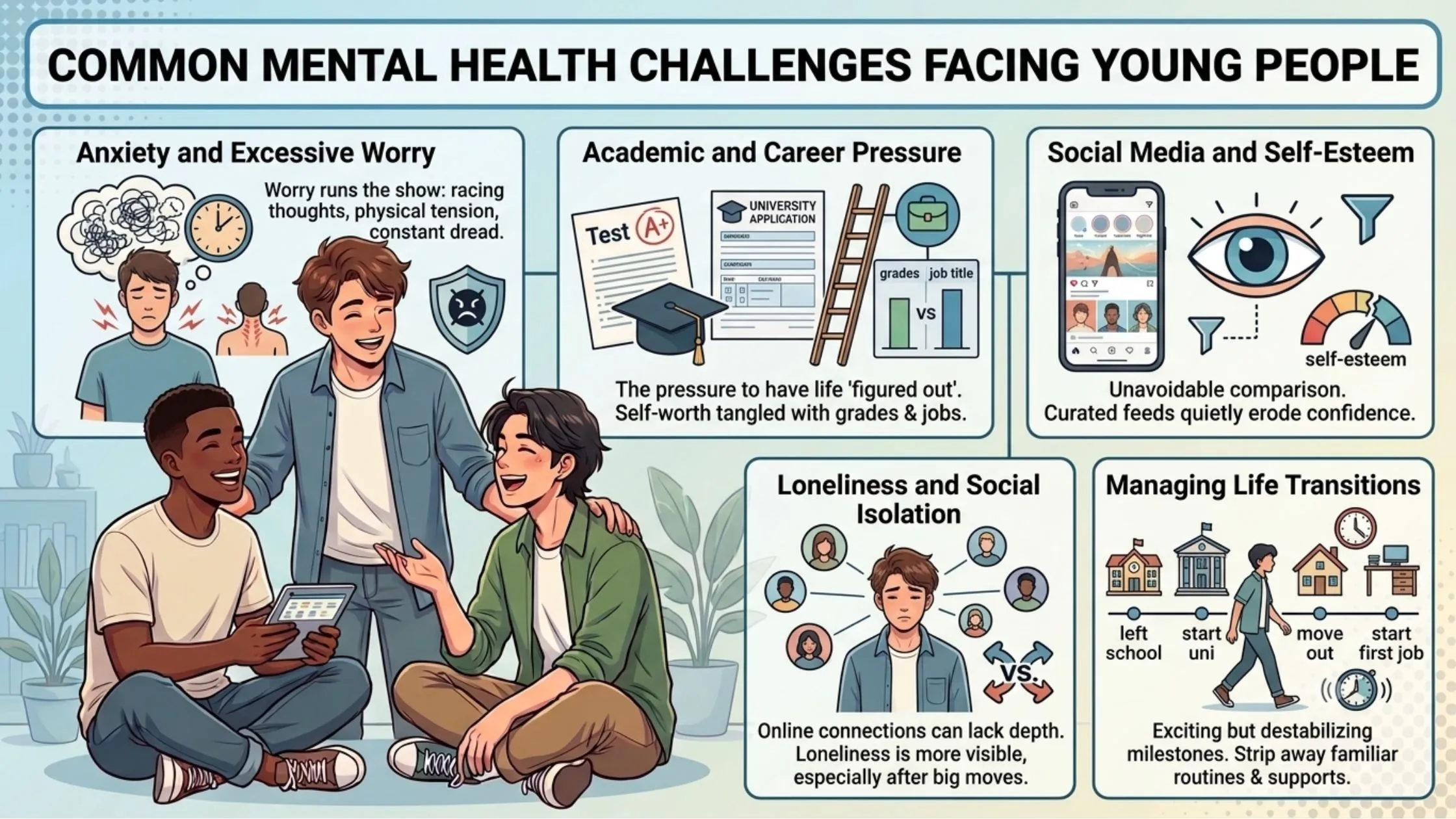
1. Anxiety and Excessive Worry
2. Academic and Career Pressure
3. Social Media and Self-Esteem
4. Loneliness and Social Isolation
5. Managing Life Transitions
Help Starts with a Conversation
Mental health challenges don’t have to be faced alone. Early support can make a lasting difference.
Book a confidential appointment with Dr Kavita Deepak-Knights and take the first step towards better emotional wellbeing.
Signs That a Young Person May Need Additional Support
-
- Persistent anxiety or worry that doesn’t seem to ease
- Noticeable changes in mood
- Withdrawing from friends and family
- Sleep problems, whether that’s trouble falling asleep or sleeping far more than usual
- Difficulty concentrating on schoolwork or daily tasks
- Losing interest in things they used to enjoy
- Feeling overwhelmed by everyday demands
None of these signs on their own means something is seriously wrong, but if they persist or start piling up together, it’s worth having a conversation.
How Psychological Therapy Can Help
At Matters of the Mind, the therapy on offer is matched to what the person is actually dealing with rather than applied as a one-size-fits-all approach. Cognitive behavioural therapy (CBT) is often a good starting point for anxiety and unhelpful thought patterns. EMDR can be appropriate where trauma is involved.
Acceptance and commitment therapy (ACT) helps people build a healthier relationship with difficult thoughts and feelings instead of fighting them constantly. Dialectical behaviour therapy (DBT) is particularly useful for managing intense emotions and building distress tolerance. Which approach fits best depends entirely on the individual, which is why an initial conversation matters so much.
Practical Ways to Support Young People’s Mental Wellbeing
-
- Encourage open, judgement-free conversations
- Maintain healthy daily routines
- Prioritise sleep
- Stay physically active
- Spend time outdoors
- Keep an eye on unhealthy social media habits
- Build supportive relationships with friends, family, or mentors
- Ask for help when it’s needed, and treat that as a strength, not a failure
When Is It Time to Seek Professional Help?
Supporting Young People Beyond International Youth Day
Conclusion
If you, or someone you care about, is struggling, it’s worth finding out more about the psychological therapies that could help. Reaching out is often the hardest step, and also the one that matters most.
Frequently Asked Questions (FAQs)
1. What is International Youth Day?
2. Why is mental health important for young people?
Good mental health helps young people cope with everyday challenges, build healthy relationships, perform better at school or work, and develop resilience for the future.


