
Feeling nervous before meeting new people, speaking in a group, or walking into a room full of strangers is something almost every individual experiences. But when this starts to feel persistent and difficult to manage, it is not just shyness but a sign of social anxiety.
Social anxiety can affect and shape day-to-day life significantly. It may affect work, relationships, meetings, and friendships, making even simple tasks difficult. This may seem easier, but it can be complicated at times. And the paradox of social anxiety is that people who struggle with it most often are the same people who care most deeply about connection.
So, in this blog, let’s talk more about what social anxiety is and how CBT can actually help in managing social fear over time.
What is Social Anxiety?
Social anxiety is the intense fear of being judged, embarrassed, rejected or watched by others in social or performance situations. It is not an occasional nervousness; it often brings a strong physical and emotional response that can feel hard to control. A person dealing with social anxiety usually worries about saying the wrong thing, being noticed or evaluated, blushing, shaking or appearing awkwardly.
This fear can lead to avoidance. Someone may begin to cancel plans, stay quiet in groups, avoid speaking, or skip opportunities that matter to them. And with time, this can affect self-esteem, relationships and quality of life.
Why does Social Anxiety Develop?
There is no single factor that causes social anxiety. Social anxiety can develop through various factors such as personality, past experiences, learned behaviour, family environments, or stressful or humiliating events.
Sometimes, people do not remember one exact starting point. Although the anxiety gradually grows. A difficult comment from a person, a repeated fear of being judged, or a pattern of self-criticism can slowly build into a strong fear of social situations.
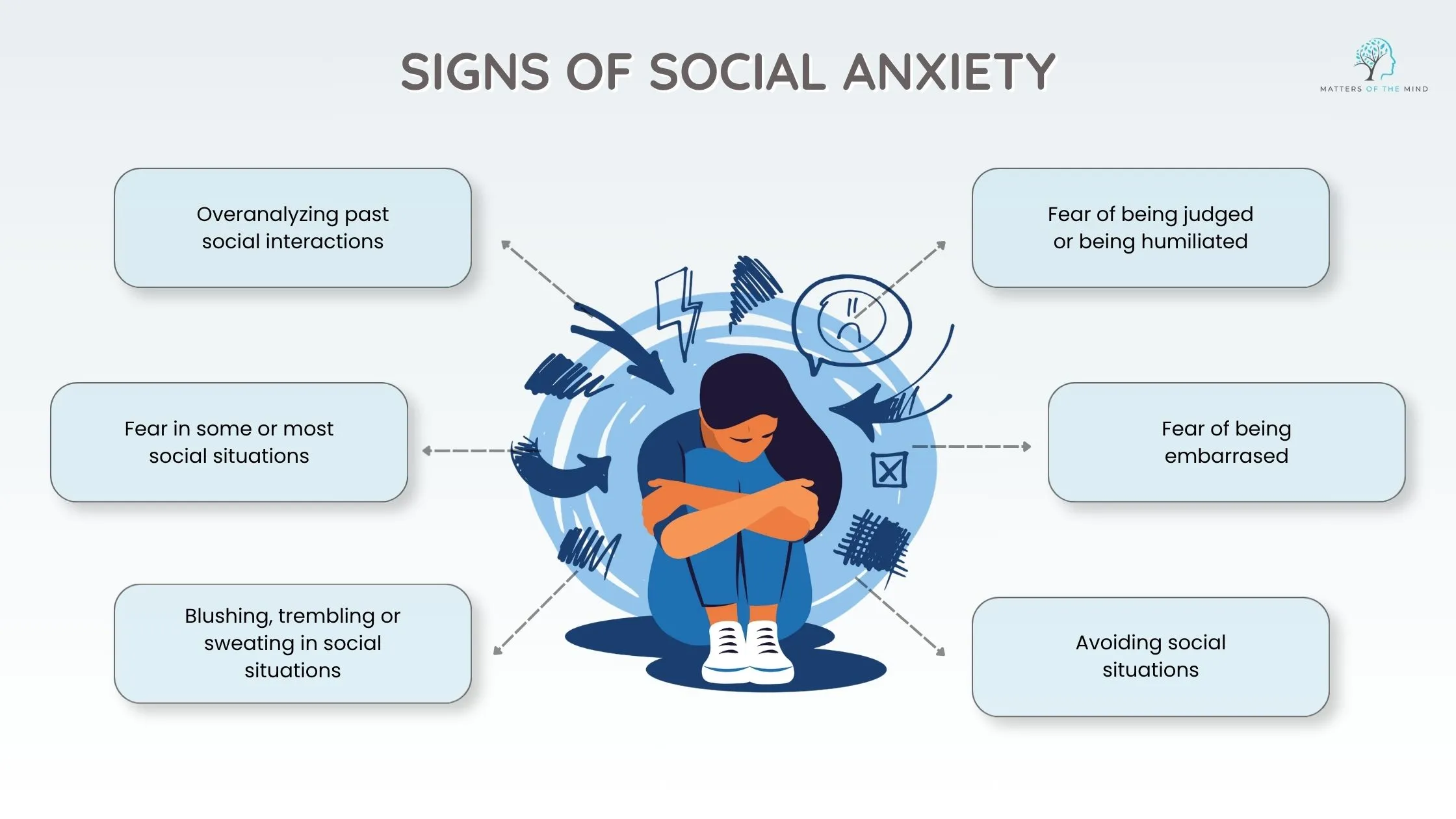
In this way, social anxiety becomes part of everyday life. The fear before any social event, overthinking conversation afterwards, avoiding eye contact, speaking very little in groups, difficulty in eating or physical symptoms such as sweating, nausea, can all be symptoms of social anxiety. People with social anxiety often know that their fear is larger than the situation itself, and it’s not easier to cope with. The mind and body can react as if there is a real danger, even when the actual situation is safe.
How Cognitive Behavioural Therapy Can Help Deal with Social Anxiety
When dealing with social anxiety, individuals want something practical, structured, and effective. This is where Cognitive Behavioural Therapy is helpful. CBT is based on the simple idea that thoughts, feelings and behaviour are connected. For social anxiety, it helps you identify the automatic thoughts that fuel fear. An individual learns to recognise thinking patterns like mind-reading and builds experience through direct behaviour rather than reassurance.
If an individual believes, “Everything will think I sound stupid”, that thought can lead to anxiety, which then leads to avoidance or silence. This might bring short-term relief, but it reinforces fear over time.
CBT helps break this cycle and release an individual from endless loops.
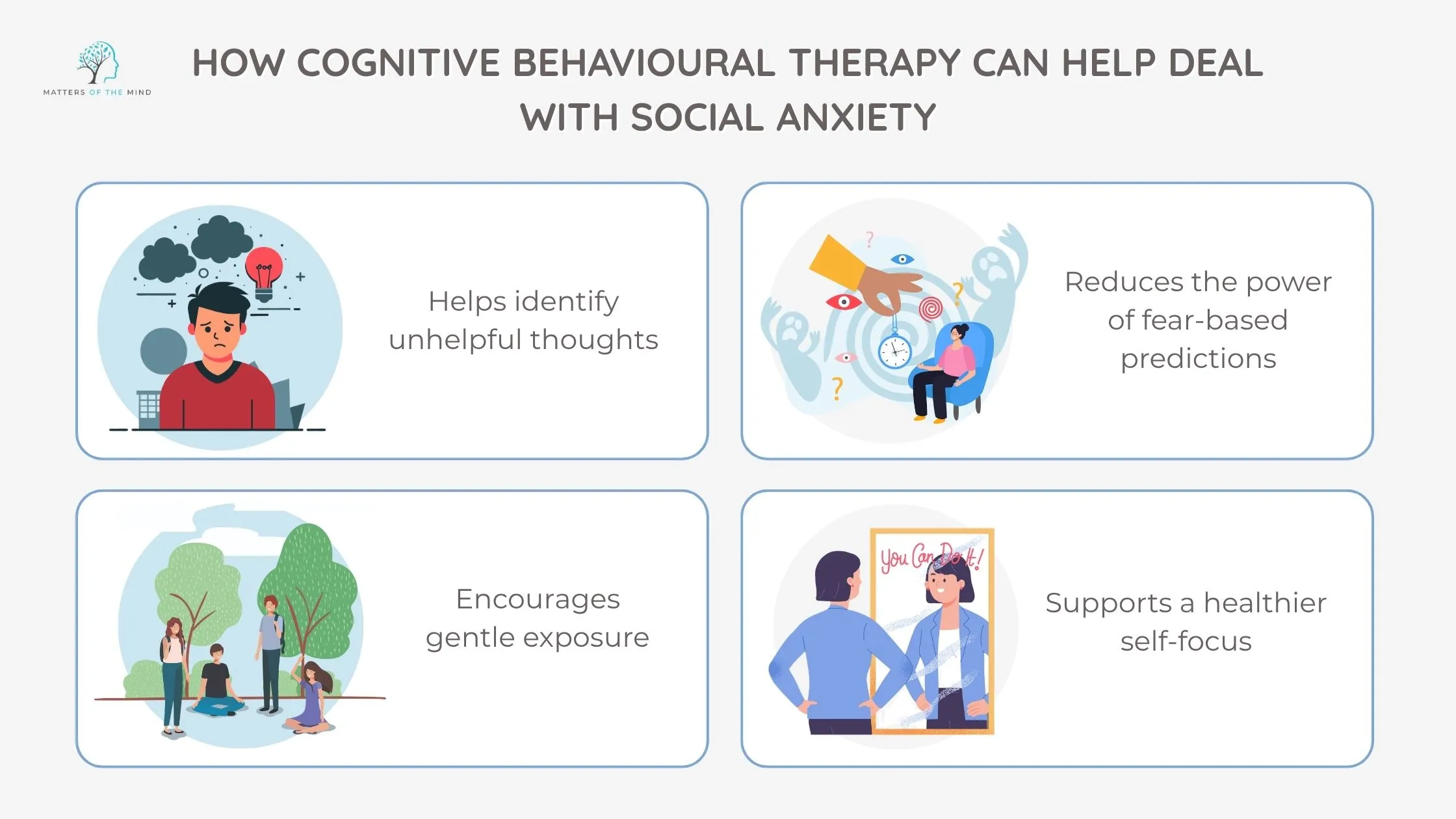
1. Helps identify unhelpful thoughts
CBT brings thoughts into awareness. Once the thoughts are noticed, they can be examined more calmly and clearly.
2. Reduces the power of fear-based predictions
Social anxiety keeps testing the thoughts to keep the anxiety alive. Many of the thoughts are predictions, not facts. CBT gradually weakens the grip of this fear.
3. Encourages gentle exposure
Avoidance makes social anxiety deeper. The more the person avoids, the more threatening & unfamiliar the situation feels. CBT often includes gradual exposure to feared situations in a supportive way.
4. Supports a healthier self-focus
People with social anxiety often become highly focused on how they look, sound or appear to others. This internal monitoring can make situations feel more uncomfortable. CBT helps shift attention outward, so the person can engage naturally with the moment, conversation or environment.
Tips to Fix Social Anxiety In a Real Way
Learning how to beat social anxiety usually means learning how to respond to it differently, not trying to eliminate every anxious feeling at once. Here’s how you can start it early:
-
- Noticing the situation that triggers fear
- Identifying the thoughts that appear before and after the anxiety
- Reducing avoidance in small, manageable steps
- Practising self-compassion instead of harsh judgment
- Seeking progress, not perfection
- Seeking professional support when needed
Take the First Step
If social anxiety is affecting your confidence or daily life, professional support can help you build practical coping strategies and feel more at ease in social situations.
Final Thoughts
Social anxiety holds the capacity to make the world feel smaller than it is. It can create a constant sense of stress, self-doubt and hesitation. But it can’t define the whole life.
With the right support, especially through cognitive behavioural therapy, individuals can learn to challenge unhelpful thoughts and develop a more grounded relationship with themselves and others.
For personalised support, you can reach out to Dr Kavita Deepak-Knights, a clinical psychologist in Windsor, Berkshire. Through Matters of the Mind, she helps individuals cope with their internal difficulties and thoughts and achieve healthy mental well-being. Social anxiety can be heavier if not treated properly, so reaching out at the right time and to the right expert can make a real difference.
Frequently Asked Questions (FAQs)
1. How do I know if it’s social anxiety or just shyness?
Shyness is usually occasional, while social anxiety is more intense and persistent. It often includes fear of judgement and can affect daily life, relationships, or work.
2. Can Cognitive Behavioural Therapy help with social anxiety?
Yes, CBT is a well-recognised approach. It helps you understand your thoughts and behaviours, and gradually respond to social situations with more confidence.
3. Will I have to face my fears straight away?
No, CBT usually takes a gradual approach. You work through situations step by step, at a pace that feels manageable.
4. What can I do to manage social anxiety day to day?
Small steps can help, such as noticing your thoughts, reducing avoidance gradually, and being kinder to yourself as you build confidence.
5. Can social anxiety improve without therapy?
It may improve over time, but often continues if avoidance becomes a habit. Support can help break that cycle more effectively.


