
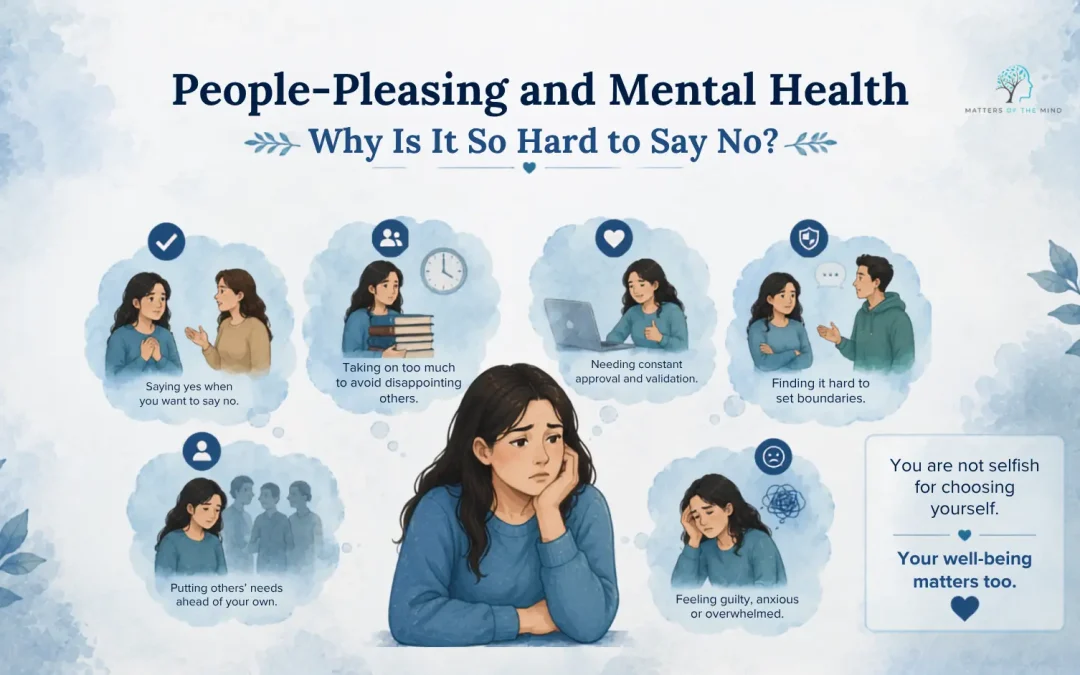
There’s a name for it. People-pleasing. Won’t find it in a diagnostic manual as its own thing, but ask any therapist and they’ll tell you it comes up all the time, usually tangled into anxiety, low self-worth, or a family history nobody’s ever really unpacked. If you’ve lived inside it, you know the exhaustion is oddly specific. Hard to explain to someone who’s never had to think twice before ordering their own coffee.
What Is People-Pleasing, Really?
Mostly it lives on the inside. Someone can seem completely easygoing while privately keeping score of every favour, feeling unseen, dreading the next ask before it’s even arrived. The niceness is doing a job. It’s not really who they are, even if it’s been running so long it’s started to feel that way.
The Psychology Behind People-Pleasing: Why Saying No Feels So Hard
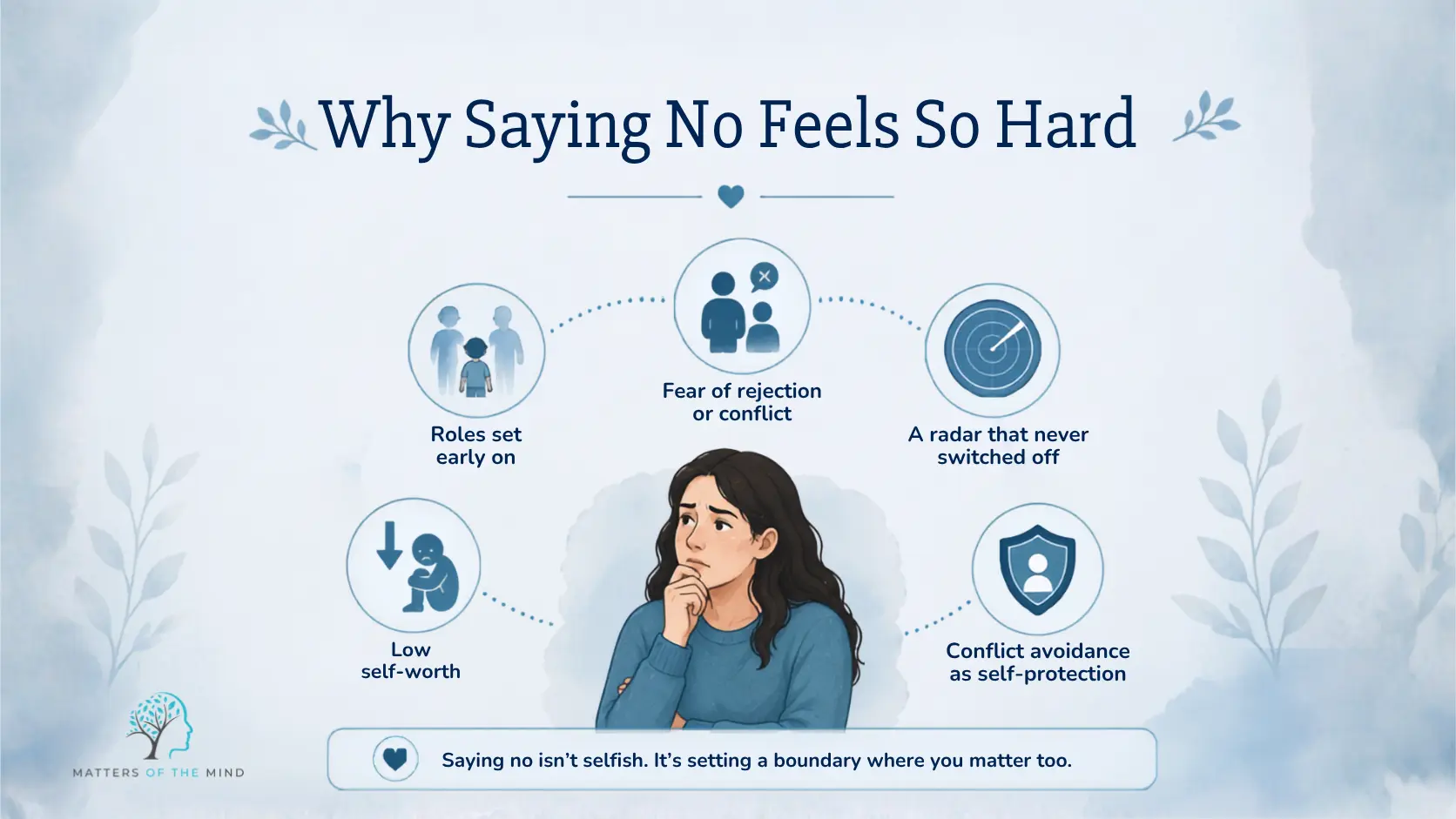
Fear of rejection or conflict
Roles set early on
Low self-worth
A radar that never switched off
Conflict avoidance as self-protection
None of it makes a people-pleaser fragile. It means the behaviour’s been doing a job this whole time, and figuring out what that job actually was matters a great deal more than being told, again, to just grow a spine.
Signs You Might Be a People-Pleaser
A few worth checking yourself against:
-
- You apologise for things that clearly aren’t your fault. Someone else walks into you, and somehow you’re the one saying sorry.
- You agree before you’ve actually thought about it. The real answer shows up afterwards, usually right after it’s too late to take it back.
- “Whatever you want” is basically a reflex. So much of one that you’ve genuinely lost track of what you’d pick if someone made you answer honestly.
- Other people’s moods feel like your responsibility. Someone’s disappointment or irritation, and suddenly it’s a problem you’re personally on the hook to fix.
- You go quiet exactly when something’s bothering you. Speaking up feels like more risk than it’s worth, even about things that actually matter to you.
- Resting comes with guilt attached. As if your worth needs earning through output rather than just existing.
None of that is a character indictment if a few of these land. It usually just means a strategy that once kept you safe has been doing more driving lately than you’d like.
How to Stop Being a People-Pleaser
Get used to disappointing people, in small doses
Buy yourself time before answering
Practise on the small stuff first
Notice the story running underneath
Work out what you actually want
Consider talking to a therapist
Where this traces back to childhood, or trauma, or anxiety that’s been quietly steering things for years, a therapist tends to get you further than willpower alone ever will. CBT can help unpick the anxious thinking driving the day-to-day behaviour. Trauma-informed or relational therapy is usually better placed for tracing back to where the pattern actually started.
Take the First Step
If social anxiety is affecting your confidence or daily life, professional support can help you build practical coping strategies and feel more at ease in social situations.
Frequently Asked Questions (FAQs)
1. Is people-pleasing an actual mental health condition?
Not on its own, no. It’s a behavioural pattern rather than a diagnosis, though it very often turns up alongside anxiety, low self-esteem, or unresolved trauma – and it can weigh on you just as heavily as something with a formal label would.
2. Why do I feel so guilty saying no, even over tiny things?
Usually that guilt was learned, often a long time back, somewhere saying no actually was risky or brought on disapproval that wasn’t easy to shake off afterwards. The feeling itself is real. It just isn’t a reliable signal that you’ve done anything wrong in the present.
3. Does this always trace back to childhood?
Not always – but often enough that it’s worth asking yourself the question honestly. Someone who grew up managing a parent’s mood, or dodging conflict, or earning love through being useful, tends to carry that pattern well into adulthood, long after whatever made it necessary in the first place is gone.


