
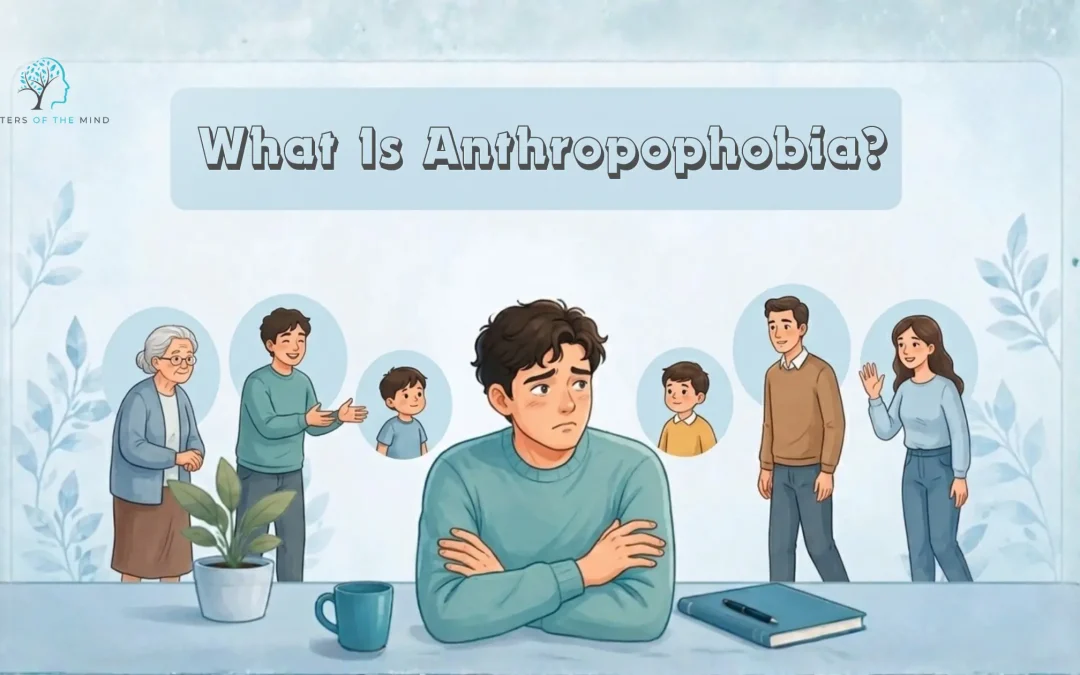
It’s not a term most people come across until they’re searching for an explanation for what they’re feeling, so it helps to unpack what anthropophobia actually is, how it differs from social anxiety, and what tends to help.
What Is Anthropophobia?
It isn’t listed as its own diagnosis in the DSM-5, the manual clinicians use to classify mental health conditions. Instead, mental health professionals typically understand it either as a specific phobia or, depending on how it shows up, as an expression of social anxiety disorder.
That said, plenty of therapists and researchers still use the term because the experience it describes is distinct enough to deserve its own name. This isn’t shyness, and it isn’t simply being an introvert who needs a bit more downtime after socialising. It’s a fear response that can make ordinary situations, a crowded bus, a queue at the shop, a conversation with a colleague, feel genuinely threatening.
Anthropophobia vs Social Anxiety: What’s the Difference?
Social anxiety disorder centres on a fear of being judged, embarrassed, or humiliated in social situations. Someone with social anxiety might feel fine sitting quietly in a crowd where nobody’s paying them any attention, but dread the idea of speaking up in a meeting or being watched while they eat.
Anthropophobia runs deeper than that. The fear isn’t really about what other people might think, it’s about the presence of people at all. Someone with anthropophobia might feel just as anxious next to a stranger on a train, saying nothing, as they would giving a speech. The fear can extend to close friends and family too, not only unfamiliar faces, which is part of what makes it so isolating
Symptoms of Anthropophobia
Physically, being around people can bring on a racing heart, sweating, shallow or rapid breathing, trembling, nausea, dizziness, or tightness in the chest. In more severe cases, this can tip into a full panic attack.
Psychologically, there’s often intense anticipatory anxiety before anything has even happened, a persistent worry that something bad will occur if others are nearby. Many people also experience an overwhelming urge to escape or avoid the situation entirely, along with a strong sense of dread that doesn’t necessarily fade with familiarity.
Over time, this fear of being around people commonly turns into avoidance: skipping plans, working from home whenever possible, doing the shopping at odd hours, or leaning heavily on messaging instead of face-to-face conversation.
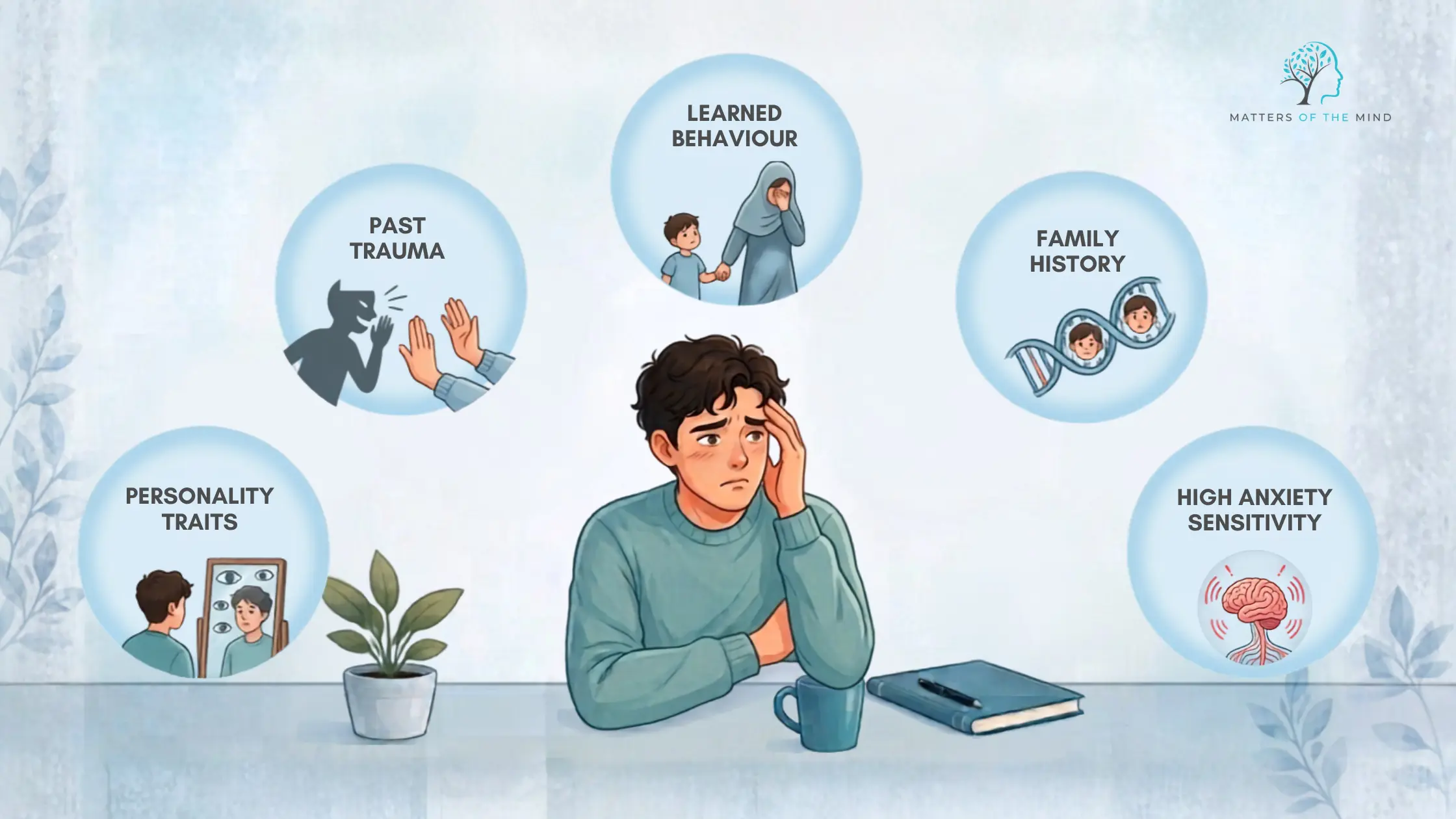
- Past trauma, particularly experiences involving bullying, abuse, or a frightening interaction with another person
- Learned behaviour, especially growing up around a parent or carer who modelled intense social fear or avoidance
- A family history of anxiety disorders, which suggests some degree of genetic predisposition
- Underlying anxiety sensitivity, where the nervous system is simply more reactive to perceived threat
- Certain personality traits, including a tendency towards heightened self-consciousness
How Anthropophobia Affects Daily Life
Fewer friendships, missed opportunities at work or in education, and a growing sense of loneliness that can, ironically, make the original fear worse.
Relationships often bear the brunt of it. Partners, friends, and family may struggle to understand why someone needs so much space, and the person experiencing the anthropophobia may feel embarrassed or ashamed about a fear that seems, from the outside, hard to justify. That shame tends to keep people from asking for help long after they could genuinely benefit from it.
Treatment for Anthropophobia
Cognitive behavioural therapy (CBT) is usually the first port of call. It helps people identify the thought patterns driving the fear, often deeply held beliefs that people are dangerous or unpredictable, and gradually replace them with more balanced, realistic ones.
Exposure therapy is often used alongside CBT. Rather than avoiding people altogether, someone works through a carefully structured series of situations, starting small and building up gradually, so the nervous system has the chance to learn that the feared outcome doesn’t actually happen.
For some, particularly where the phobia is rooted in a specific traumatic experience, trauma-focused therapies can help process what happened rather than just managing the anxiety it left behind. Medication, typically anti-anxiety medication or antidepressants, is sometimes used alongside therapy for more severe cases, though it’s rarely the whole answer on its own.
When to Seek Help
A GP is a sensible first stop and can refer you on to a therapist or psychologist. Early support tends to make a real difference, both in how quickly things improve and how manageable the process feels along the way.
Take the First Step
If social anxiety is affecting your confidence or daily life, professional support can help you build practical coping strategies and feel more at ease in social situations.
Final Thoughts
If this sounds familiar, either for yourself or someone you know, it’s worth having a conversation with a mental health professional about what support might look like. Understanding what’s happening is often the first real step towards feeling less afraid of the world around you.


