
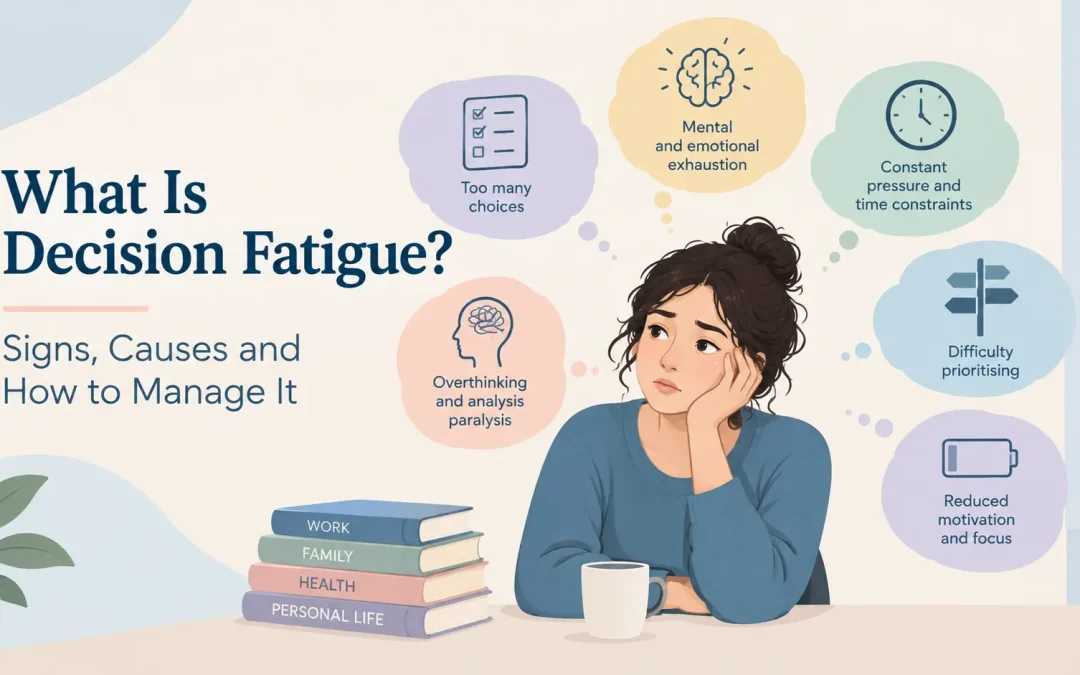
By 9pm, some people can’t even decide what to watch. Not because nothing appeals – because the part of the brain that weighs up options has clocked off for the day, whether it’s been told to or not. That’s decision fatigue, and it’s a lot more ordinary than it sounds. Most people have felt it without ever putting a name to it.
It tends to sneak in sideways. You’re not tired exactly, not in the way a hard workout tires you out. It’s a specific kind of foggy resistance to choosing anything at all, even things that don’t matter much. Paint colour, lunch order, which reply to send first. Everything starts to feel like it deserves more thought than you’ve got left to give it.
What Decision Fatigue Actually Is
Decision fatigue is the decline in the quality of your decisions after a long stretch of decision-making. The mental “muscle” involved in weighing options, considering consequences, and choosing between them gets used up over the course of a day, much like physical stamina does. Once it’s depleted, people tend to do one of two things: avoid deciding altogether, or take whatever option needs the least thought, which usually means the easiest or most impulsive one rather than the best one.
It’s not laziness and it’s not a lack of discipline. It’s a genuinely finite resource getting spent down, and by the time evening rolls round, there’s often very little left in the tank.
Signs You’re Dealing With Decision Fatigue
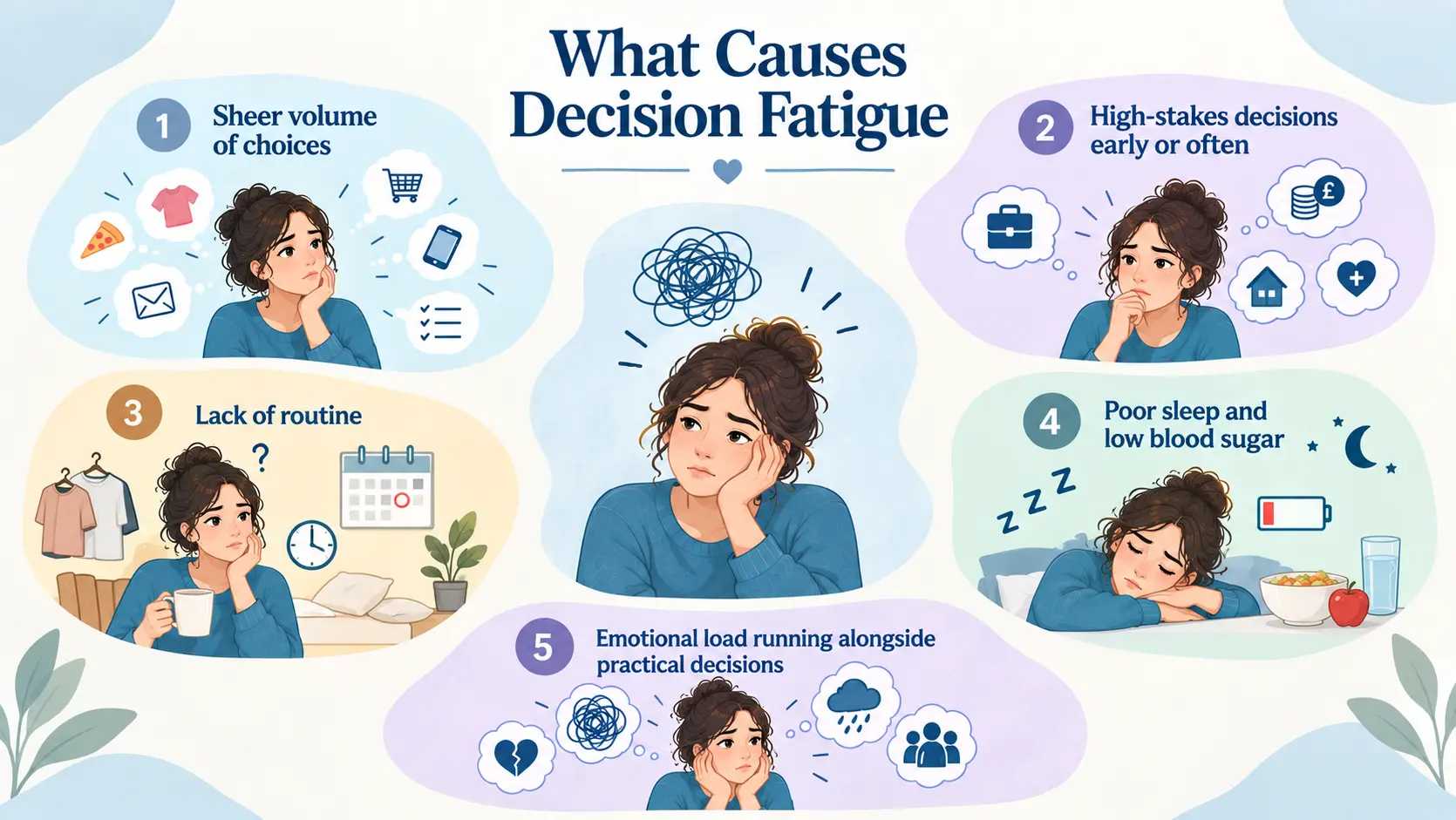
- Small choices start to feel disproportionately hard. Picking a meal or replying to a text takes far more effort than it should.
- You default to “whatever’s easiest,” even when it’s not what you actually want. The path of least resistance wins by default, not because you chose it on merit.
- You avoid decisions altogether, leaving emails unanswered or plans unconfirmed simply because deciding feels like too much right now.
- You feel unusually irritable by the afternoon or evening, especially after a day full of choices, meetings, or problem-solving.
- You make impulsive choices later in the day that you wouldn’t have made in the morning – an unnecessary purchase, a snap agreement to something you’ll regret.
- You second-guess decisions you’ve already made, going back over choices that were perfectly reasonable at the time.
None of these on their own mean much. Together, especially if they follow a predictable daily pattern, they’re a fairly reliable sign your decision-making capacity has run dry.
What Causes Decision Fatigue
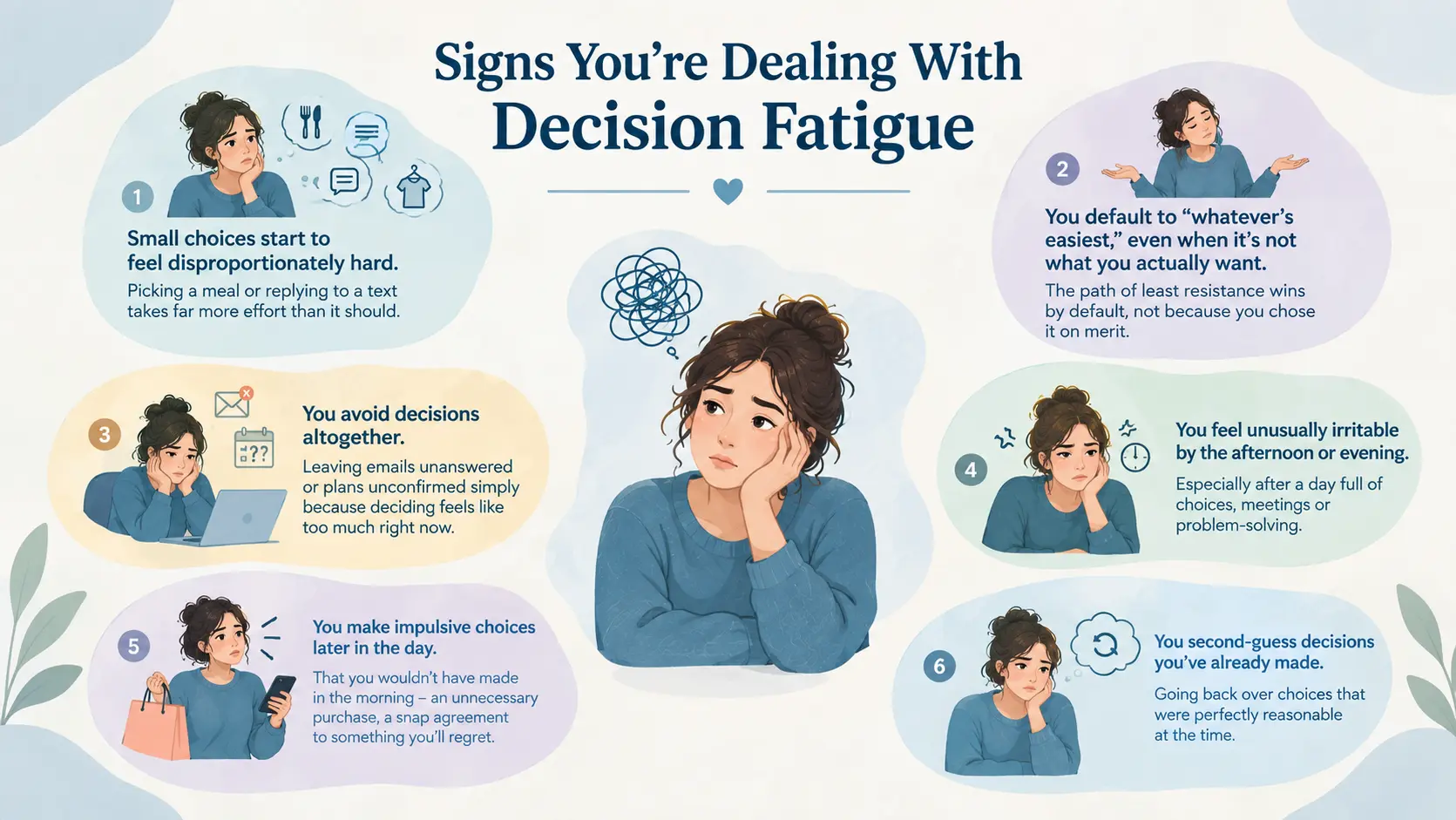
Sheer volume of choices
The average adult makes an enormous number of decisions a day, most of them small and forgettable individually. What outfit, what to eat, which email to answer first, whether to take the call now or later. None of these cost much on their own. Stacked up across a day, they add up to real mental load.
High-stakes decisions early or often
Not all decisions are equal. A single difficult, high-consequence choice – a work decision, a financial one, something involving another person’s wellbeing – can drain far more capacity than a dozen trivial ones combined. People in roles that demand constant judgement calls tend to burn through this resource fast.
Lack of routine
Routines exist partly to remove decisions from the table. Eating the same breakfast, wearing similar clothes, following a set morning order – these aren’t boring habits so much as decision-saving ones. Without them, every single day starts from a blank page, and that blank page has a cost.
Poor sleep and low blood sugar
The brain’s decision-making capacity is closely tied to basic physical resources. Being under-slept or running low on food doesn’t just make you tired, it specifically weakens the part of the brain responsible for weighing options and resisting the easy default, which is why bad decisions cluster so reliably around exhaustion and hunger.
Emotional load running alongside practical decisions
Choices made while worried, grieving, or anxious cost more than the same choices made in a neutral state, because the emotional processing is competing for the same mental resources. This is a big part of why decision fatigue tends to hit harder during genuinely difficult periods of life, not just busy ones.
How to Manage Decision Fatigue
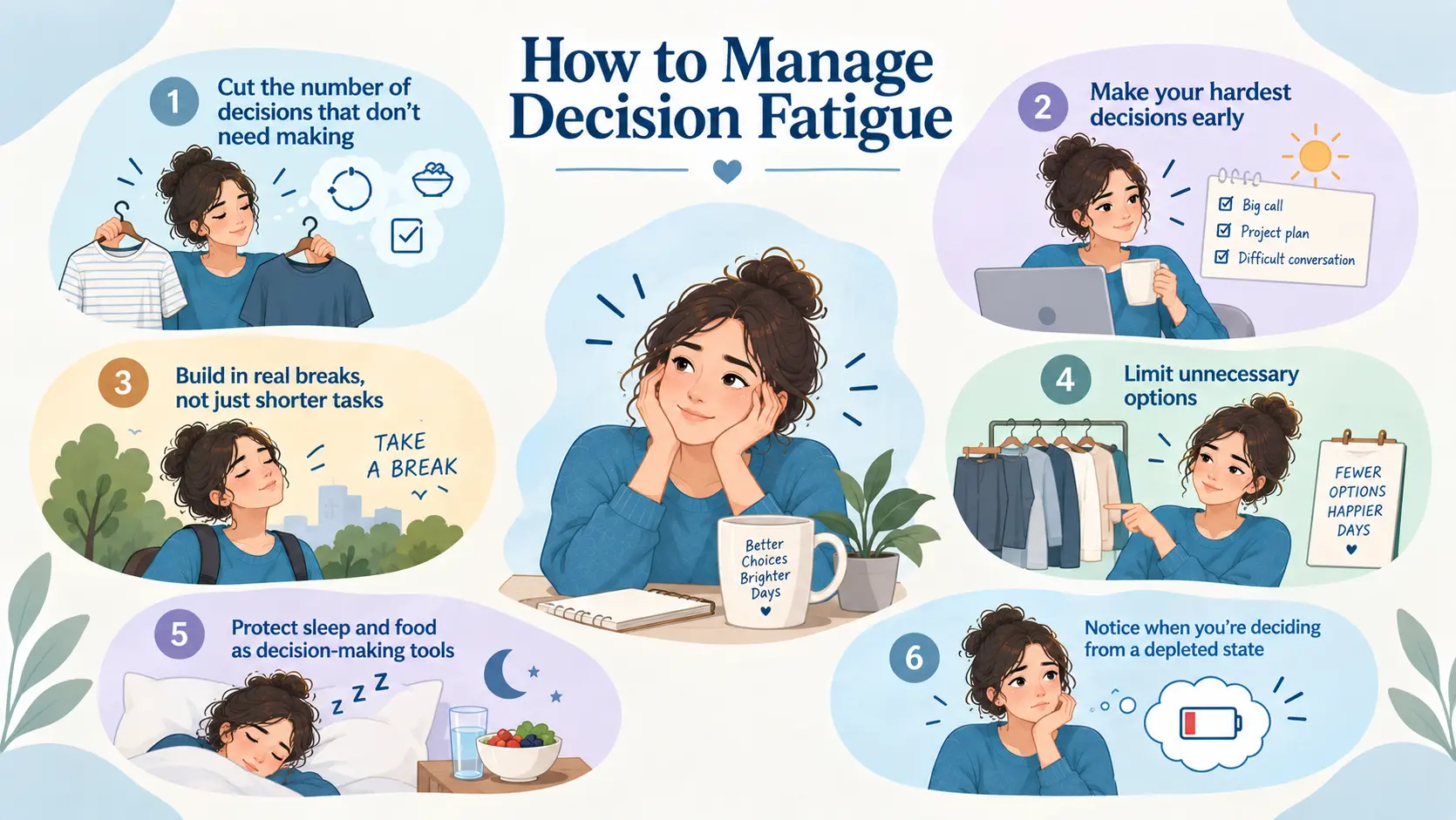
1. Cut the number of decisions that don’t need making
Build small routines around anything low-stakes and repetitive – what you wear, what you eat for breakfast, the order you tackle your inbox. Every decision removed from the pile is capacity saved for something that actually deserves it.
2. Make your hardest decisions early
Decision-making capacity tends to be highest earlier in the day, before it’s been spent on smaller things. Where possible, schedule the choices that matter most – a difficult conversation, a big work call, anything with real consequences – for the morning rather than letting them pile up till evening.
3. Build in real breaks, not just shorter tasks
A ten-minute walk or a proper pause between meetings does more for decision-making capacity than simply working through faster. The brain needs actual downtime to recover this particular kind of energy, not just a change of task.
4. Limit unnecessary options
More choice isn’t always helpful. Narrowing things down in advance – a set weekly meal rotation, a small wardrobe of go-to outfits, a short list of default responses for common situations – takes the option overload out of everyday moments that don’t need it.
5. Protect sleep and food as decision-making tools, not just health habits
It’s easy to treat sleep and meals as separate from performance, when in fact they’re some of the most direct levers you have over how well your brain handles choices later that day. Treating them as non-negotiable tends to pay off in ways that go well beyond simply feeling less tired.
Help Starts with a Conversation
Mental health challenges don’t have to be faced alone. Early support can make a lasting difference.
Book a confidential appointment with Dr Kavita Deepak-Knights and take the first step towards better emotional wellbeing.
6. Notice when you’re deciding from a depleted state
If a choice can wait, and you know you’re running on empty, let it wait. “I’ll decide tomorrow morning” is a perfectly reasonable answer to a non-urgent question, and it usually leads to a better outcome than pushing through and deciding badly now.
Decision fatigue isn’t a flaw in anyone’s character or a sign of weak willpower. It’s a predictable, fairly mechanical response to asking a limited resource to do more than it’s built for in a day. Recognising the pattern is most of the work – once you can see it building, there’s usually something small you can do about it before it turns into a genuinely bad decision.
Frequently Asked Questions (FAQs)
1. Is decision fatigue a real, recognised phenomenon?
Yes. It’s well documented in psychological research, most famously in studies looking at judges’ parole decisions, which became noticeably harsher as the day went on and improved again after a break. The underlying idea, that decision-making capacity depletes with use, is widely supported.
2. Can decision fatigue affect mental health?
Indirectly, yes. Chronic decision fatigue tends to overlap with stress, burnout, and irritability, and can make existing anxiety or low mood harder to manage, since even small daily choices start to feel overwhelming on top of everything else.
3. How long does it take to recover from decision fatigue?
It varies, but a proper break, food, and sleep usually restore capacity within hours rather than days. The bigger issue is usually structural – if the same overload happens every day, the fatigue never really gets the chance to clear before it builds up again.


