
Grief is a deeply personal journey. Whether it comes from the loss of a loved one, the end of a relationship, a life transition, or any significant emotional change, the experience can feel overwhelming. It is a complex emotional experience that touches every part of our lives, whether it’s our thoughts, emotions, behaviours, relationships or self. These stages are often known as the Kubler-Ross model, defining a framework for understanding reactions to loss.

Understanding the five stages of grief and loss can offer a compassionate framework for making sense of these changes, helping you recognise that what you’re feeling is a natural part of the healing process.
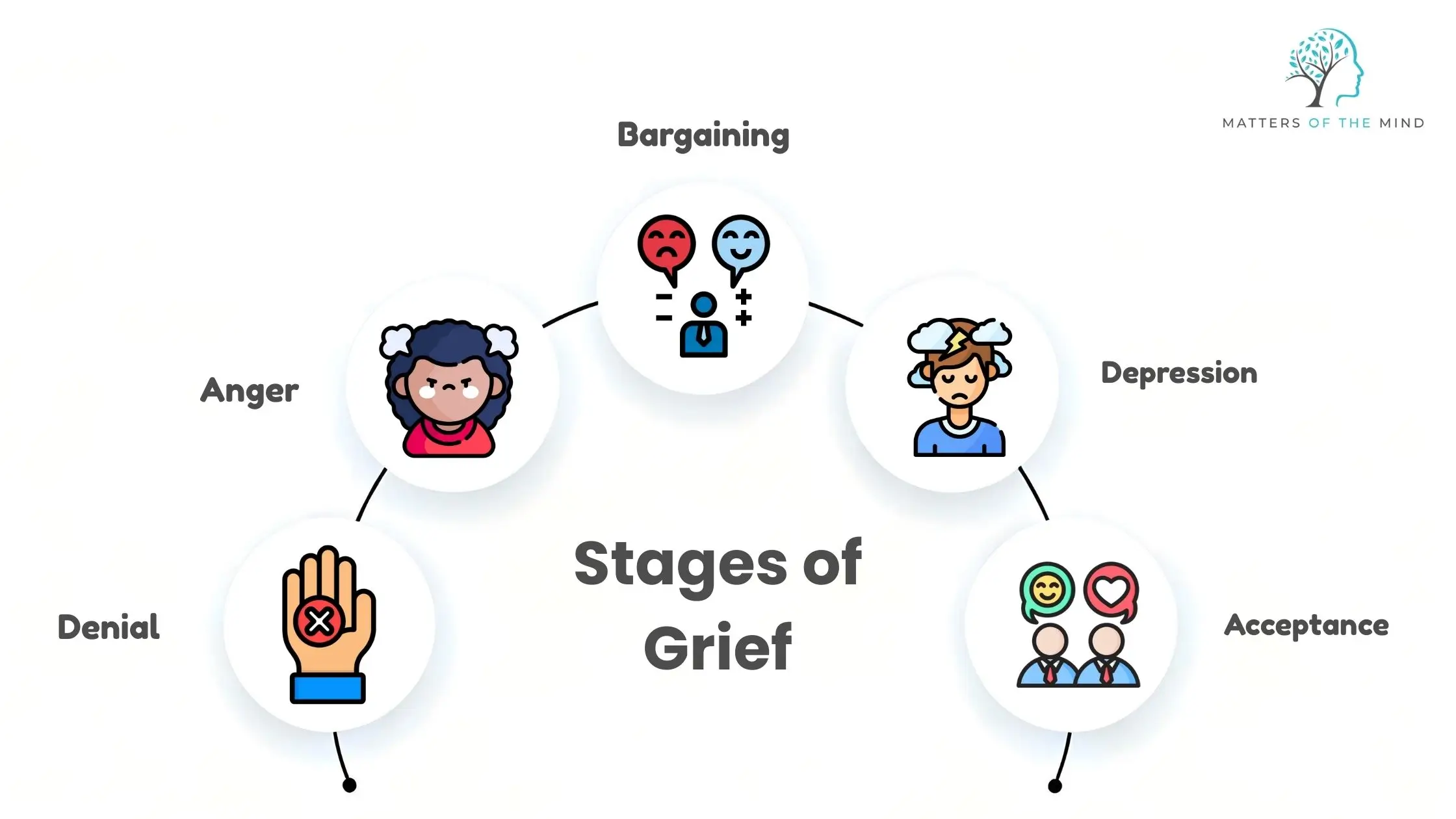
These stages, denial, anger, bargaining, depression and acceptance, were introduced to explain how humans naturally process loss. While not every individual goes through all five in the same order, these grief and loss stages offer a framework to understand what you may be feeling.
This guide simplifies each stage and highlights supportive therapies and techniques that can help you move through them with compassion and care.

5 Stages of Grief and Loss: A Detailed Guide
5 Stages of Grief and Loss

1. Denial: This can’t be real

The first reaction to loss often arrives as a misbelief or emotional numbness. Denial isn’t a refusal to accept reality; it’s a mental way of protecting yourself until you are ready to understand the depth of the loss. Common feelings in this stage include shock or emotional numbness, feeling disconnected from the situation, and difficulty acknowledging what’s happened.

Therapy that helps

Mindfulness-based grounding

This approach offers gentle grounding techniques that help you stay connected to your body and the present moment without overwhelming your emotions. Simple breathing, sensory awareness, and grounding exercises create a sense of emotional safety and help you slowly process reality at your own pace.
Mindfulness-based grounding is especially valuable here, as it allows your mind and body to adjust to the shock of grief and loss in a calm, safe way.

2. Anger: Why did this happen

When the numbness softens, the anger may arise. This anger may be directed at yourself, others, the situation, or even at life itself. It is a natural emotional release, not something to avoid or suppress. At this stage, an individual experiences irritability, resentment, frustration, or blames themselves or others. These emotions harm an individual’s mental health significantly.

Therapy that helps

CBT helps identify the thoughts fueling anger and teaches healthy ways to express and manage these emotions. This influences an individual’s thoughts, feelings, and actions by changing negative patterns.

3. Bargaining: If only

This stage brings mental negotiation, wishing things were different, replaying moments, or asking, “What if I had done something differently?” Bargaining often hides feelings of guilt or regret. Replaying scenarios, guilt about past decisions, and difficulty letting go of the hard feelings are the common feelings in this stage.

Therapy that helps

Acceptance and commitment therapy (ACT)

  • ACT supports you in acknowledging painful thoughts without getting stuck in them.
  • ACT gently helps you to accept emotions while moving towards meaningful actions.
  • ACT is considered one of the best therapies during times of bargaining.

4. Depression: Everything feels heavy

This stage often reflects the true emotional weight of the loss. It may bring sadness, withdrawal, loss of interest or emotional exhaustion. This is not a sign of weakness; it is the mind and heart trying to process what has changed. Deep sadness, wanting to be alone, reduced energy and overwhelming emotional fatigue are the major signs of this stage.

Therapy that helps

Acceptance and commitment therapy (ACT)

ACT supports individuals in gently acknowledging their pain instead of fighting against it. Through this, an individual makes space for painful feelings without becoming overwhelmed by them, reconnects with small, meaningful actions that bring grounding, and builds emotional flexibility to ensure better mental well-being.

CFT is particularly helpful when the sadness is linked to self-blame, guilt or harsh self-judgement. It helps individuals in developing a more understanding and kinder inner voice by reducing shame or guilt. CFT allows individuals to soften toward themselves and hold their grief with gentleness rather than criticism.

5. Acceptance: Learning to live with the present moment

Acceptance doesn’t mean that the pain disappears or that it feels okay. Instead, it means that you’re gradually learning to coexist with the grief while slowly rebuilding life around it. It includes the understanding of the permanence of loss, beginning to create new routines, and moments of peace and stability.

Therapy that helps

In the acceptance stage, ACT plays a meaningful role in helping individuals gently rebuild their lives while honouring the presence of their grief. Instead of trying to suppress or eliminate emotions, ACT teaches emotional flexibility, allowing you to feel while moving towards a meaningful and purposeful life.

Activities For Coping With Grief and Loss

Supporting yourself outside therapy is just as important, too. Here are some of the activities that you can perform:
  • Mindfulness grounding techniques
  • Journaling your emotions
  • Nature walks
  • Breathing or relaxation practices
  • Talking to someone you trust

However, there is no right or wrong way to grieve. If you find yourself feeling stuck or unable to cope with daily life, reaching out for support can be a meaningful step towards healing. Therapeutic support provides a safe, compassionate space to understand your emotions and move through them at your own pace.

Your healing can begin with one conversation

Connect with Dr Kavita Deepak-Knights for compassionate, personalised guidance as you navigate healing.

Frequently Asked Questions (FAQs)

1. Are the 5 stages of grief and loss the same for everyone?

Not necessarily. These 5 stages usually provide a helpful framework, but every person experiences grief differently.

2. How long does the grief and loss stage last?

There is no set duration. Some people move through these stages in months, while others take years. What matters the most is allowing yourself to feel the emotions rather than rushing.

3. Can ACT therapy help with grief and loss?

Yes. ACT therapy for grief and loss focuses on accepting difficult emotions instead of resisting them. It teaches emotional flexibility, grounding techniques, and ways to reconnect with your values so you can rebuild a meaningful life, even with the presence of grief.

4. Is acceptance the final step of grief?

Acceptance isn’t an endpoint; it’s an ongoing process. You may still feel waves of sadness, longing, or confusion. Acceptance simply means learning to carry the loss while continuing to grow, adapt, and find meaning.
Dr. Kavita Deepak-Knights
About the Author

Dr Kavita Deepak-Knights linkdin icon

With over 20 years of clinical experience, Dr Kavita brings a trusted and expert approach to mental health care. As the founder of Matters of the Mind and an Oxford-trained psychologist, she specialises in evidence-based therapies, including CBT, ACT, DBT, and EMDR, offering personalised support to help individuals understand their challenges and enhance their overall well-being.