

Developed by Paul Gilbert, CFT is a form of psychological therapy designed to help people cultivate compassion towards themselves and others. Rather than simply thinking positively, the compassion therapy model teaches individuals how to use warmth, courage, and understanding to regulate challenging emotions, and reduce inner pressure, self-judgement and fear.
What is Compassion Focused Therapy (CFT)
CFT is particularly based on three emotional systems:
- Threat system: activated by fear, anxiety, criticism, or danger.
- Drive system: pushes us to achieve, succeed and stay motivated.
- Soothing system: responsible for calm, safety, connection, and emotional balance.
Why CFT Works So Effectively For Anxiety?
Anxiety often arises from a deeply rooted threat system, where the mind perceives danger, and it reacts with worry, fear, and physical tension. CFT for anxiety is especially effective because it reduces the power of self-criticism, fear and inner pressure, and it strengthens the soothing system to balance emotional responses.
- Calm the body during worry
- Respond to anxious thoughts without fear
- Build resilience by grounding themselves in emotional safety
- Break cycles of avoidance and self-blame
Working of Compassion Focused Therapy (CFT)

1. Understanding the Inner Critic
2. Cultivating the compassionate self
3. Soothing rhythm breathing
4. Compassionate Image
5. Exploring emotional histories
Who Can Benefit From CFT?
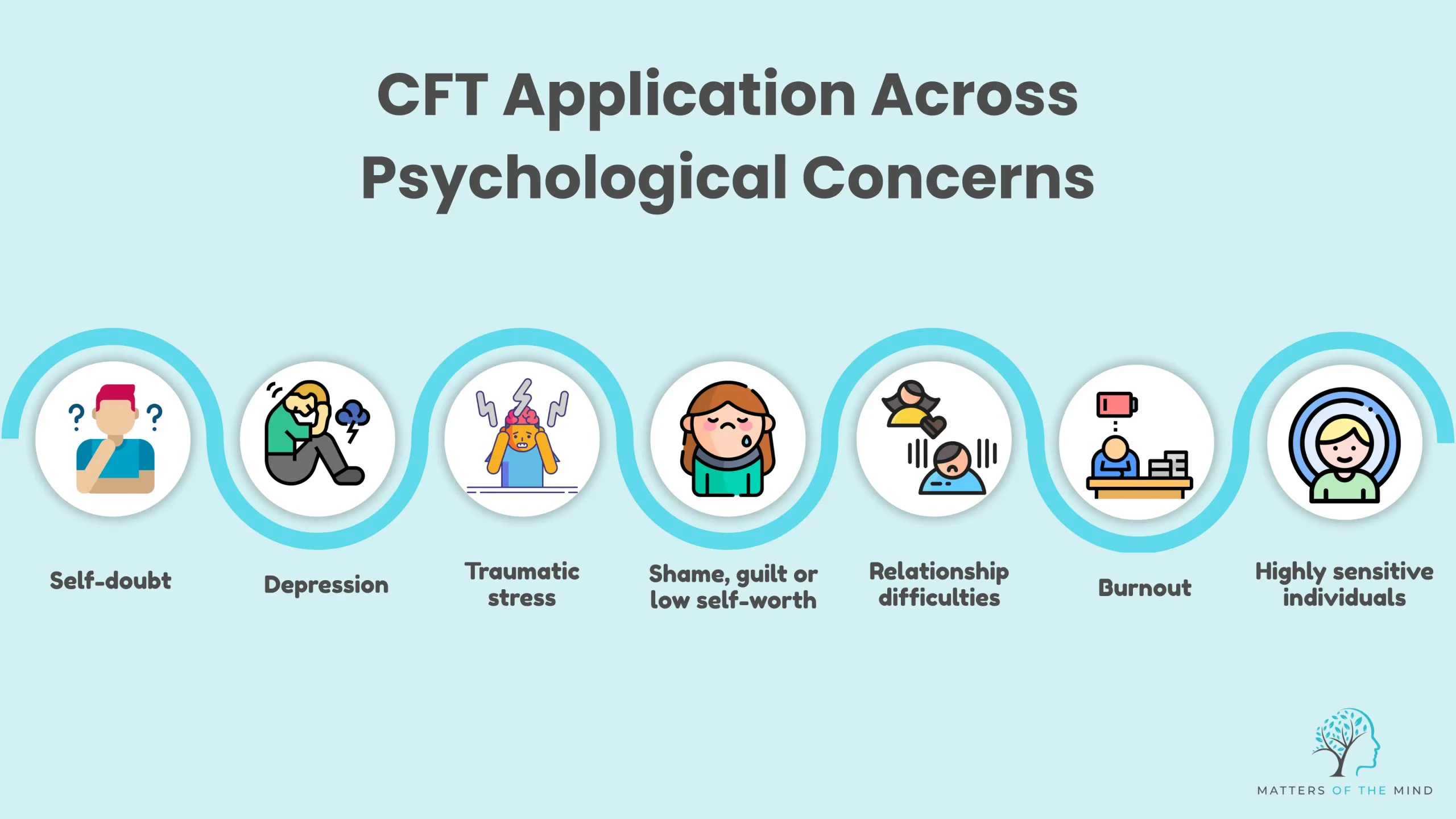
- Self-doubt
- Depression
- Traumatic stress
- Shame, guilt or low self-worth
- Relationship difficulties
- Burnout
- Highly sensitive individuals experiencing inner pressure
Final Thoughts
Compassion-focused therapy (CFT) is more than a psychological technique; it’s a personalised approach that helps individuals to build a better and kinder inner world. By strengthening the soothing system, softening self-criticism, and cultivating emotional courage, CFT opens the door to healing that feels safe, gentle and sustainable.
Sometimes the smallest step can shift everything. Let’s explore what that step might be?


