Someone you love walks through the door in a bad mood. They haven’t said it’s about you. Still, you’re already replaying the day, wondering what you did wrong. You offer tea, soften your voice, drop whatever you were doing. 20 minutes later, you’re exhausted and they’re still unhappy.
If that sounds familiar, you may be feeling responsible for other people’s emotions. From the outside, it can look like being thoughtful. On the inside, it feels more like being permanently on call for everybody else’s mood.
What Does Feeling Responsible for Other People’s Emotions Mean?
Emotional responsibility means taking ownership of your words, actions and reactions. It doesn’t mean controlling how another person feels. You can apologise when you’ve caused hurt. You can listen when somebody is struggling. But you cannot guarantee they’ll be happy, calm or pleased with you.
That’s the difference between caring and carrying. Caring leaves room for two people to have feelings. Carrying makes one person the manager of both.
Why Do You Feel Responsible for Everyone’s Feelings?
There can be different reasons why you feel responsible for other people’s emotions. Here are some common ones.
You Learnt to Notice Other People’s Moods Early
If you grew up around someone whose mood changed often, you may have learnt to notice when they were upset or angry. This helped you avoid arguments. But now, even when your partner is quiet or having a bad day, you may feel that something is wrong and that you need to fix it.
You Worry About Upsetting Others
You may feel scared that someone will reject you or stop liking you if they are unhappy with you. So, you try to make them feel better, even when you haven’t done anything wrong. Over time, this can lead to people pleasing, where you put other people’s needs before your own.
You Are Used to Taking Care of Others
Maybe you are the person everyone comes to when they have a problem. You listen, offer advice and try to help. While caring for others is a good thing, it becomes difficult when you feel guilty or blame yourself whenever someone is upset, even when their feelings have nothing to do with you.
Signs You’re Taking On Too Much Emotional Responsibility
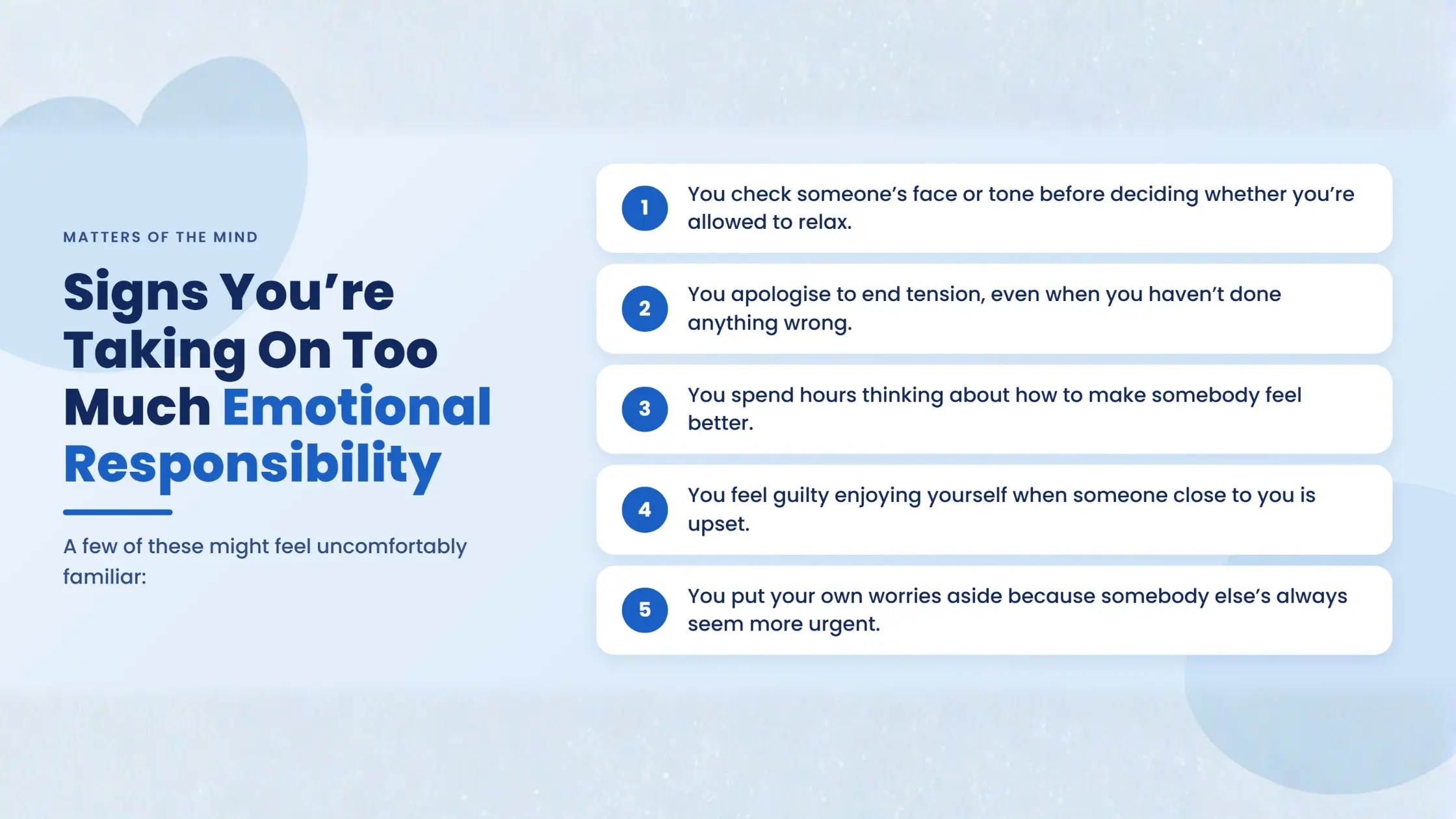
A few of these might feel uncomfortably familiar:
-
You check someone’s face or tone before deciding whether you’re allowed to relax.
-
You apologise to end tension, even when you haven’t done anything wrong.
-
You spend hours thinking about how to make somebody feel better.
-
You feel guilty enjoying yourself when someone close to you is upset.
-
You put your own worries aside because somebody else’s always seem more urgent.
That emotional burden can turn into resentment, poor sleep or anxiety. You’re looking after every room’s atmosphere, but hardly noticing what’s happening inside you.
Where Your Responsibility Begins and Ends
You are responsible for speaking respectfully, being honest, acknowledging harm and offering help you can realistically give. You aren’t responsible for preventing every disappointment, choosing somebody else’s reaction or making their distress disappear. An emotional boundary doesn’t mean you stop caring. It means you stop treating every feeling as yours to fix.
How to Build Emotional Boundaries Without Becoming Cold
Building emotional boundaries doesn’t mean you have to stop caring about others. It means learning how to support people without ignoring your own feelings and needs. Here are some simple ways to start:
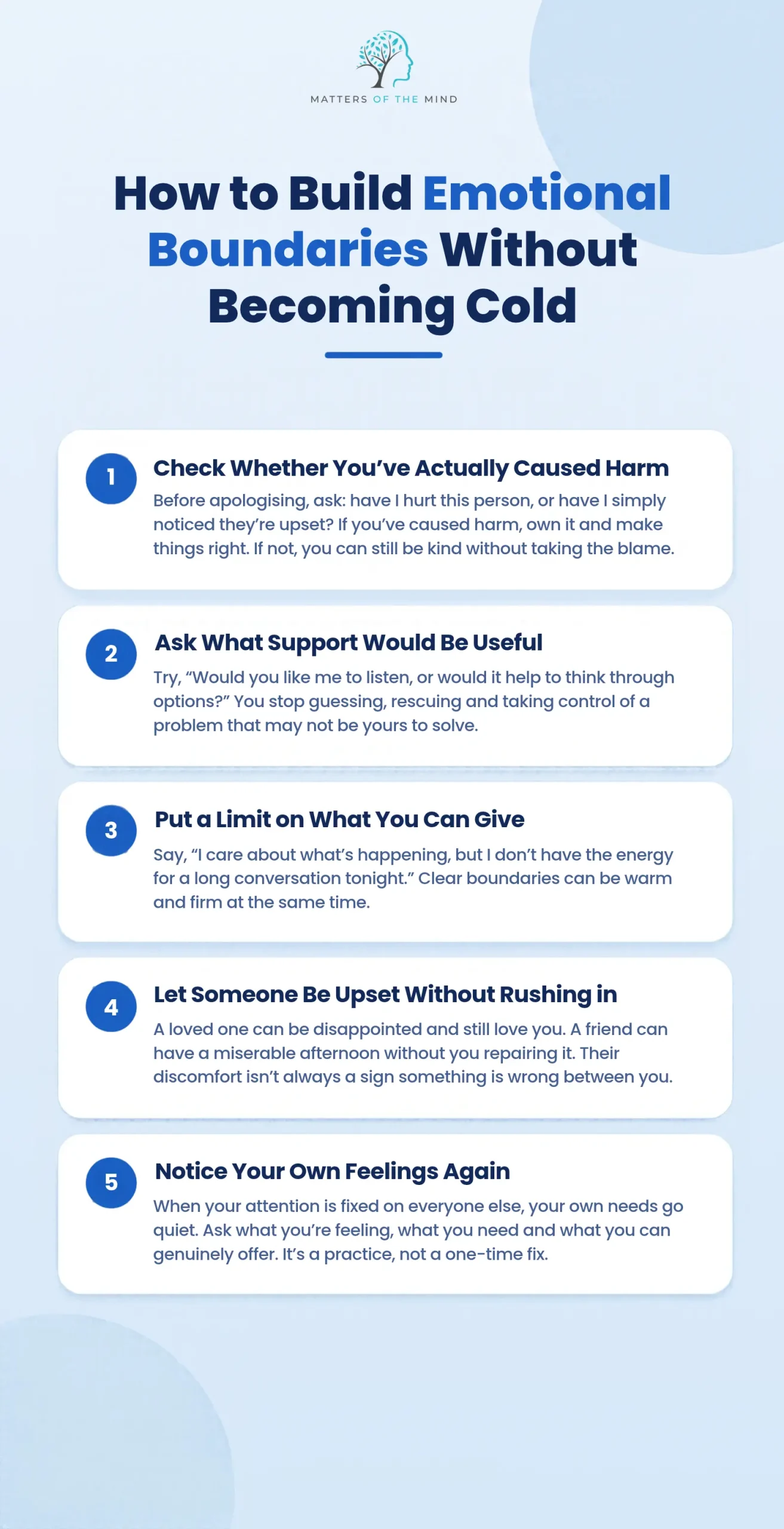
Check Whether You’ve Actually Caused Harm
Before apologising, ask yourself: Have I hurt this person, or have I simply noticed they’re upset? If you’ve caused harm, own it and try to make things right. If you haven’t, you can still be kind without taking the blame.
Ask What Support Would Be Useful
Try, “Would you like me to listen, or would it help to think through options?” It’s a small change, but an important one. You stop guessing, rescuing and taking control of a problem that may not be yours to solve.
Put a Limit on What You Can Give
You might say, “I care about what’s happening, but I don’t have the energy for a long conversation tonight.” Or, “I want to talk, just not while we’re shouting.” Clear emotional boundaries can be warm and firm at the same time.
Let Someone Be Upset Without Rushing in
This is often the hardest part. A loved one can be disappointed and still love you. A friend can have a miserable afternoon without you repairing it. Their discomfort isn’t always evidence that something is wrong between you.
Notice Your Own Feelings Again
When your attention is fixed on everyone else, your own needs go quiet. Ask yourself what you’re feeling, what you need and what you can genuinely offer. This is a practice, not something you master in one brave conversation.
When It’s Worth Talking to a Therapist
If you often find yourself monitoring other people’s moods, worrying that you’ve upset someone, or feeling responsible for keeping everyone happy, it may be worth exploring why. These patterns can sometimes be linked to anxiety, low self-esteem, prolonged stress, or past experiences that have made you particularly sensitive to other people’s emotions.
Talking to a therapist can help you understand where these feelings come from and develop healthier ways to respond. Dr Kavita Deepak-Knights offers psychological therapy in Windsor, Berkshire, and online. Depending on your needs, approaches such as CBT, ACT, and compassion-focused therapy can help you manage self-blame, set healthier emotional boundaries, and become less critical of yourself.
Being caring and considerate doesn’t mean you have to carry everyone else’s emotions. If this pattern is affecting your relationships, confidence, or peace of mind, you can get in touch with Dr Kavita to explore whether therapy might help you find a healthier balance between caring for others and looking after yourself.
Ready to prioritise your mental health?
Connect with Dr Kavita Deepak-Knights to explore personalised care and navigate mental health challenges.
Frequently Asked Questions (FAQs)
1. What if my partner goes silent after an argument?
Ask whether they’d prefer space or a time to talk. Don’t assume silence means you’ve failed. If withdrawal is used to punish or frighten you, seek support.
2. How do I handle a parent who treats me like their therapist?
You can say, “I love you, but I’m not able to be the only person you talk to about this.” Encourage wider support without taking the whole role yourself.
3. What if a colleague's bad mood ruins my day?
Stick to what you know rather than guessing their thoughts. Clarify work expectations, and raise repeated hostility through appropriate workplace channels.