

Living with bipolar disorder can be deeply challenging, not only for the person experiencing it, but also for those who care about them. If someone close to you is dealing with this situation, you may sometimes feel unsure about how to respond and what support to offer.
However, bipolar disorder is a serious and complex mental health condition that affects mood regulation, cognitive functioning, behaviour, and the ability to carry out everyday tasks. These changes can range from periods of elevated moods and high energy to situations of deep sadness or low motivation. For individuals, understanding these experiences can be the first step towards providing meaningful support.
Supporting someone through these fluctuations requires patience, compassion, and a deeper awareness of what they may be going through internally. In this blog, we’ll try to understand what exactly bipolar disorder is and how we can be able to help someone dealing with this.
What is Bipolar Disorder?
Bipolar disorder, also called manic disorder, is a mental health condition that causes extreme mood swings. It includes emotional highs, known as mania and hypomania, and lows, also known as depression. People with bipolar disorder may experience:
-
- Sudden or gradual mood changes
- Periods of high confidence, increased activity, or reduced need for sleep
- Phases of deep sadness, fatigue, or withdrawal
- Difficulty concentrating or making decisions
- Changes in behaviour, energy, and emotional responses
These experiences are not simply mood swings or personality traits. They are a part of a mental health condition that requires professional care and consistent emotional support.
5 Ways to Support Someone Through Bipolar Disorder
Understanding practical ways to offer support can make the process less challenging. Below are the ways that can create a more balanced and compassionate approach.
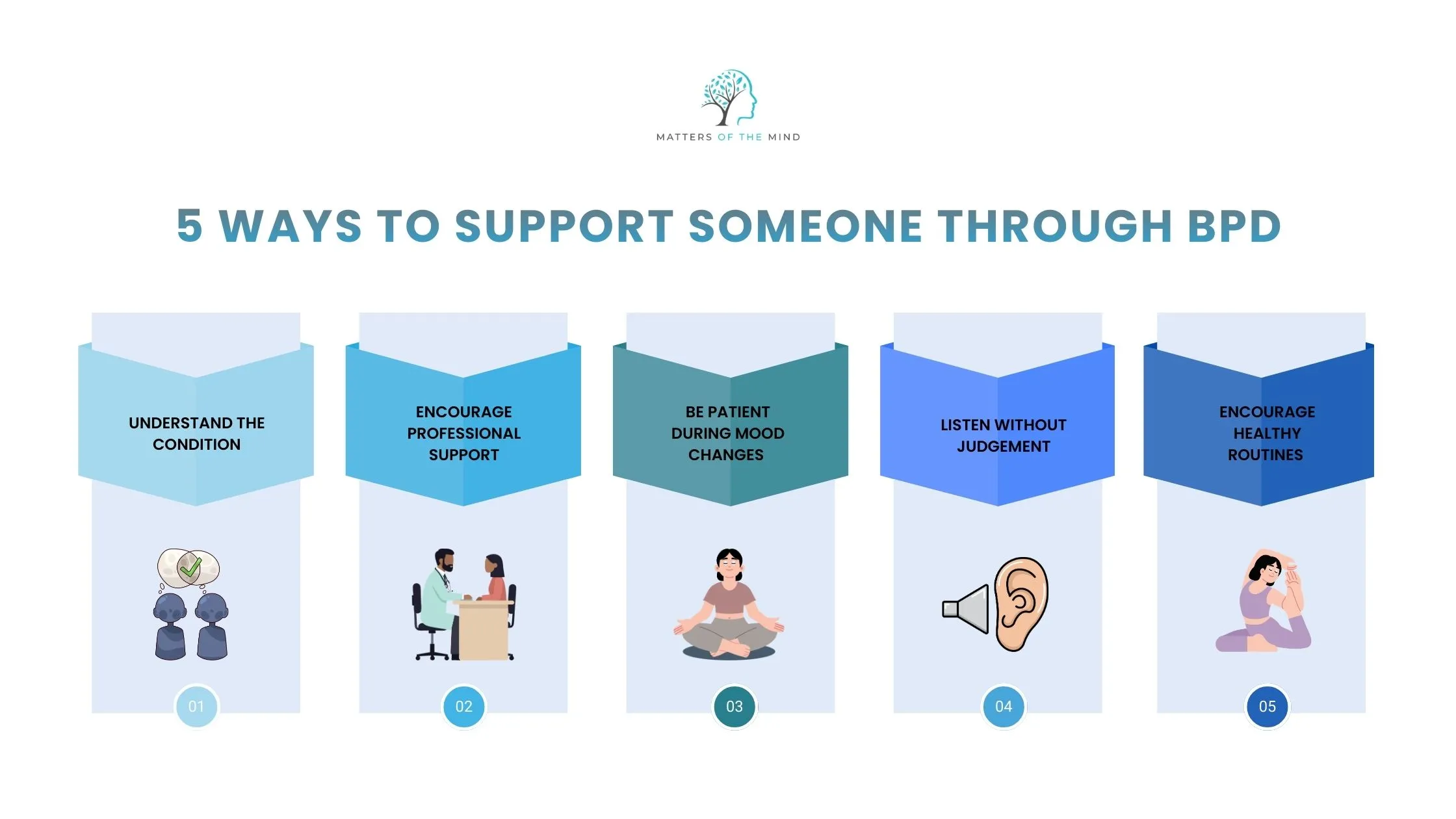
1. Understand the condition
One of the most helpful things you can do is to educate yourself about bipolar disorder. Understanding the nature of mood episodes, triggers, and treatment approaches can help you respond more thoughtfully when challenges arise. When you learn, you are less likely to interpret behaviours personally and more likely to respond with patience and empathy.
2. Exploring what’s already working
While emotional support from loved ones is valuable, professional guidance is often essential in managing bipolar disorder effectively. Encourage someone to seek support from a trained clinical psychologist, which can help them access therapies, coping strategies, and structured treatment plans tailored to their needs.
3. Be patient during mood changes
Mood changes can affect how someone thinks, feels, and behaves. During these times, reactions may seem unusual or intense. Remaining calm and patient provides a sense of stability when one’s inner world feels unpredictable. Instead of avoiding their experiences, acknowledge their feelings and reassure them that they are not facing the experience alone.
4. Listen without judgement
The most helpful thing that can be offered is a free space to talk. Listening attentively without interrupting, correcting, or offering immediate solutions allows someone to feel heard and validated. Many people living with bipolar disorder fear being misunderstood or judged, so a compassionate listening experience is needed and reassuring too.
5. Encourage healthy routines
Stable routines can be very helpful for individuals managing bipolar disorder. Sleep patterns, regular meals, and balanced daily activities often support emotional stability. Encouraging small habits such as maintaining regular sleep schedules or engaging in calming activities can gently reinforce well-being. Joining in healthy routines such as walks or quiet moments of relaxation can make the process feel less isolating.
What to Avoid When Supporting Someone With Bipolar Disorder
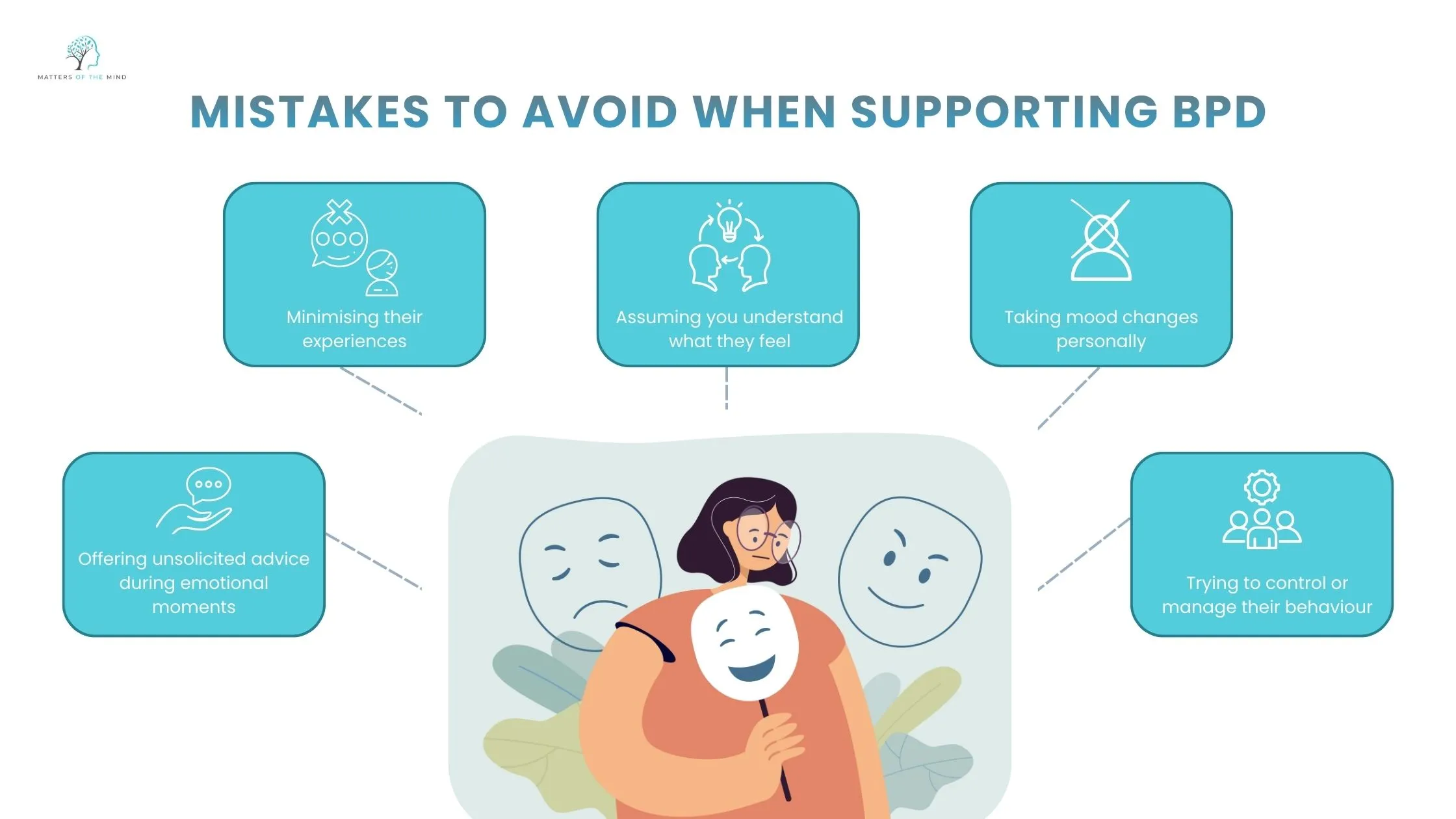
Certain actions can definitely help, but others unintentionally make things more difficult. Try to avoid:
- Minimising their experiences, let them share what they want
- Offering unsolicited advice during emotional moments
- Assuming you understand exactly what they are feeling
- Taking mood changes personally
- Trying to control or manage their behaviour
Supporting someone doesn’t mean carrying the responsibility for their recovery. It means offering care while recognising the importance of professional support and personal boundaries.
In this journey, taking care of yourself matters too. Supporting someone with a mental condition can be emotionally demanding. It’s important to remember that your well-being matters too. Maintaining your own boundaries and seeking guidance when needed is equally needed and helpful.
Explore Our Bipolar Awareness Day Guide
If you would like to understand bipolar disorder in more depth, including why awareness matters and how it affects individuals and families, read our detailed Bipolar Awareness Day article.
Final Thoughts
Supporting someone living with bipolar disorder requires understanding, patience, and empathy. While an individual may not be able to remove the challenges they face, the presence, encouragement, and listening can make a powerful difference.
By learning about the condition, offering consistent emotional support, and encouraging professional care when needed, one can help create an environment where healing and stability feel more possible.
If bipolar disorder is affecting daily life, relationships, or emotional well-being, seeking professional support can be a meaningful step forward. The therapeutic support can help individuals understand their emotional patterns, develop coping strategies, and build coping strategies in their daily life.
However, compassionate support can provide valuable guidance for both individuals and their loved ones and help navigate the journey towards mental well-being.
Frequently Asked Questions (FAQs)
1. What is the best way to help someone dealing with bipolar disorder?
The best way to help someone is by showcasing patience, listening without judgment, and encouraging them to seek professional support.
2. Can bipolar disorder be managed with professional support?
Yes, in many cases, bipolar disorder can be managed with the right treatment, therapy, and healthy routines. Effective therapy sessions can provide guidance, coping strategies, and emotional support.
3. How should you talk to someone with bipolar disorder?
Speak calmly, listen openly, and avoid juggling their feelings. Creating a safe space for them to share their experiences can help someone living with bipolar disorder.
4. Can someone with bipolar disorder lead a normal life?
Yes, many individuals living with bipolar disorder can lead stable and fulfilling lives. With the right treatment, supportive relationships, and professional help, individuals can learn to manage mood changes and maintain daily routines.


