
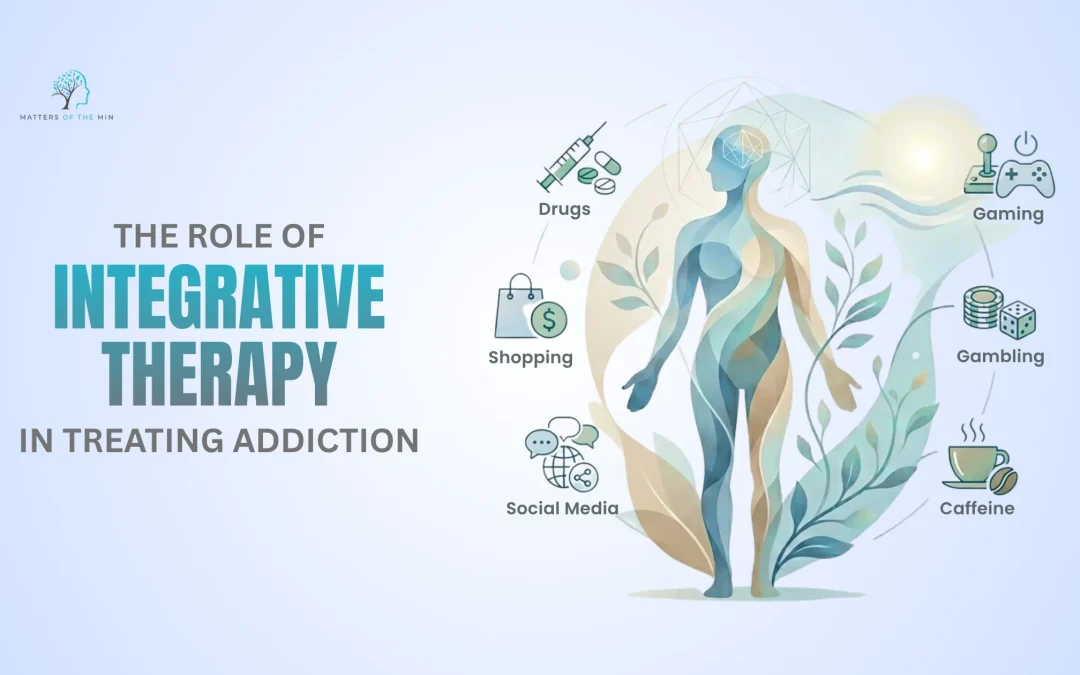
Addiction is rarely just about the substance or behaviour itself. Beneath it often lies the layer of emotional pain, unresolved trauma, and deeply integrated patterns of coping. However, there is no one-size-fits-all approach to addiction treatment. Recovery requires a deeper, more personalised understanding of the individual, and one such therapeutic approach, integrative therapy, plays a meaningful role.
In recent years, there has been a significant growth in terms of choosing evidence-based approaches to achieve a holistic path to healing. This not only supports recovery from addiction but also strengthens long-term emotional resilience.
In this blog, we’ll learn how integrative therapy helps overcome addiction and gives individuals a safe way to lead a healthy life.
Understanding Addiction: A Deeper Way
Addiction is a complex and challenging issue that affects millions of people worldwide. Unlike other conditions, addiction involves aspects of voluntary behaviour, compulsion, and a high degree of personal and societal stigma, making it uniquely challenging to treat.
It affects the brain, behaviour, and emotional well-being simultaneously. It alters the reward system, impacts decision-making, and often coexists with conditions such as anxiety, depression, or trauma. Emotional dysregulation and stress play a significant role in maintaining addictive behaviours. Approaches like mindfulness-based therapies have been shown to reduce cravings and substance use by improving self-regulation and emotional awareness.
What is Integrative Therapy in Addiction Recovery?
Integrative therapy is a personalised approach that combines different therapeutic approaches based on an individual’s needs. Rather than relying on a single framework, it brings together techniques from:
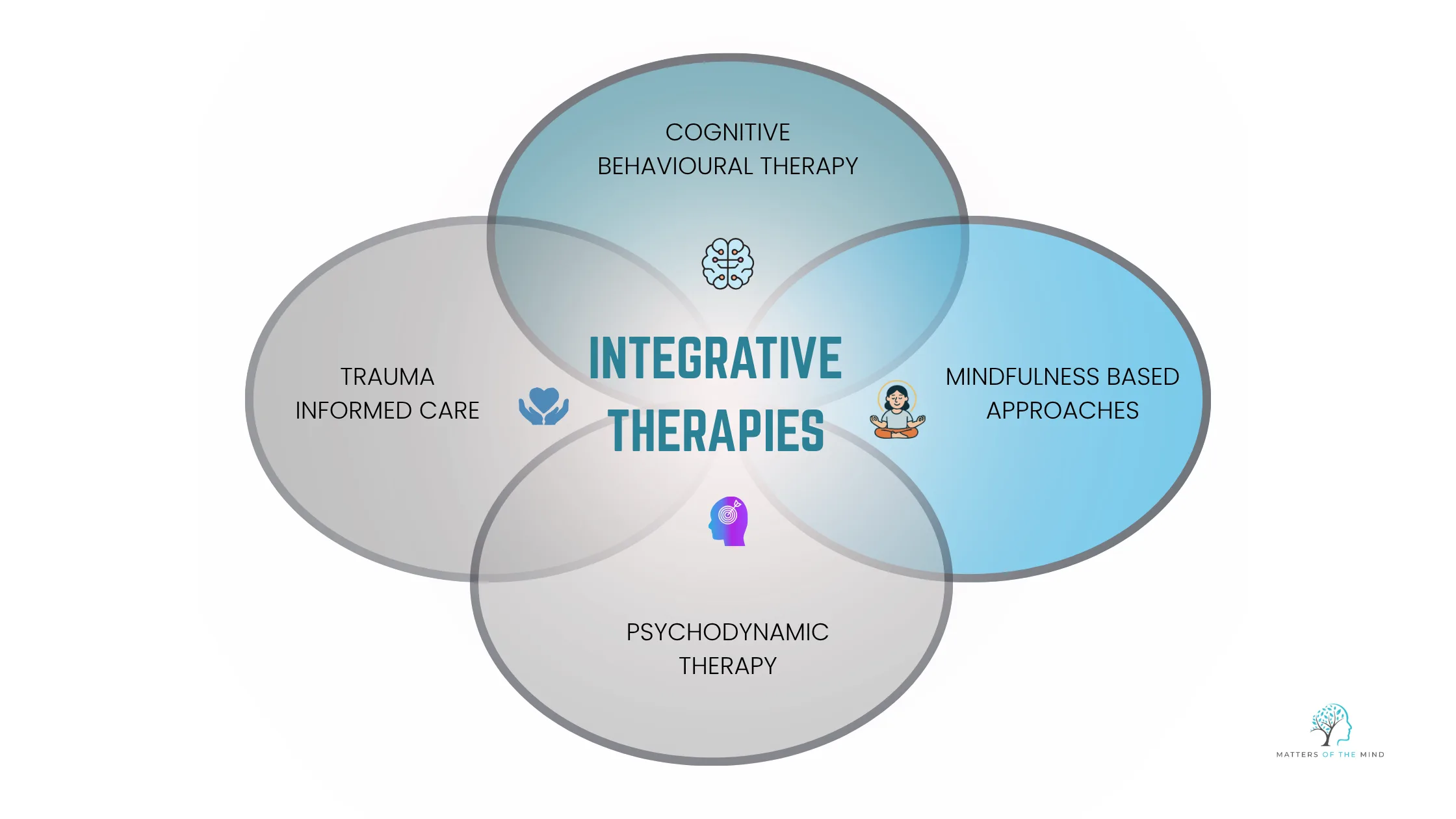
1. Cognitive Behavioural Therapy (CBT)
2. Mindfulness-based approaches
3. Psychodynamic therapy
4. Trauma-informed care
This blended and personalised approach allows addiction counselling to address not just the symptoms, but the root causes of addiction.
For example, while CBT may help identify and change negative thought patterns, mindfulness techniques can support individuals in managing emotional triggers in real time.
Why Does a Combined Approach Work For Addiction?
Addiction is complex, and its treatment. Combining mindfulness-based interventions with other therapeutic approaches enhances outcomes compared to using a single approach alone. Here’s why therapy for addiction recovery becomes more effective when it is integrative:
1. Addresses root causes
Many individuals use substances or behaviours as a way to cope with deeper emotional pain. An integrative approach helps uncover and process these underlying issues.
2. Improves emotional regulation
Mindfulness-based therapies have been shown to reduce stress and enhance cognitive control, which plays a key role in preventing relapse.
3. Supports long-term recovery
Rather than focusing on abstinence, integrative models build healthier coping strategies, improving overall well-being.
4. Adapts to the individual needs
Each person’s journey with addiction is different. A flexible approach allows therapy to evolve alongside the individual.
The Role of Integrative Therapy
Integrative therapy comprises various techniques, and one of the most impactful components is Mindfulness.
Mindfulness-based approaches help individuals:
-
- Become aware of emotions without acting on them
- Recognise emotional triggers
- Develop a non-judgmental relationship with thoughts and feelings
These interventions, if done timely, can reduce substance misuse by influencing cognitive and emotional processes linked to addiction. This creates a space between impulse and action, which is an essential step in recovery.
Integrative Therapy and Mental Health Support For Addiction
Addiction exists in isolation, but many individuals also experience anxiety, depression, or trauma-related challenges. This is the stage where mental health support becomes crucial. The therapy allows for:
-
- Simultaneous treatment for addiction and co-occurring disorders
- A deeper understanding of emotional patterns
- Development of healthier coping mechanisms
By addressing both addiction and mental health together, recovery becomes more sustainable and less fragmented.
A Reminder
The recovery from addiction is not linear. There may be setbacks, pauses and moments of uncertainty. What matters is the presence of consistent, compassionate support. For individuals who are dealing with these needs to know that with proper help and support, this can be treated well.
Final Thoughts
The role of integrative therapy in treating addiction lies in the ability to see the individual with personalised support. By combining different therapeutic approaches, it creates a space where healing can happen at every level, whether emotional, psychological or behavioural.
As understanding of addiction continues to evolve, so will the approach to recovery. If you or someone close to you is struggling, reaching out for help can be a meaningful first step. With the guidance of experienced mental health psychologists, individuals can begin to explore the underlying patterns of addiction in a safe and supportive environment.
For those seeking support, Dr Kavita Deepak Knights offers a supportive space focused on understanding the deeper emotional layers of addiction while guiding individuals towards sustainable recovery. Book a personalised session today and start a journey towards better emotional well-being.
Ready to prioritise your mental health?
Connect with Dr Kavita Deepak-Knights to explore personalised care and navigate mental health challenges.
Frequently Asked Questions (FAQs)
1. What is integrative therapy for addiction?
Integrative therapy is a personalised approach that combines different therapeutic methods to address both addictive behaviours and their underlying emotional causes.
2. How does integrative therapy support addiction recovery?
It helps individuals understand emotional triggers, develop healthier coping strategies, and build skills that support long-term recovery.
3. Can integrative therapy help with co-occurring mental health difficulties?
Yes, it can support individuals experiencing addiction alongside anxiety, depression, or trauma by addressing both at the same time.
4. What types of addiction can integrative therapy help with?
It can support both substance misuse, such as alcohol or drugs, and behavioural addictions like gambling or compulsive habits.
5. Is integrative therapy suitable for everyone?
It is a flexible approach, but suitability depends on individual circumstances and is best determined during an initial consultation.


