
When life feels challenging and stressful, most individuals suffer all at once. Constant overthinking, persistent sense of self-doubt, or a critical inner voice can affect mental health more than we ever imagine. Everyday situations may begin to feel heavier and emotional stress can start affecting sleep, relationships, work and self-confidence. In these moments, it can feel difficult to understand why you are feeling the way you do.
However, in this situation, Cognitive Behavioural Therapy (CBT) offers a structured, evidence-based way of making sense of these experiences. It provides a safe and supportive space to explore how patterns of thinking influence emotions and behaviours, and how these patterns, once recognised, can be reshaped. Rather than just forcing you to think positively, CBT helps you to develop a more balanced and compassionate understanding of the inner world.
In this blog, we’ll learn in detail what exactly Cognitive Behavioural Therapy is and how it works to bring a healthier space for mental well-being.
What Exactly Is Cognitive Behavioural Therapy? (CBT)
Cognitive Behavioural Therapy is based on a simple yet powerful idea that the way we think influences how we feel and behave. Rather than focus intensively on past experiences, CBT primarily works in the present. It helps individuals identify unhelpful thoughts or distorted patterns, understand how these thoughts influence thoughts and emotions, and learn practical strategies to challenge and reframe them. Over time, this process supports emotional balance, improved coping, and greater self-awareness.
Working of Cognitive Behavioural Therapy (CBT)
CBT is a structured and goal-oriented therapy designed to support and empower individuals on their mental well-being journey.
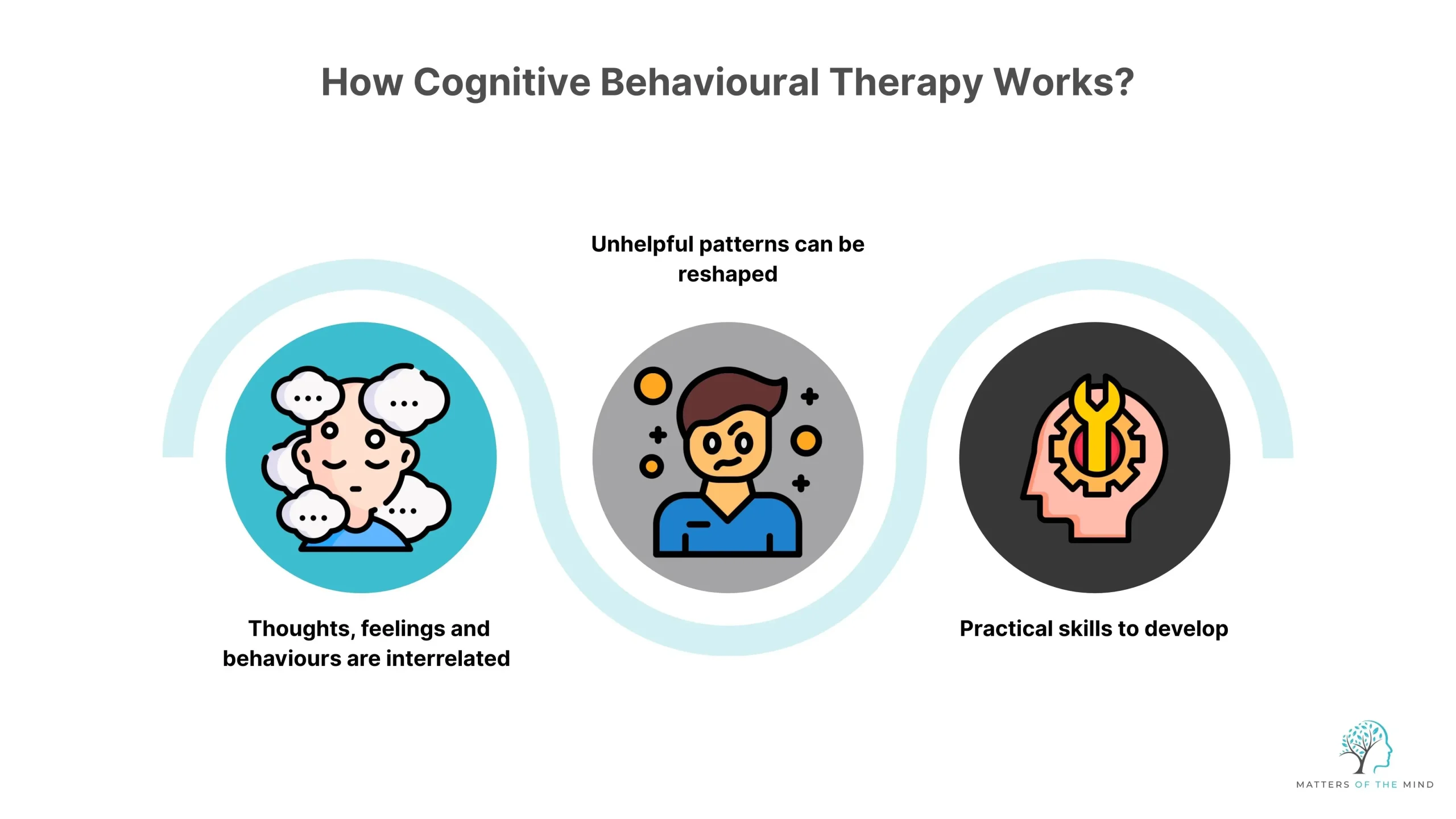
Here are the key principles that are included in this:
1. Thoughts, feelings and behaviours are interrelated
In everyday moments, thoughts often arise automatically, sometimes so quickly that they go unnoticed. CBT helps bring awareness to these patterns, showing how certain ways of thinking can shape emotional reactions and behaviour. By understanding this connection, individuals begin to see that emotional responses are not random but understandable and open to change.
2. Unhelpful patterns can be reshaped
Over time, the mind can fall into habitual ways of interpreting experiences, such as expecting the worst, thinking in extremes, or being overly self-critical. CBT provides a structured and supportive way to recognise these patterns and explore alternative and more balanced ways. Change is approached gradually, with care and self-compassion, rather than under pressure or judgement.
3. Practical skills to develop
CBT is not only about gaining insight but also about learning skills that can be applied in daily life. These are introduced step by step and adapted to individual needs, helping build confidence in managing challenges independently. With practice, these skills often become part of a person’s natural response to stress and emotional difficulty.
Common CBT Techniques Used in Therapy
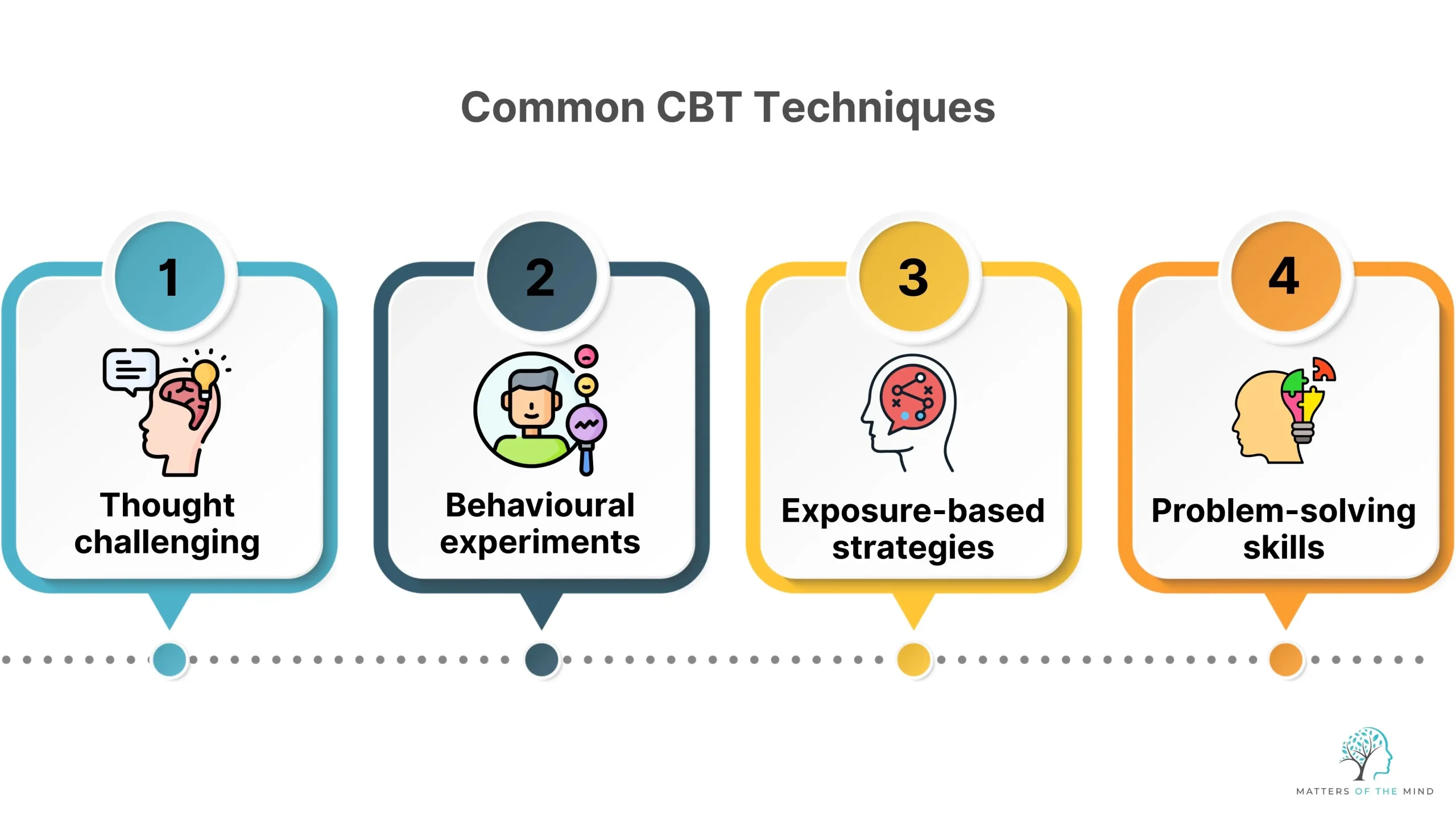
CBT includes a wide range of practices and strategies tailored to individual needs. Some of the commonly used approaches include:
1. Thought challenging
Learning to question negative assumptions and test them against evidence.
2. Behavioural experiments
Trying new ways of responding to situations to see how outcomes change.
3. Exposure-based strategies
Gradual, supported exposure to feared situations to reduce avoidance and build confidence.
4. Problem-solving skills
Breaking overwhelming challenges into manageable and actionable steps.
These CBT techniques for anxiety are particularly effective in helping individuals feel more in control of their actions and reduce emotional distress over time.
Who Can CBT Help With?
CBT is widely used to support individuals experiencing:
- Anxiety and panic symptoms
- Low mood and depression
- Stress & burnout
- Phobias and social anxiety
- Repetitive thinking patterns
- Low self-esteem and confidence issues
CBT is adaptable; it can be integrated into broader psychological therapy services and tailored to suit different life stages and challenges.
What You Can Expect During CBT Sessions
CBT sessions typically include the following things:
- Open, supportive discussions in a calm and safer place
- Identifying specific goals and areas of focus
- Learning practical tools and exercises
- Reflecting on progress and adapting strategies when needed
Is CBT Right For You?
CBT can be particularly helpful if you are looking for:
- A structured yet compassionate approach
- Greater awareness of thought patterns and emotional triggers
- Support in building long-term coping strategies
- Practical tools you can apply in daily life
While CBT is highly effective for many people, the most important factor is finding an approach and therapeutic relationship that feels right for you.
Final Thoughts
Cognitive Behavioural Therapy (CBT) offers a supportive and thoughtful way of understanding the patterns of the mind. By recognising the patterns between thoughts, emotions and behaviours, CBT creates a wider space for emotional clarity, emotional balance and self-compassion. Whether you’re struggling with or simply seeking a deeper understanding of your emotional well-being, CBT provides practical tools that can strengthen your mind.
If you’re considering professional support, Dr Kavita Deepak-Knights, a trusted clinical psychologist in Windsor, Berkshire, offers personalised psychological therapy services through Matters of the Mind. She provides a calm, compassionate space to explore challenges and work towards positive and lasting change.
Book your consultation today and take the first step towards your mental well-being.
Frequently Asked Questions (FAQs)
1. How does Cognitive Behavioural Therapy (CBT) work in practice?
CBT works by helping individuals become aware of unhelpful thought patterns and understand how these thoughts influence emotions and behaviour. Sessions focus on exploring everyday situations, identifying patterns that may be contributing to distress, and learning practical strategies to respond differently.
2. Is CBT effective for anxiety and stress?
Yes, CBT is widely recognised for its effectiveness in supporting anxiety-related concerns. Through structured and supportive approaches, CBT techniques for anxiety help individuals reduce avoidance, manage worry, and develop healthier coping responses.
3. How long does CBT usually take?
The length of CBT varies depending on individual needs and goals. Some people find benefit within a shorter number of sessions, while others prefer a more extended approach to work through deeper or long-standing patterns.


