
Family functions as an interconnected system constantly influencing one another through daily interactions, unspoken patterns, and long-standing patterns. When tension rises, conversations turn into conflicts, or certain relationships begin to feel distant, the challenge rarely lies with just one person. It’s the dynamic between family members that shapes how difficulties unfold and how they are felt.

This is where systematic family therapy services create a meaningful change. Rather than asking who is causing the problem, this approach gently shifts the focus to “How are we relating to one another?” Through this lens, families gain a deeper understanding of their shared emotional patterns and begin rebuilding communication, trust, and healthier ways of connecting.

In the blog, we’ll discuss what exactly systematic family therapy is and how it supports families or individuals to create a better understanding.

Understanding The Family As A System

Before knowing exactly how therapy works, it’s important to understand the foundation i.e., the family therapy foundation. Family therapy is a structured, evidence-based approach that views the family as a connected system, where each member influences the behaviour, emotions, and well-being of the others. When one part of the system is under stress, the entire system feels it.
This approach recognises that
  • Families operate through patterns and cycles
  • Behaviours are responses to dynamics within these patterns
  • Support and change are most effective when the system grows together

What is Systemic Family Therapy?

Systemic family therapy is a holistic method that examines how relationships, communication styles, and shared experiences shape each family member’s emotional world. Instead of isolating one person’s problem, it explores how the family as a whole can support change.

This therapy is grounded in the belief that meaningful transformation happens through deepened understanding, improved communication, and shared responsibility for growth.

How Systemic Therapy Supports Family Relationships?
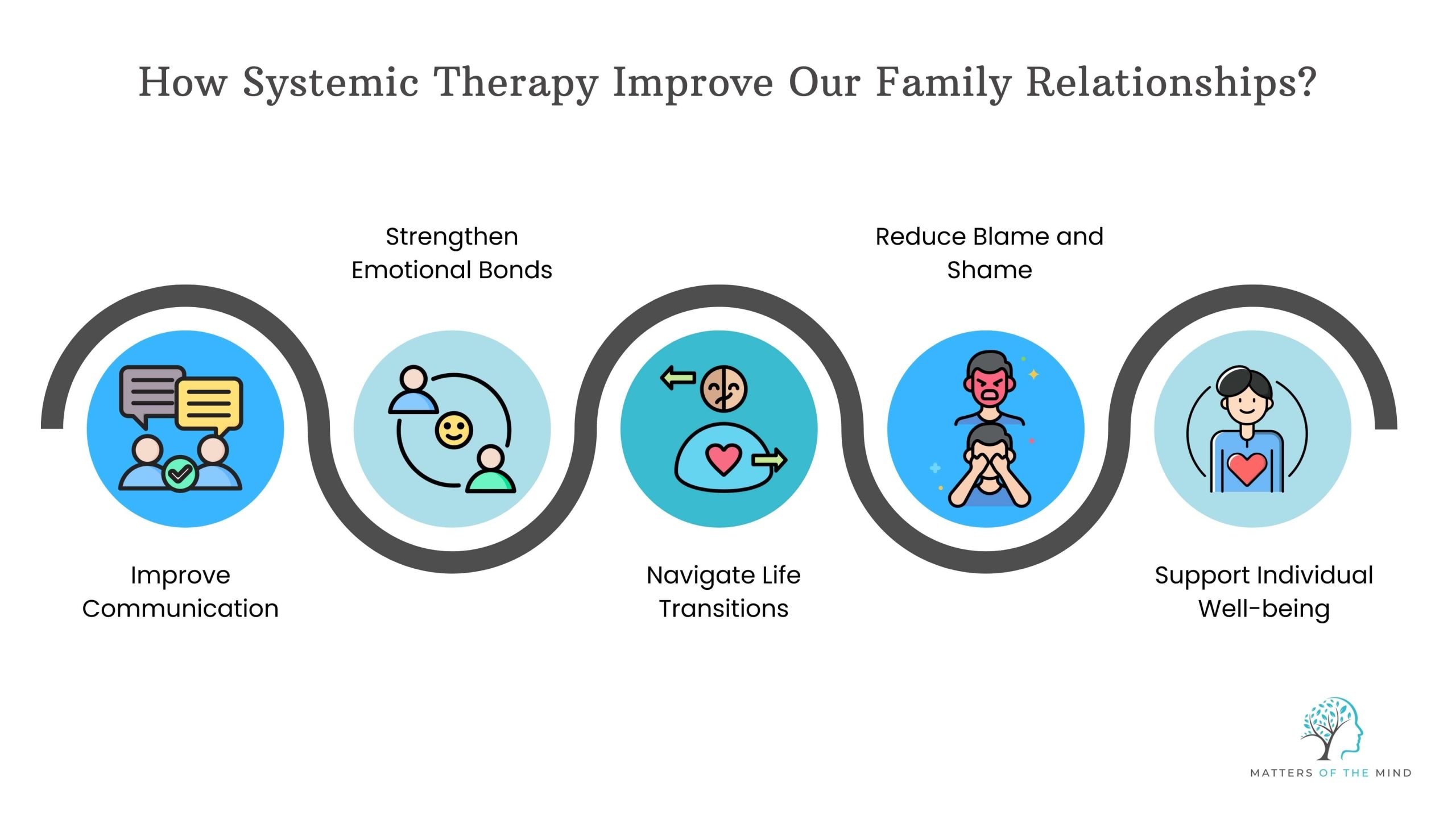
Systemic Therapy focuses on understanding and improving the relationships within a family or partners in a marriage. Here‘s how it deeply helps:
How Systemic Therapy improve our family Relationships

1. Improves communication

Many family concerns stem from miscommunication or unspoken expectations. Systemic therapy helps families express themselves clearly and listen with more empathy, resolve conflicts, and strengthen understanding.

2. Strengths emotional bonds

By exploring emotional undercurrents, such as fear, guilt, resentment, or unmet needs, family members gain insight into each other’s experiences. This increases closeness and reduces emotional distance.

3. Helps navigate life transitions

Major life events such as marriage, parenting transitions, loss, relocation, or blended family adjustments can strain relationships. Systemic therapy provides tools to navigate these changes with shared resilience.

4. Reduce blame and shame

Rather than focusing on a single “problem-holder,” the therapy shifts the view toward patterns. This helps families move away from blame and toward cooperation, compassion, and problem-solving.

5. Supports individual well-being

Healthy family systems naturally strengthen individual mental health. When communication improves, and conflicts reduce, each person feels more secure, understood and supported.

When Should a Family Consider Systemic Therapy?

Systemic family therapy services can be helpful when a family experiences:
  • Frequent conflicts or communication challenges
  • Emotional distress or breakdown of trust
  • Parenting stress or behavioural concerns in children
  • Major life transitions
  • Relationship strains between partners or siblings
  • Persistent patterns that keep repeating without resolution
It’s not only for families in crisis, but many seek it proactively to build stronger, healthier connections.

What Happens in Systemic Family Therapy Sessions?
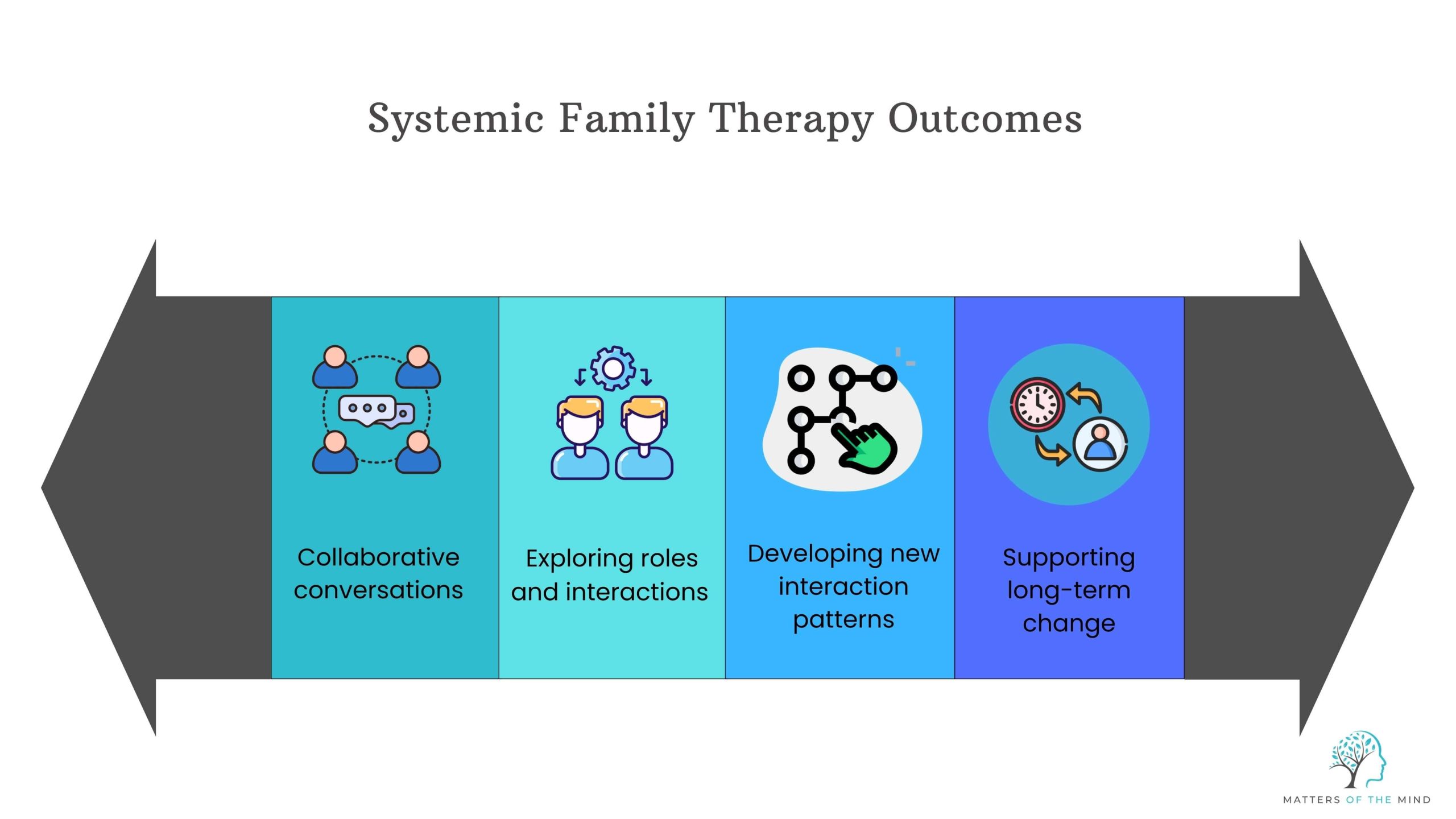
Here is the series of events that you can expect in a healthy setting of a systemic family therapy session.
Systemic Family Therapy Outcomes

1. Collaborative conversations

Therapy sessions feel like guided conversations where each voice is valued. The therapist helps uncover how patterns developed and how they can be transformed.

2. Exploring roles and interactions

Families often unknowingly adopt repeated roles, such as the peacemaker, the decision-maker, or the withdrawn one. Therapy helps uncover these roles and understand how they affect relationships.

3. Developing new interaction patterns

Practical techniques, reframing exercises, and communication tools help families create healthier, more respectful ways of relating.

4. Supporting long-term change

Systemic therapy not only focuses on solving the current issue, but also creates lifelong healthy skills to sustain a better relationship.
With millions of families in the UK facing communication and relationship challenges, now is the time to strengthen yours.

Final Thoughts

Every family experiences moments of stress, misunderstanding, tension, or emotional distance. What truly matters is having a space to explore these patterns with compassion and a willingness to grow together. Systemic family therapy offers that space, helping families strengthen communication, deepen trust, and cultivate healthier and more strong relationships. Through this therapy, families can create a long-lasting change that benefits everyone.

If your family is navigating difficult patterns or simply wants to build stronger, healthier connections, Matters of the Mind, led by Dr Kavita Deepak-Knights, offers dedicated support through evidence-based therapeutic approaches. Whether you’re seeking clarity, improved communication, or guidance through family challenges, you’ll find a warm, structured, and compassionate space to begin your journey.

Reach out today to take the first step toward a more balanced and connected family life.

Dr. Kavita Deepak-Knights
About the Author

Dr Kavita Deepak-Knights linkdin icon

With over 20 years of clinical experience, Dr Kavita brings a trusted and expert approach to mental health care. As the founder of Matters of the Mind and an Oxford-trained psychologist, she specialises in evidence-based therapies, including CBT, ACT, DBT, and EMDR, offering personalised support to help individuals understand their challenges and enhance their overall well-being.