
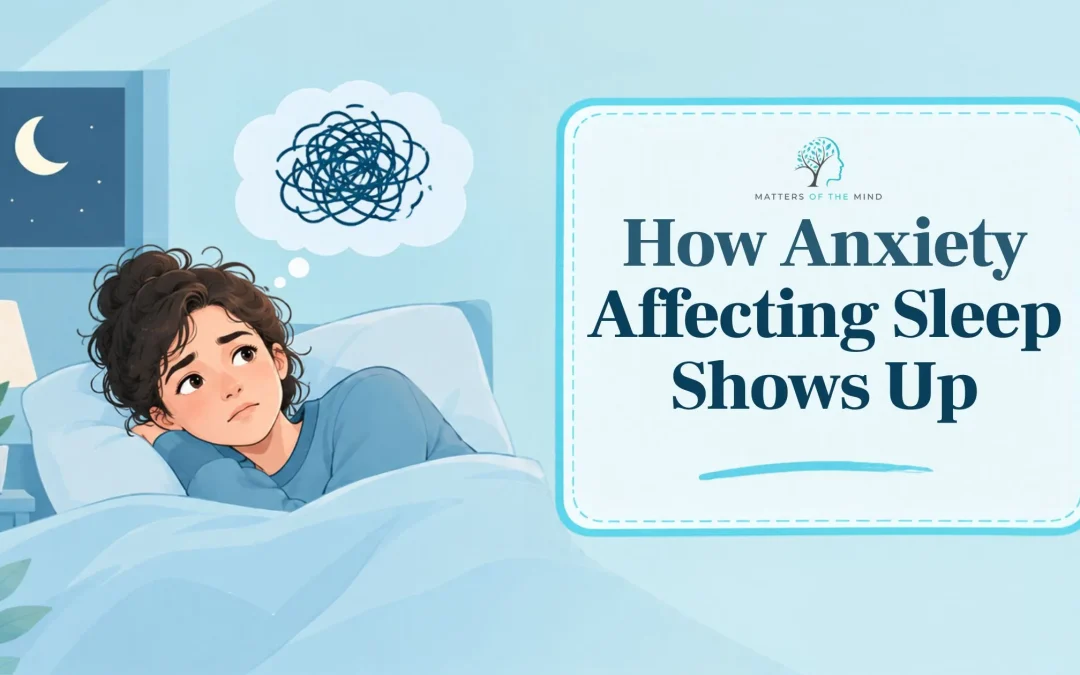
Three in the morning. You’re wide awake. Your mind’s on a chat from four days ago. Then it jumps to something that hasn’t even happened yet. No reason for it. You’re just awake, and you stay awake. Sound familiar? You already know something about anxiety and sleep that most people only learn the hard way.
The two feed each other. Not gently either. Anxiety makes it harder to sleep. Bad sleep makes the anxiety worse the next day. Round and round. A lot of people get stuck in that loop for years. They never work out which one came first.
Quick answer: anxiety keeps your body on alert. That makes it harder to fall asleep, easier to wake up at night, and harder to get the deep sleep you actually need, even if you’re in bed for long enough.
Why Anxiety Hits Sleep So Hard
Anxiety is your body bracing for a threat. Your heart rate climbs. Your muscles tense up. Your mind starts scanning for what might go wrong next. That’s a handy system if there’s a real threat nearby. It’s a rubbish system to have running at 11pm while you’re trying to drift off.
Sleep needs your body to wind down. Anxiety keeps it wound up. They pull in opposite directions, and anxiety usually wins. Your body treats “maybe danger” as more urgent than “needs rest.” That’s not a flaw in you. It’s just how the alarm system works.
How Anxiety Affecting Sleep Shows Up
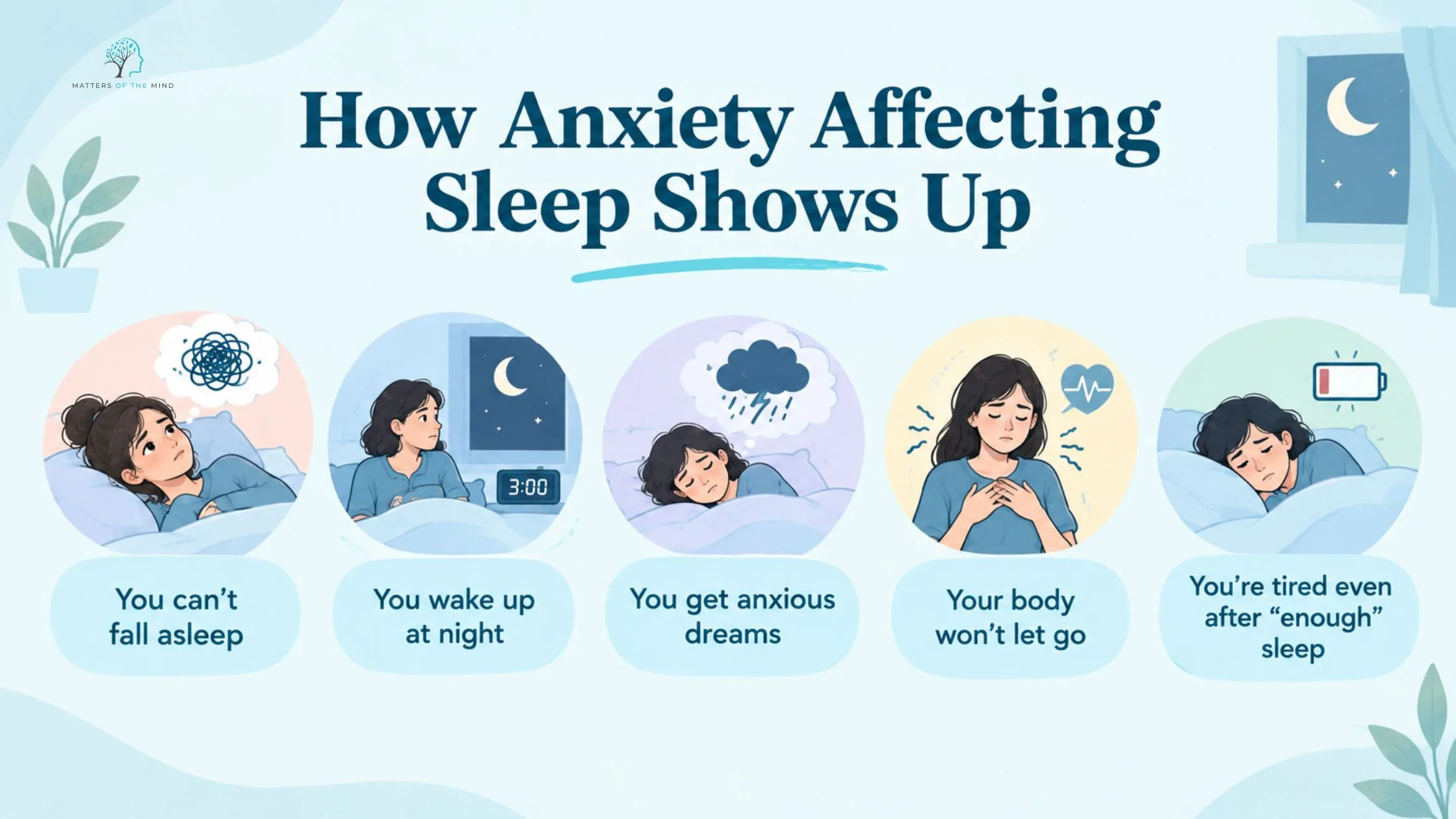
You can’t fall asleep
Lights off. No more distractions. And the mind gets louder, not quieter. You’re stuck on a loop of worst-case scenarios. Stuff that felt fine during a busy day suddenly feels huge, the second there’s nothing left to pull your focus away from it
You wake up at night
Anxious sleep sits lighter. It’s easy to disturb, and hard to drop back into once it breaks. A lot of people with anxiety wake at 3 or 4am. Heart already racing, before they’ve even worked out why.
Strengthen Family Connections
Strong family relationships take understanding, communication and support. If your family is experiencing challenges, professional guidance can help you move forward together.
You get anxious dreams
Whatever’s stressed you during the day tends to leak into your dreams at night. Vivid. Unsettling. Sometimes tied straight to what’s been on your mind. You wake up, but it doesn’t feel like rest. It feels like round two of the same stress.
Your body won’t let go
Racing heart. Tight chest. Restless legs. A clenched jaw you didn’t even notice. None of this switches off just because your eyes are shut, and a tense body can’t drop into deep sleep, no matter what your mind’s doing.
You’re tired even after “enough” sleep
Anxious sleep is often there on paper, just thin. Hours in bed, but not much real, deep rest. That’s how someone sleeps seven hours and still wakes up feeling wrecked.
What Actually Helps
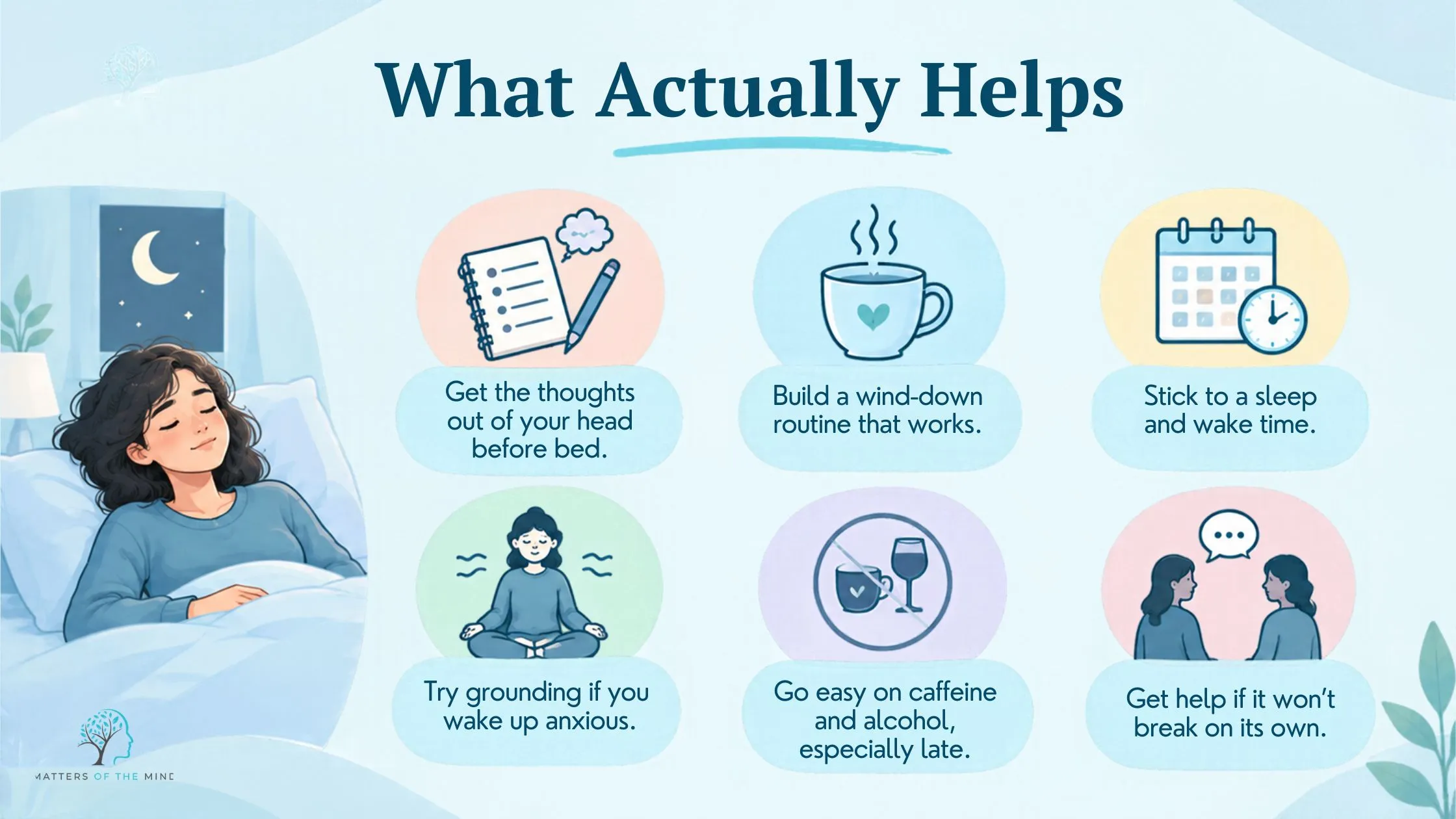
Get the thoughts out of your head before bed. Write them down, even as a messy list. It takes the edge off. Your brain holds onto loose, unresolved worries far harder than ones you’ve put down on paper.
Stick to a sleep and wake time. Even on the rough nights. A messy schedule makes it harder for your body to find a rhythm, and anxiety already disrupts that enough on its own.
Go easy on caffeine and alcohol, especially late. Both mess with sleep quality directly. Both can wind up your anxiety too, hours after your last drink.
Build a wind-down routine that works. Scrolling your phone in bed does the opposite of calming you down. Try something slower. Dim the lights. No screens. Same routine each night, so your body learns it’s safe to switch off.
Try grounding if you wake up anxious. Slow your breathing. Press your feet into the mattress. Name five things you can hear. Small, physical things that pull your focus off the racing thoughts without much effort.
Get help if it won’t break on its own. If anxiety and sleep problems have dragged on for months, self-help alone often isn’t enough. CBT, especially CBT for insomnia, has strong evidence behind it for this exact loop. It works on the anxious thinking and the sleep habits together, not one without the other.
Anxiety affecting sleep isn’t something to just push through. It won’t fix itself once you’re tired enough to force it. Left alone, it tends to settle in and get worse, not better. With the right support though, this is one of the more treatable patterns out there, and most people improve faster than they expect to.
If anxiety is affecting your sleep and day-to-day life, speak to your GP or a therapist about support. If your mental health is struggling more broadly, call the Samaritans free on 116 123, or text SHOUT to 85258, any time of day or night.
If this sounds like you, and it’s been going on a while, it helps to speak to someone who treats the anxiety and the sleep problem together, not one without the other. You can reach out to Dr Kavita Deepak-Knights, a clinical psychologist based in Windsor, Berkshire, and founder of Matters of the Mind. She works with adults dealing with anxiety-driven sleep problems, using evidence-based approaches like CBT on both the thinking and the sleep patterns built up around it. Reaching out isn’t a last resort. It’s usually the thing that actually cuts short how long this drags on for.
Frequently Asked Questions (FAQs)
1. Can anxiety alone cause insomnia?
Yes. Anxiety keeps your nervous system on alert, and that gets in the way of your body winding down and falling asleep, even without any other sleep disorder involved.
2. Why do I wake up anxious in the night?
Anxious sleep runs lighter, so it’s easier to disturb. A lot of people wake with their heart already racing, often triggered by nothing more than a naturally lighter sleep cycle meeting a nervous system that’s already keyed up.
3. What helps most with anxiety and sleep problems?
A steady wind-down routine, fixed sleep and wake times, and less caffeine late in the day. If the cycle’s gone on a while, CBT for insomnia tends to work best, since it tackles the anxious thinking and the sleep habits at the same time.


