
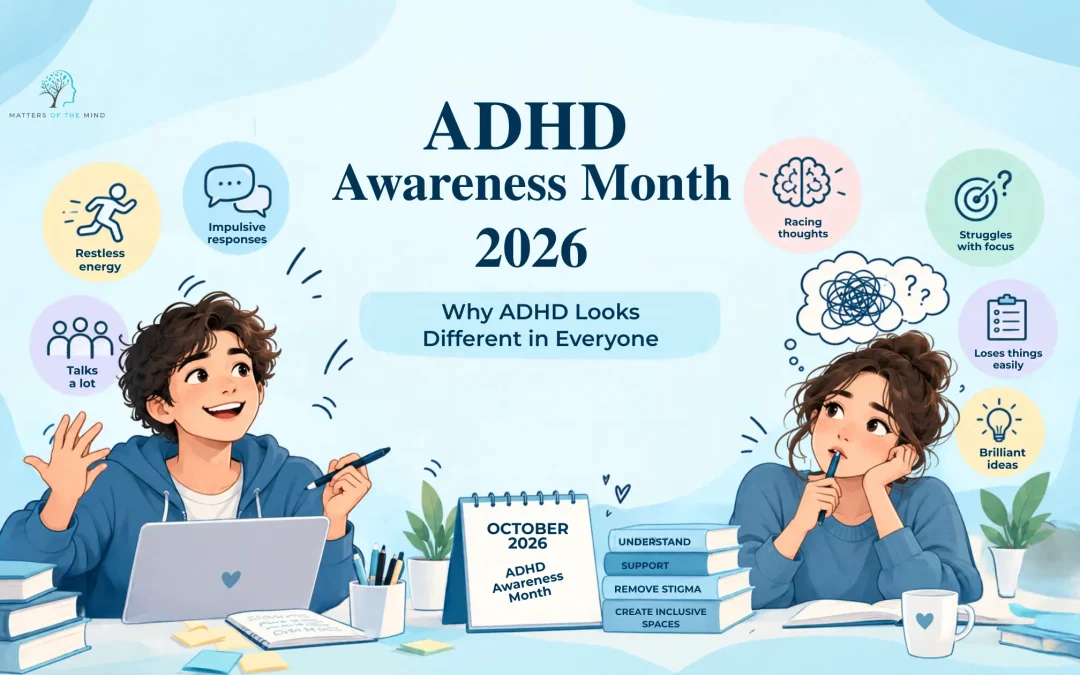
Picture two people with ADHD. One can’t sit still through a meeting. The other sits perfectly still, says nothing, and still can’t tell you what was actually discussed. Both have ADHD. Neither looks like the other. That’s the bit people keep getting wrong. It’s exactly why ADHD Awareness Month exists.
Ask someone to picture ADHD and you’ll usually get the same image back. A hyperactive kid, often a boy, bouncing off the classroom walls. That picture isn’t wrong. It’s just nowhere near the whole story. ADHD shows up in a huge range of ways. A lot of people, especially adults, especially women, go years without a diagnosis. They just don’t match the one image everyone carries around in their head.
When Is ADHD Awareness Month?
ADHD Awareness Month runs every October. In 2026 it falls from Thursday 1 October to Saturday 31 October. Same dates every year. It’s organised by a coalition of ADHD groups working to spread accurate information and push back on the stereotypes that still hang around the condition.
ADHD awareness isn’t just a month of hashtags, though there’s plenty of that too. It’s a chance to correct the record on something that gets misread constantly. By teachers. By employers. By doctors. Often by the people who actually have it.
Why ADHD Awareness Matters So Much
ADHD is one of the most common neurodevelopmental conditions there is. It’s also one of the most misread. People still treat it like a discipline problem, or something kids grow out of. Neither is true. ADHD affects focus, impulse control, and how the brain manages tasks. For most people it doesn’t vanish at eighteen. It just changes shape.
Poor awareness has real costs. Kids get labelled difficult instead of getting help. Adults spend decades thinking they’re just lazy, or disorganised, or bad at life, with no idea there was ever a name for it. Getting the full picture out there, not just the loud version, changes whether people get support in time.
The Three Faces of ADHD
ADHD isn’t one thing. There are three recognised types, and they barely look alike.
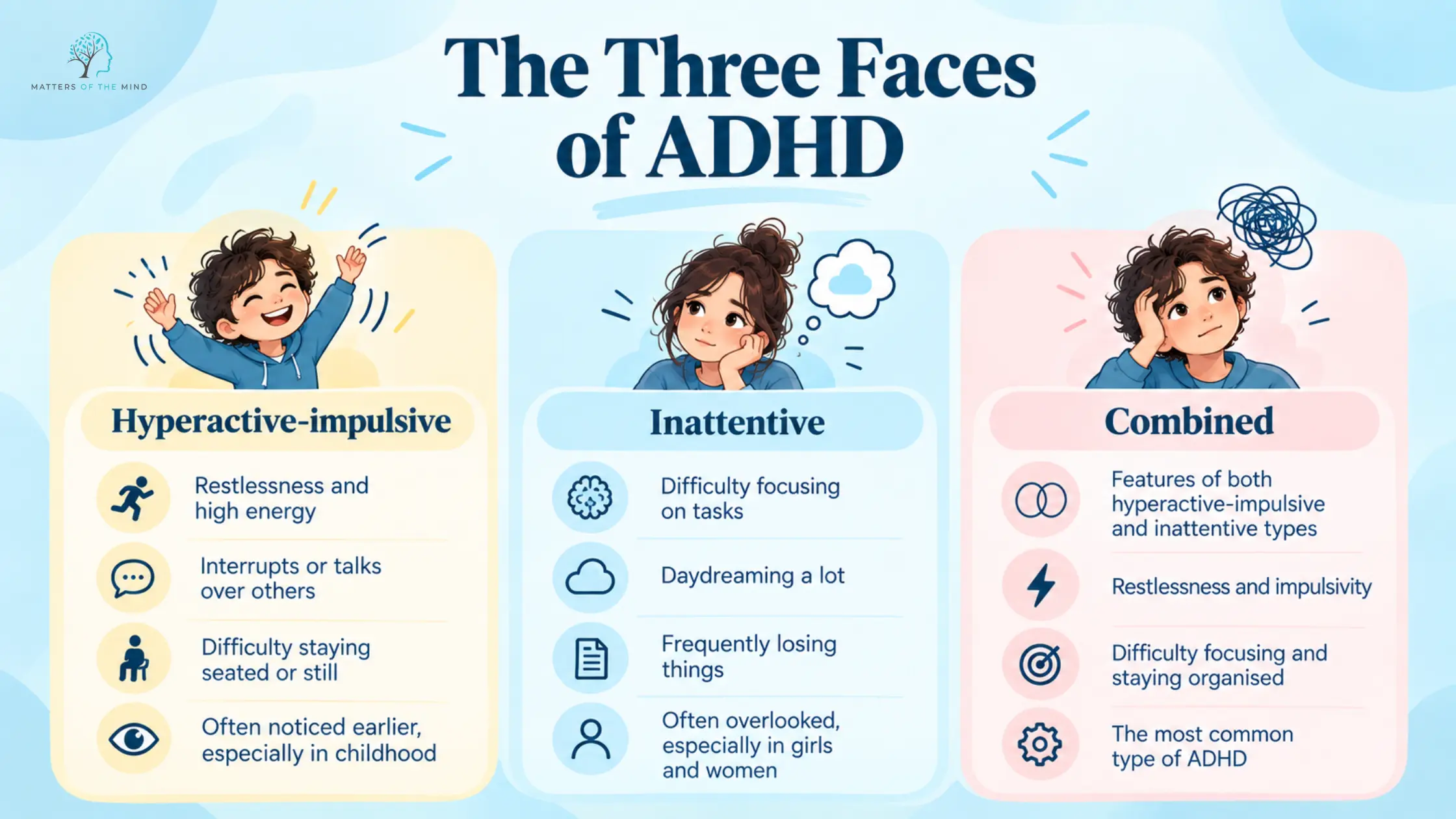
Hyperactive-impulsive
Mental health conditions
Little or no hyperactivity here. Just real trouble focusing, following instructions, keeping track of things. Daydreaming a lot. Losing things constantly. Forgetting what someone just said, seconds after they said it. Quiet version. Also the one that gets missed most, especially in girls, because it doesn’t disrupt a classroom the way the hyperactive type does.
Combined
A mix of both. Restless and impulsive, but also struggling to focus and stay organised. Most people diagnosed with ADHD actually fall here, even though the hyperactive stereotype still runs the show in most people’s minds.
Why It Looks So Different From Person to Person
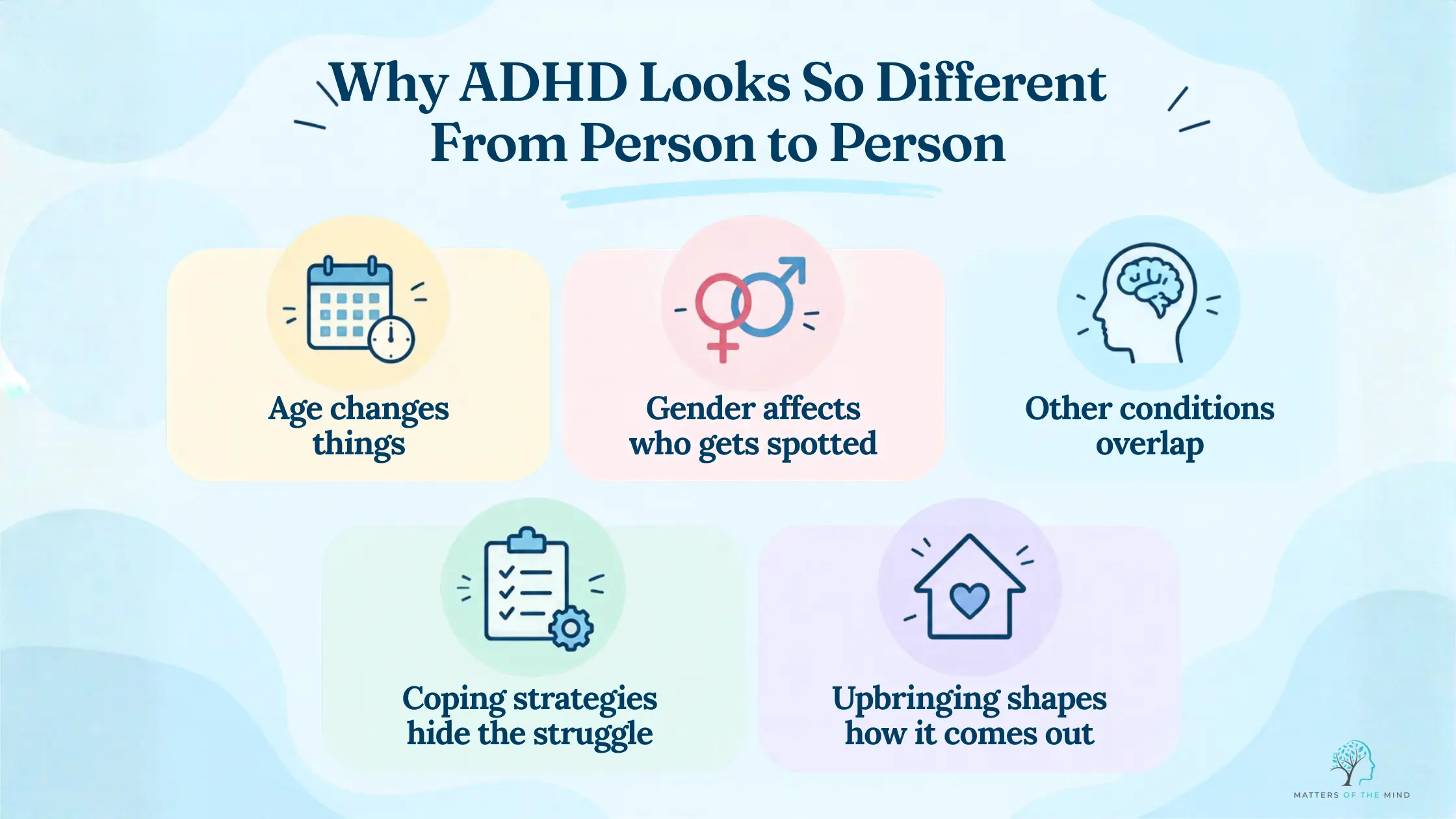
Even within one type, ADHD plays out differently depending on who’s carrying it.
- Age changes things. Hyperactivity in a seven-year-old often turns into restlessness or racing thoughts by thirty. The ADHD hasn’t gone anywhere. It’s just grown up alongside them.
- Gender affects who gets spotted. Girls and women lean more toward the inattentive type, and they’re often good at masking it. Sometimes for decades.
- Other conditions overlap. Anxiety, depression, and autism frequently sit alongside ADHD. Each one bends how the ADHD itself shows up.
- Coping strategies hide the struggle. Plenty of adults build entire systems around it. Alarms, lists, routines. From the outside, they look organised. Underneath, they’re working twice as hard for the same result.
- Upbringing shapes how it comes out. A child taught to stay quiet and compliant may hold their symptoms inward rather than act them out. That often means the ADHD gets missed completely, or gets mistaken for anxiety instead.
What This Means for Diagnosis and Support
Because ADHD looks so different from person to person, a lot of people don’t get diagnosed until adulthood. Sometimes only after their own child gets diagnosed first, and suddenly they recognise the pattern in themselves. Others spend a lifetime assuming they just weren’t trying hard enough.
An accurate picture matters, because treatment isn’t one-size-fits-all either. Medication works well for a lot of people. Others do better with therapy, coaching, and practical strategies built around how their brain actually works. A diagnosis that reflects how ADHD really shows up for that person, not the textbook version, tends to lead to support that actually fits.
Start Feeling Like Yourself Again
Take the first step today!
Book a confidential session with Dr Kavita Deepak-Knights in Windsor, Berkshire, and begin restoring your emotional balance.
If you recognise yourself, or someone close to you, in any of this, raise it with a GP. Adult ADHD assessments are far more available now than they used to be. Getting properly assessed is usually the first real step toward support that works, instead of another decade managing it alone.
For personalised support, you can reach out to Dr Kavita Deepak-Knights, a clinical psychologist in Windsor, Berkshire.
Through Matters of the Mind, she works with adults and young people navigating ADHD, including neurodevelopmental assessment built around how ADHD actually shows up for that individual, not a one-size-fits-all approach. Getting the right diagnosis, from the right person, can genuinely change how manageable ADHD feels day to day.
Frequently Asked Questions (FAQs)
1. When is ADHD Awareness Month in 2026?
It runs from Thursday 1 October to Saturday 31 October 2026. Same dates every year, since the month always covers the whole of October.
2. Why does ADHD look so different in different people?
Because there are three distinct types, hyperactive-impulsive, inattentive, and combined. Age, gender, and other overlapping conditions all shape how each type actually shows up day to day.
3. Can adults be diagnosed with ADHD for the first time?
Yes, and it happens more often than people think. Many adults, particularly women, go undiagnosed for years because their symptoms don’t match the hyperactive stereotype. They often get assessed later in life, sometimes after a child’s diagnosis prompts them to look at their own.


